Weekly (Issue 1): Tariff Squeeze & Freight Crunch — What Buyers Should Watch This Week
Weekly (Issue 1): Tariff Squeeze & Freight Crunch — What Buyers Should Watch This Week
This week: US drone tariffs of up to 100% and an escalating ILA East Coast port strike threat reshape landed costs and lead times for Q4 sourcing. Transpacific rates rebound on front-loading, while stablecoin payment rails get their first coordinated regulatory green light across Asia.
Trade Policy & Tariffs
1. US imposes 10–100% tariffs on imported drones and key components
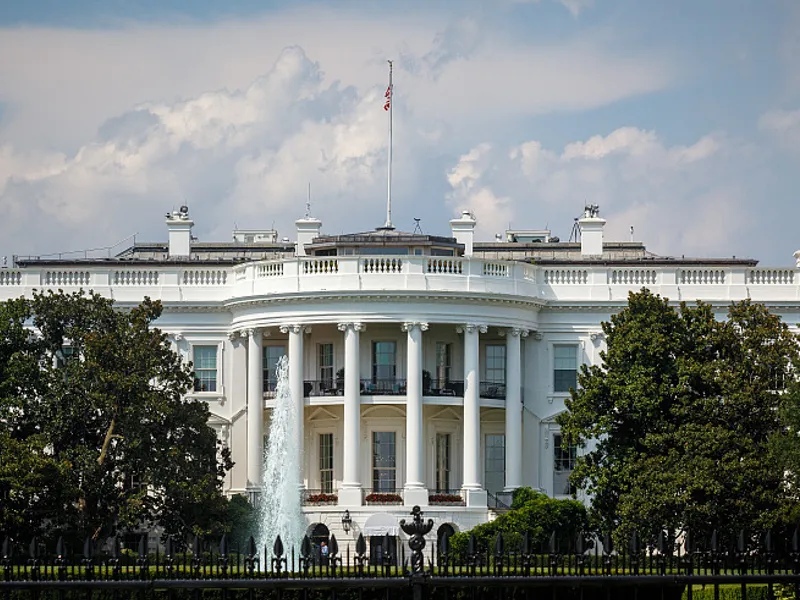
The White House proclamation on August 13 sets tiered ad valorem duties on drones and certain parts: a 100% rate for "highly sensitive" classes (including units over 25 kg take-off weight and thermal-imaging models) and a 25% rate for other drones and components, with country-specific rates of 15% for the EU, Japan, Liechtenstein, Korea and Switzerland, and 10% for the UK. The 100% tier takes effect 21 days after signing; non-sensitive components follow in 180 days.
"On drones of particular sensitivity, by size or by function, and docking stations and certain key components of such drones, a 100% ad valorem tariff." — White House proclamation, August 13, 2026
2. US–Canada trade talks stall ahead of August 19 50% tariff deadline
Negotiations between senior Canadian and US trade officials have failed to bridge core differences, with a 50% tariff on roughly US$20 billion of Canadian goods — covering dairy, hockey sticks, cement, down jackets and hundreds of other lines — set to take effect on August 19. Unlike most Trump-era duties, this round will not exempt CUSMA-compliant goods, hitting any importer shipping under the Canada–US–Mexico framework.
"Industry insiders say companies are opting to wait and see as the clock ticks down on U.S. President Donald Trump's latest tariff deadline, rather than rushing shipments across the border to beat the buzzer." — The Canadian Press, via CTV News, August 14, 2026
Supply Chain & Logistics
1. Transpacific GRI succeeds as ILA strike threat escalates and 25 states sue over 301
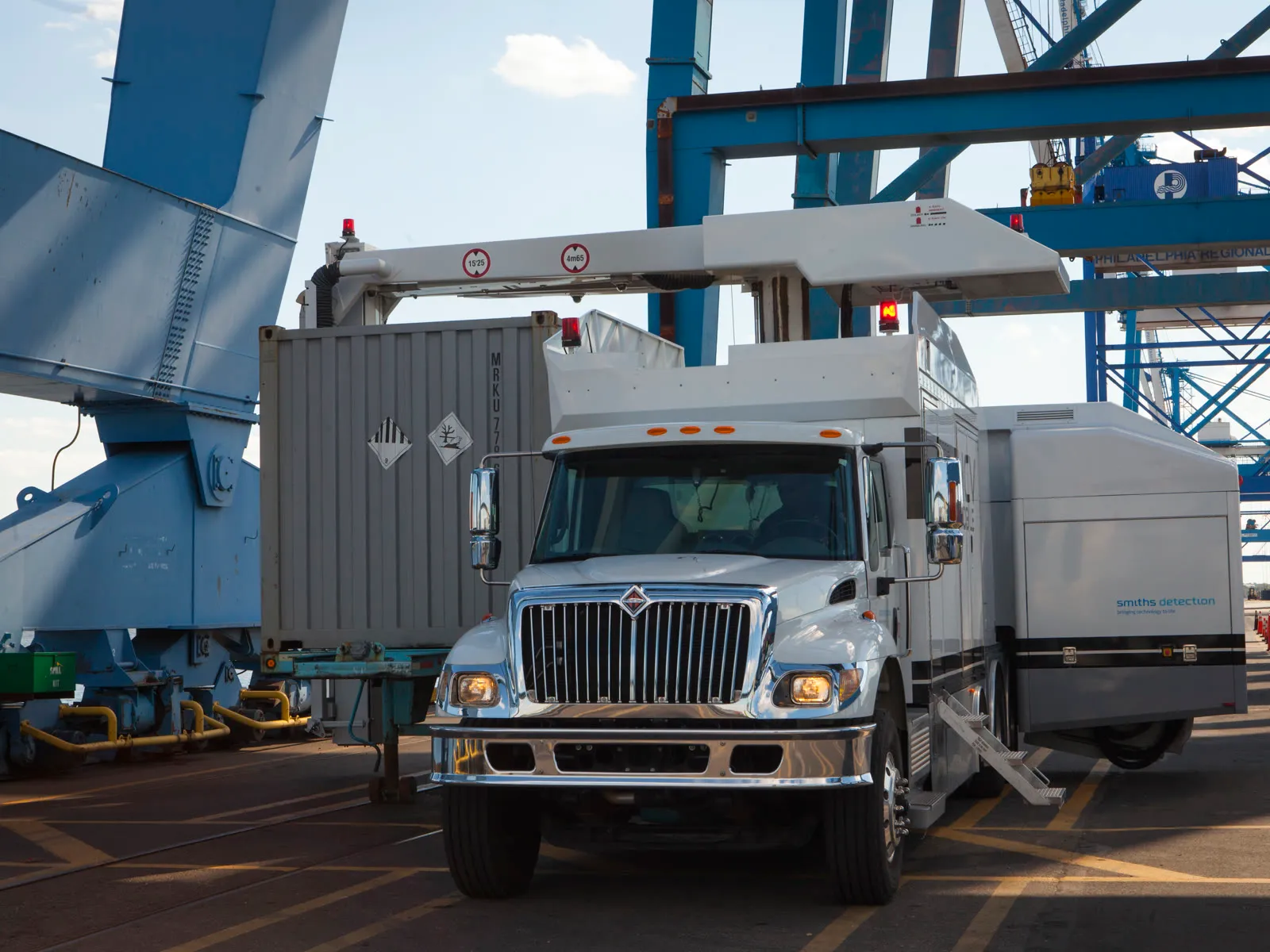
The August 1 GRI round landed across transpacific lanes, pushing West Coast rates up 4.09% to US$6,484/FEU and East Coast up 2.61% to US$9,290/FEU. The rebound reflects blank sailings and aggressive front-loading ahead of a potential October 1 East Coast port strike. The ILA has suspended Master Contract negotiations with USMX over APM Terminals' use of an automated gate system in Mobile, raising the prospect of a strike affecting 14 major ports on day one of Q4.
"There's no point trying to negotiate a new agreement with USMX when one of its major companies continues to violate our current agreement with the sole aim of eliminating ILA jobs through automation." — ILA President Harold Daggett
On the regulatory side, 25 states filed a joint lawsuit in the US Court of International Trade on August 3, challenging the new Section 301 tariffs. Separately, the Panama Canal Authority will tighten Neopanamax draft limits to 48 ft on August 26 and 47.5 ft on September 3 due to a strengthening El Niño.
via LinkedIn / Freight Market Update
2. Hormuz near-closure keeps Gulf rates firm; Cape routing adds 10–14 days to Asia–Europe
The Strait of Hormuz remains effectively closed to mainstream commercial container traffic, with only ~84 transits in the week of July 27 to August 2 — a fraction of the 95–138 vessels per day the strait handled before the February escalation. Effective Gulf capacity is running at 60–70% of pre-crisis levels. All-in Shenzhen-to-Jebel Ali pricing is quoted in the US$8,250–9,500 per 40HQ range including war-risk, emergency and peak-season surcharges — roughly 35–55% above earlier levels. For air, IATA reported global demand up 8.5% YoY in June 2026 against capacity growth of 4.4%.
Factory & Manufacturing
1. Chutian Energy opens 80 GWh lithium battery mega-plant in Yichang
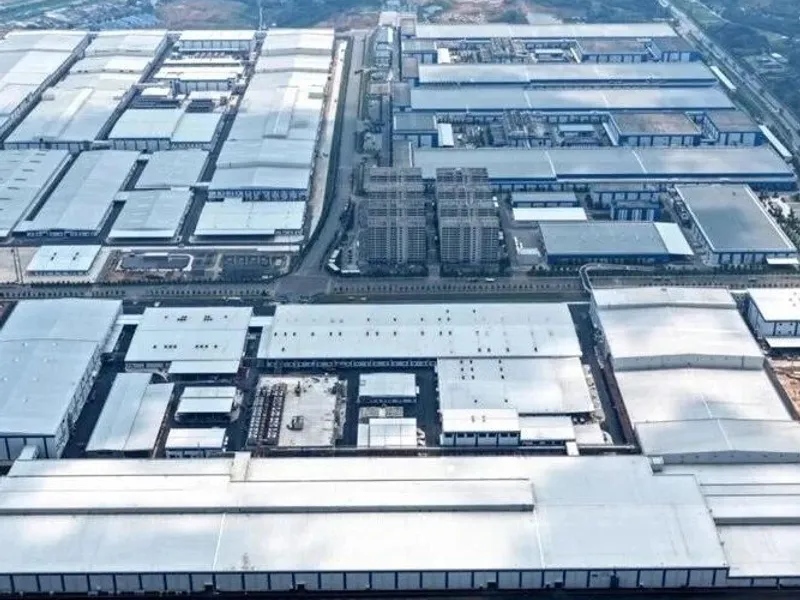
Phase 2 of Chutian's Yichang complex in Hubei went live on August 9 with an ¥22 billion total investment. The new line boosts single-line efficiency by more than 60% and targets 800,000 cells per day at full ramp. The Yichang base reported H1 output value of ¥7.5 billion with shipments up 222% year-on-year, products now reaching multiple European and Asian markets. Phase 3 is already in planning, with another ¥10 billion and 50 GWh of additional capacity.
2. Chinese PCB makers commit ¥2.7B+ to high-end AI-server and Mini-LED capacity in one week
Ellington Electronics (603328.SH) launched a ¥2 billion private placement, with ¥1.85 billion funding a new HLC and HDI PCB plant in Zhongshan, Guangdong, targeting AI servers, high-speed network switches, AI accelerator cards and reserved capacity for optical modules. The facility will deliver 340,000 sqm of HLC and 60,000 sqm of HDI per year. Separately, Shenzhen MTC's subsidiary will invest ¥750 million in Nanchang to produce Mini/Micro LED and optical-module PCBs, with commercial output expected in H2 2027.
New Products & Sourcing Ideas
1. MemoMind One camera-less AI glasses — Kickstarter clears US$1M
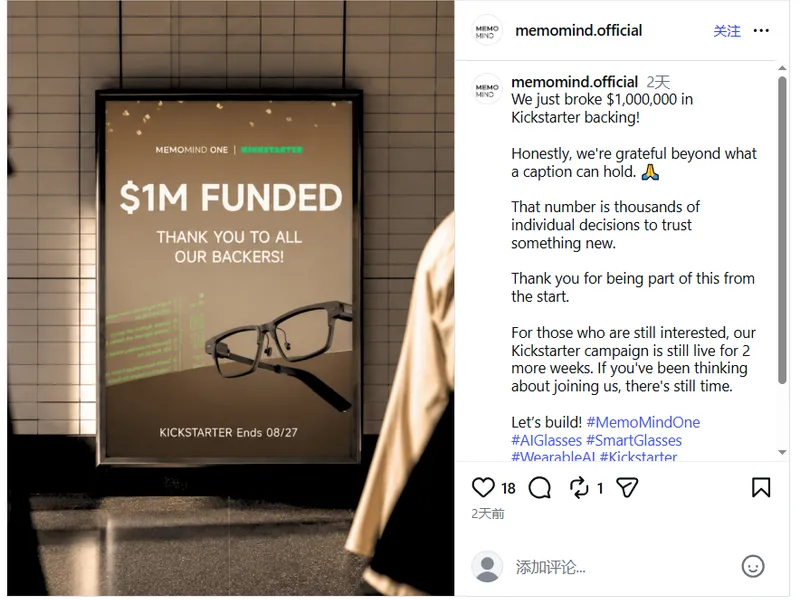
XGIMI's MemoMind brand kicked off its first product on June 28 with a modest US$10K goal, but the campaign blew past US$1M by August 7, with 20 days still on the clock. The defining feature is a deliberate absence of any camera module — a sharp bet on privacy as competing smart glasses face criticism over covert recording. Hardware includes dual green Micro-LED displays (peak 2,000 nits), integrated speakers, and AI features spanning real-time translation, note-taking, contextual assistance and navigation. Pricing starts at US$400 for the standard edition, undercutting direct competitor Even Realities G2 (US$600+).
via Toutiao / Memomind official
2. xTool WonderPress — all-in-one heat-press workstation pulls US$5.19M from 9,251 backers
Marketed as a single creative workstation for heat pressing, sublimation, vacuum forming, curing and craft baking, WonderPress ran from April 28 to June 24, 2026 and closed as one of the most-funded maker-tech Kickstarter campaigns of the year. The pitch worked because it showed finished objects, not just modules — a useful template for any B2B seller evaluating whether their product demo translates across categories.
Sourcing Platforms & Tools
1. Raiven 2.0 brings patented "Best Value" sourcing to building trades
Launched on August 13, Raiven 2.0 layers the company's patented Best Value™ methodology (US Patent 12,327,222 B2) over a self-service sourcing platform for electrical, HVAC and multi-trade contractors. Rather than just the lowest line-item price, the system scores quotes across availability, lead time, freight, supplier reliability and customer priorities, then returns a recommended sourcing strategy that fits each customer's purchasing rules. Early adopter Airstream Services in Nashville reports best-value decisions are now central to its procurement strategy as it scales.
2. Gartner (Aug 13): 63% of Western procurement leaders now use Chinese LLMs to screen suppliers
A new Gartner report finds that 63% of mid-to-large European and American procurement decision-makers already use Chinese large-language models (Kimi, Doubao, DeepSeek) for first-pass supplier screening. The shift moves the entry point for supplier discovery from search engine results to AI-generated brand summaries and direct website citations — a change that makes machine-readable product specs, certifications, FAQs and structured data a new priority for B2B exporters running their own domains.
Industry Trends
1. China handheld imaging: gimbal cams hit 61% share as DJI takes 80.5%
RUNTO's weekly tracking data for summer travel season (W29–W32, July 13 – August 9) reports 445,000 units sold in China's online handheld imaging market for ¥1.33 billion in revenue. Gimbal cameras grew their share from 40% at the start of the year to 61% in the summer window, overtaking traditional action cams (27%). DJI led with 80.5% volume share, followed by Insta360 at 9.3%. The growth drivers are clear: short-video and vlog creation going mainstream, three-axis stabilization lowering the shooting barrier, and AI editing + smart tracking closing the "shoot-to-share" loop.
2. Global consumer electronics: chip costs push holiday prices up, AI features drive upgrades
Ahead of the Q4 holiday season, analysts expect a more polarized market: emerging markets face stronger headwinds from weaker purchasing power, while mature markets stay resilient thanks to higher disposable incomes and broader financing options. Component costs are squeezing margins across the board, which means "selective discounts on old inventory and more value-added bundles, not price cuts." AI capabilities — intelligent motion detection, on-device analytics, 4K imaging — are emerging as the upgrade trigger that goes beyond the spec sheet.
Payments & Trade Finance
1. Bank of England Digital Pound Lab Phase 2 tests stablecoin + digital pound for SME trade
On August 12, the Bank of England selected Polygon Labs, NOBO Finance and Dun & Bradstreet for Phase 2 of its Digital Pound Lab. The pilot builds "SME Bankable Profiles" that combine wallet transaction data, open-finance sources and D&B records to reduce repetitive onboarding, and tests invoice factoring with electronic shipping documents as collateral, so exporters can receive stablecoin advance payments while importers settle in digital pounds. Real-world settlement is still simulated; the Bank of England and HM Treasury will review results later in 2026.
2. Asia becomes the testbed for regulated stablecoin payment rails
Singapore, Hong Kong and Japan are pushing stablecoin frameworks from consultation into live operation. The Monetary Authority of Singapore now lists Circle, Coinbase, BitGo and Anchorage as Major Payment Institutions for digital payment token services. Hong Kong's Stablecoins Ordinance took effect August 1, 2025, with the first two licenses issued on April 10, 2026 to Anchorpoint Financial (FRS01) and HSBC (FRS02). Japan's FSA issued its final crypto "travel rule" amendment on July 7, adding five new jurisdictions effective August 3, 2026. Hong Kong-based Reap, which issues stablecoin-backed cards, now moves roughly US$6 billion a year; its research shows Asia stablecoin flows hit US$12.5 trillion in 2025, with the Singapore–China corridor the most active.
Buyer Voices & Insights
1. "How to vet a Yiwu agent" — Reddit's playbook for cutting through self-promotion
The pattern in sourcing forums is predictable: a buyer asks for a Yiwu agent, and within hours, a swarm of accounts created three weeks ago with zero history reply "DM me, I'm a Yiwu agent." Reliable vetting looks like this — check the account history, demand public company details in-thread, and cross-reference the same name across multiple threads over months or years. Genuine agents answer publicly; fake ones DM because they don't want fact-checking. LinkedIn is more professional but has the same problem: a "Sourcing Manager" with two months on the platform is not the same as one with two years.
2. 2026 sourcing reality: 68% of Western buyers verify credentials before price
Data from the 2026 Global Sources Hong Kong fair shows that 68% of European and American procurement teams now prioritize factory credentials, product certifications and carbon-footprint documentation in their first screening pass — with price ranking second. With the EU carbon tariff in force and the US $800 de minimis exemption gone, customs inspections and brand audits are tightening across the board. One Dongguan apparel factory lost over ¥100K this year to two separate shipment detentions on environmental compliance failures, then won long-term European orders after completing its full certification stack. The lesson: buyers no longer fear higher prices; they fear non-compliance, delivery instability and weak after-sales.