Weekly (Issue 2): Tariffs, Freight Spikes & the AI Sourcing Shift
Weekly (Issue 2): Tariffs, Freight Spikes & the AI Sourcing Shift
This week: Section 232 metals and polysilicon tariffs widen the duty net while EU BEV countervailing duties lock in through 2029 — just as transpacific spot rates hit new highs near US$9,400/FEU. Freight congestion and a wave of AI sourcing tools are reshaping how buyers screen suppliers, negotiate, and settle across borders.
Trade Policy & Tariffs
1. US widens Section 232 metals net to 14 derivative products (15% / 25% / 50%)
On August 4, 2026 the Commerce Department (BIS) published a Federal Register pre-notice proposing to pull 14 aluminum, steel and copper derivative products into the Section 232 tariff framework, at 15%, 25% and 50% tiers calculated on full customs value. Covered lines include welding-machine parts, fire extinguishers, mobile cranes, trailers and steel gas cylinders; most fall at 25%, self-propelled cranes at the scheduled rate, agricultural trailers at 15%, and propane/oxygen steel containers at 50% (metal value only). This is the third expansion of the steel/aluminum/copper 232 framework in 2026 after the April and June adjustments.
"These products will face 15%, 25% and 50% three-tier Section 232 tariffs, calculated on full customs value." — BIS pre-notice, August 4, 2026
For buyers, the practical hit is classification creep: finished goods that previously cleared as unrelated HS lines now attract 232 duties. Re-check your tariff schedule before quoting.
via Expeditors — Global Trade Actions Timeline
2. US sets minimum import prices on polysilicon, plus 15% derivative duty
A White House proclamation on August 6, 2026 establishes a Section 232 minimum import price (MIP) regime for polysilicon and downstream products, alongside a 15% ad valorem duty on specified polysilicon derivatives. The MIPs are hard floors: polysilicon at US$21/kg, ingot & wafer at US$100/kg, solar cells at US$0.22/W and modules at US$0.38/W. Imports entered below the MIP face a top-up tariff equal to the shortfall. The measures apply to goods entered for consumption on or after December 4, 2026, and Commerce is authorized to adjust the MIPs as market conditions move.
"The Secretary of Commerce is authorized to adjust MIPs as market conditions warrant." — White House proclamation, August 6, 2026
Solar and electronics supply chains should treat Q4 as a price-floor quarter for Chinese polysilicon — lock volumes early rather than chasing spot.
3. EU keeps BEV countervailing duties through 2029; price-undertaking route opens
The EU's OEM-specific countervailing duties (7.8%–35.3%) on Chinese battery-electric vehicles remain in force through end-2029. In January 2026 the Commission issued guidance for price-undertaking offers (minimum import price, export quotas, EU investment), and VW Anhui filed the first undertaking in February 2026. Transport & Environment's analysis shows China-built BEVs fell from 22% of the EU market (2024) to 17% in Q1 2026 — but that drop is mostly Western brands (Tesla, BMW, Volvo) moving production to Europe, while Chinese-branded imports kept rising: BYD (17% duty) more than doubled its EU imports, SAIC (35%+) nearly halved. Chinese brands now make up more than half of China-origin BEV imports.
"Chinese manufacturers, in contrast, now account for 'more than half of China's battery-electric vehicle imports'." — T&E analysis, July 2026
Buyers budgeting EU inventory must plan for the 10% base duty plus CVD; plug-in hybrids and EU-local production are the workaround channels tariff teams are watching.
Supply Chain & Logistics
1. Transpacific spot rates hit new highs as congestion, not demand, drives the market
Freightos' August 18 update shows Asia–US East Coast rates (FBX03) rose 3% on the week to a new high of US$9,400/FEU, while Asia–US West Coast (FBX01) climbed 9% to about US$7,400/FEU — nearly back to its July peak. The driver has shifted from front-loading to port congestion: a German labor strike, storms and drought have slowed Far East and European hubs, while carriers are adding canal and emergency surcharges. Bunker prices are up 15% since the ceasefire collapse, and some lines will add ~US$90/FEU in emergency fuel surcharges from mid-September. The Panama Canal Authority is trimming Neopanamax draft to 48 ft this month and 47.5 ft in early September, with canal transit surcharges of US$200–1,000/FEU from mid-September.
via Freightos — August 18, 2026 Update
2. Xeneta: long-term rates up 40%+ since February as disruption goes structural
Xeneta's August 13 market update puts average long-term rates from the Far East to US West Coast and US East Coast up 41% and 40% respectively since late February, with North Europe at +41% and the Mediterranean at +17%. Spot rates on August 12 sat at US$6,965/FEU (USWC) and US$10,249/FEU (USEC). Chief Analyst Peter Sand calls the Middle East war impact "a deepset and structural problem that will not go away any time soon," warning shippers against locking one-year deals in a rising market and favoring shorter-tenure contracts with adjustment mechanisms.
"This is the longer financial tail of supply chain shocks. A spot rate is for the 'here and now', but signing a long-term contract means accepting these elevated costs for at least the coming quarter." — Peter Sand, Xeneta
via Xeneta — Weekly Ocean Container Shipping Market Update (13.08.26)
3. Hormuz stays effectively closed; Cape routing adds 10–14 days to Asia–Europe
CargoLinked's August update reports the Strait of Hormuz remains effectively closed to mainstream container traffic, with transits at roughly 84 vessels in the week of July 27–August 2 — a fraction of the 95–138/day handled before the February escalation. Effective Gulf capacity runs at 60–70% of pre-crisis levels, and all-in Shenzhen–Jebel Ali pricing is quoted at US$8,250–9,500 per 40HQ including war-risk and peak surcharges (35–55% above earlier levels). With the Red Sea also below normal, Cape of Good Hope routing carries the bulk of Asia–Europe volume, adding 10–14 days per rotation and consuming 10–15% of effective global capacity.
via CargoLinked — Global Freight Market Update, August 2026
Factory & Manufacturing
1. KUMHO-SUNNY breaks ground on US$155M modified-plastics base in Anhui
Shanghai KUMHO-SUNNY Plastics broke ground in May 2026 on a new manufacturing base in Lu'an, Anhui — a 25-acre, two-phase project representing a total investment of US$155 million and set to become the company's largest single production facility. The site features highly automated, low-carbon lines supplying new energy vehicles (NEVs), high-end home appliances and advanced electronic materials, joining existing bases in Jinshan (Shanghai), Foshan (Guangdong) and Thailand. For buyers, it signals deeper inland capacity for premium modified plastics with a more efficient East/Central/West China supply chain.
2. Highsun AKRO opens US$118M Fuzhou plant — 100,000 t/yr engineered plastics
Highsun AKRO Engineering Materials invested RMB 800 million (approx. US$118 million) in a new Fuzhou plant with annual capacity of 100,000 tons, equipped with German AKRO-PLASTIC's ICX modifying and extrusion technology. The plant mass-produces AKROMID PA6, PA66 and PPA, plus AKROLOY PA66/PPA alloys and custom-colored products covering mainstream high-end engineered plastics. The three stated directions — localized R&D lab, energy-saving equipment, and integration into the Highsun Group — point to cost-effective, large-batch production of automotive, E&E and kitchen/bath materials.
3. Foton new-energy sales surge 44.8% in July as overseas jumps 90.7%
Foton Motor sold over 11,000 new-energy vehicles in July 2026, up 44.8% year over year, and more than 20,000 vehicles in overseas markets, up 90.7%. January–July NEV sales exceeded 70,000 units (+21.5%). The right-hand-drive Foton CAVAN C1 was shipped in batches to Thailand, and CAVAN vehicles now sell in 25 countries with EU WVTA, UK GB and Australian VTA approvals. The shift from truck exports to a full new-energy ecosystem — products, certification, charging, after-sales, financing — is the model Chinese commercial-vehicle makers are exporting.
New Products & Sourcing Ideas
1. Sovol M1D — IDEX + 6-toolhead desktop 3D printer
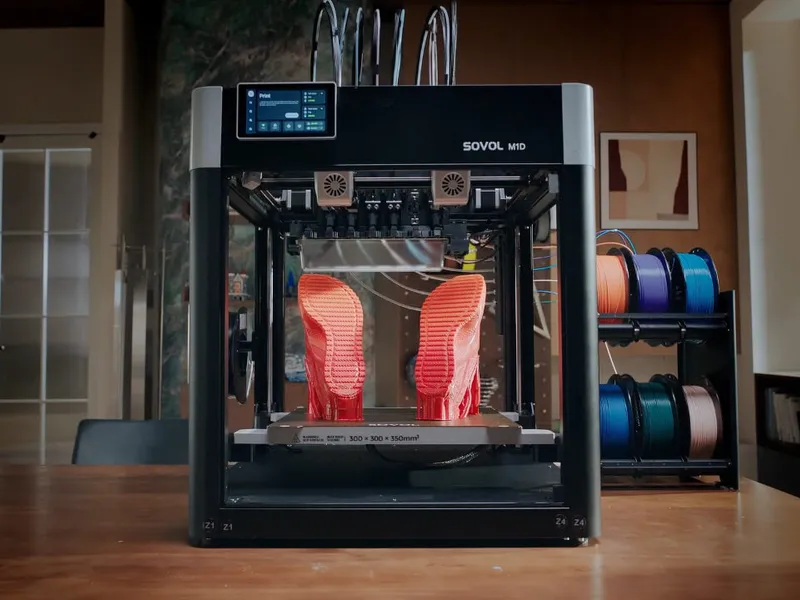
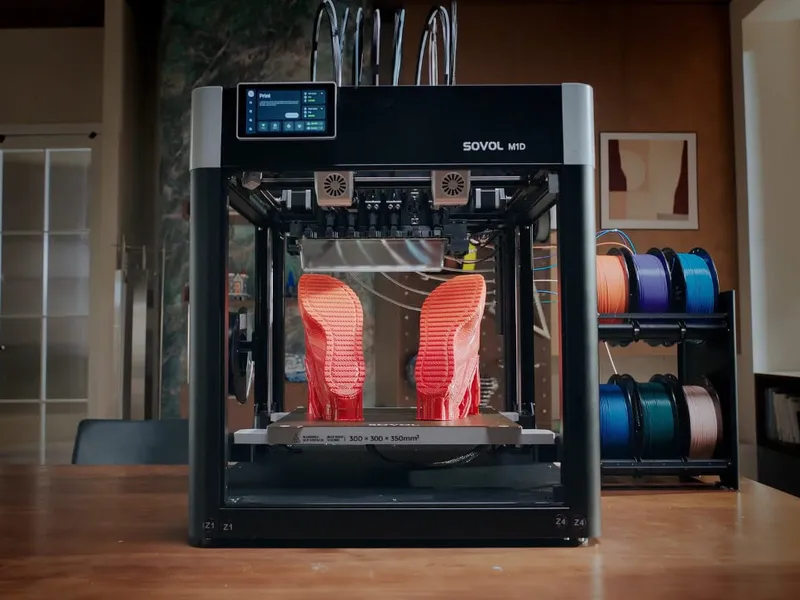
Shenzhen's Sovol launched the M1D on July 24, 2026, combining Independent Dual Extruder (IDEX) with a tool changer — its "DualX System" pairs one fixed extruder with six swappable toolheads for up to seven colors or materials in a single print, build volume 300×300×350 mm, toolhead swaps under 5 seconds, and claimed material-waste cuts of more than 90% versus single-nozzle systems like Bamboo Lab's AMS. The Kickstarter (launched July 28) had raised over US$3 million from close to 2,000 backers as of August 1. Super Early Bird pricing is US$1,299 (Essential) / US$1,599 (Advanced, heated chamber to 60°C); deliveries begin November 2026.
via AM Insight Asia · Kickstarter
2. Minimal Phone 2 — QWERTY anti-distraction Android, US$599 early bird
Los Angeles-based The Minimal Company is crowdfunding the Minimal Phone 2 on Kickstarter: a 9.78 mm metal-body smartphone with a 4-inch 90 Hz AMOLED touchscreen above a full backlit QWERTY keyboard, MediaTek Dimensity 8300, 3,000 mAh battery with 27 W wired + wireless charging, and a 50 MP rear camera. The campaign had raised over US$850,000; early-bird pricing is US$599 for 8 GB/256 GB (with a ~US$100 accessory pack), retail US$699, and an Ember limited edition adds 12 GB. Global shipping is targeted for December 2026.

3. URXR One — 93 g Micro OLED XR glasses on Kickstarter
Unseen Reality opened Kickstarter backing for the URXR One on August 4, 2026 — lightweight (93 g) XR glasses using dual 1.03-inch Micro OLED displays (2,448×2,064 per eye, 90° FOV, 90 Hz) with Mini Pancake optics and video see-through under 10 ms latency. The body carries no battery or compute; a connected device powers it, with an optional Power Hub. Early-bird price is US$699, standard crowdfunding US$799, retail US$899; shipping is planned for Fall 2026. Three virtual screens around a laptop make it a spatial-workstation play rather than a VR headset.

4. Foil Dash — waist-belt foil assist moves the battery off the board
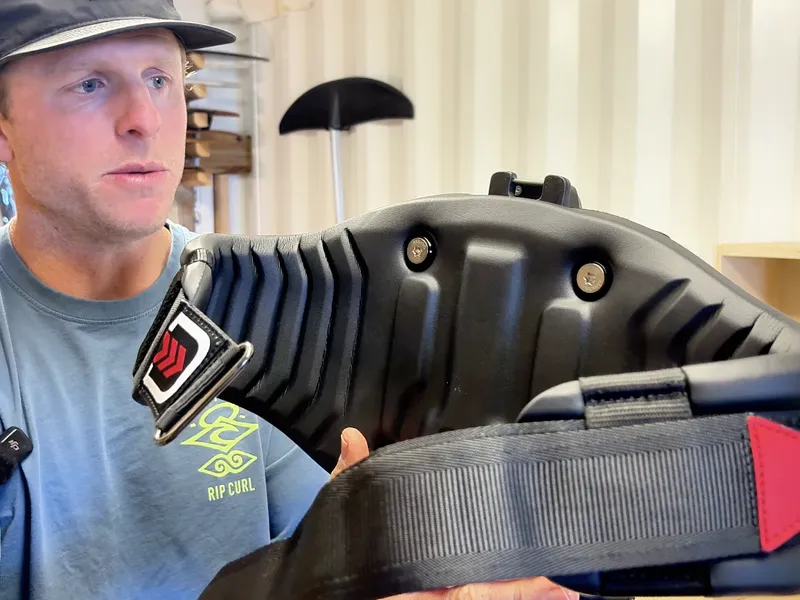
Foil Dash enters the foil-assist market with a novel waist-belt design: the heavy battery enclosure rides on the rider's body instead of the board, removing swing weight so the board keeps its light, responsive feel for prone surfing and dock pumping. A first-look review by Fluke Kitesurfing (July 20, 2026) praises robust saltwater build quality and highly sensitive throttle response, while noting the tethered cable from mast to waist is a new variable to manage on a first-generation product. Price was not disclosed at review time.
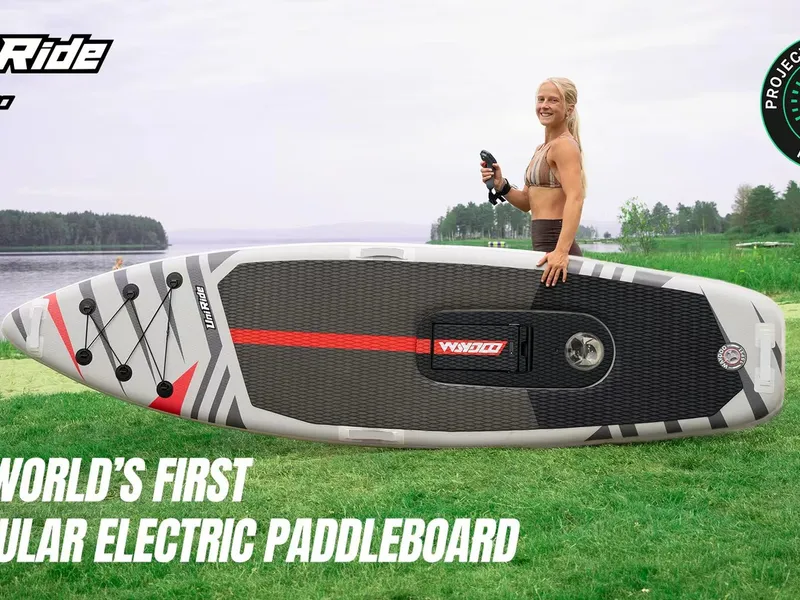
5. Waydoo UniRide — one modular power core, five ride modes
Waydoo's UniRide is a modular electric ecosystem built around a single quick-swap "UniRide Core" (motor + battery + controller) that clicks into five boards: eSUP, DUO-eSUP, Explore eSUP, eFoil and eKayak, up to 30 km/h. A transparent hatch, single-handed battery lock and smart remote aim it at beginner-friendly coastal cruising through to eFoil flight. Waydoo bills itself as the "#1 Most Funded Watersports Brand on Kickstarter," positioning UniRide as a one-core-many-adventures play for water-sports retailers.
Sourcing Platforms & Tools
1. Suplari — procurement intelligence built for "messy" AI-ready data
Suplari (acquired by Microsoft in 2021, operating as an independent AI procurement platform) connects ERPs, P2P, contracts and risk systems, then automatically cleans, classifies and enriches fragmented spend data so procurement-specific AI agents can be trusted. Its "Suplari Worker" deploys agents that monitor spend, detect anomalies and execute workflows with or without human approval, while "Suplari Assistant" answers procurement questions in plain language grounded in your data. The pitch to buyers: turn fragmented data into provable P&L impact without a massive upfront cleanup.
2. Zip — AI procurement orchestration, US$9B saved across US$500B processed
Zip positions itself as the connective tissue across an organization's spend lifecycle — sitting above ERP/CLM/GRC with a single "front door" for purchase requests and 50+ procurement-specific AI agents that validate supplier info, flag non-standard legal terms and check compliance in real time. Enterprise teams using Zip have collectively saved over US$9 billion and processed more than US$500 billion in spend, with 200+ integrations; it was named a Visionary in the 2026 Gartner Magic Quadrant for Source-to-Pay Suites — the only AI procurement orchestration platform in the analysis. OpenAI used Zip's agents to cut intake data validation from 15–20 minutes per request to seconds.
via Zip — What is procurement orchestration?
3. YiwuSell — one-stop Yiwu sourcing agent for 75,000 booths / 2.1M SKUs
Yiwu Market is the world's largest small-commodity wholesale base: more than 75,000 permanent booths, over 2.1 million distinct SKUs, and exports to 210+ countries and regions, organized into six districts (festive/toys, hardware/electrical, stationery/beauty/sports, bags/shoes/textiles, household/kitchen, and imported goods). YiwuSell argues a local agent is essential to cut through language barriers, hidden MOQs and consolidation/logistics — offering supplier screening, price negotiation, QC, cargo consolidation and door-to-door global shipping. A practical entry point for buyers who cannot walk all six districts themselves.
4. TonySourcing — 15 years boots-on-the-ground for toys & DIY from China
With offices and warehouses in both Yiwu and Shantou's Chenghai District (the "Toy Capital of the World"), TonySourcing sources, verifies and consolidates across both hubs. Its framework stresses three buyer protections: on-site factory audits, multi-supplier consolidation into one container, and strict NNN (Non-use, Non-disclosure, Non-circumvention) agreements to protect proprietary designs, plus pre-shipment inspections before the final balance is paid. A Denmark-based CEO client summarizes the value plainly.
Industry Trends
1. Hi-Tech Fair procurement list hits 1,009 requests — "smart upgrades" lead
The 28th China Hi-Tech Fair's consumer-electronics procurement demand has reached 1,009 requests (376 new this batch), with two clear trends: "smart upgrades" and "scenario segmentation." Demand has moved from finished products to upstream components — AI chips, sensors, display panels, power management, MCUs, SiC devices, flexible displays and smart-voice modules — spanning smartphones, AI hardware, wearables, smart home and 3C accessories. For component buyers, the signal is a shift from box-sourcing to spec- and module-sourcing.
2. Asia consumer-electronics expos show buyers going direct to source factories
Coverage of the 2026 Asia Consumer Electronics Expo (Beijing, June 10–12) frames four trends: stock-market segmentation, overseas growth, AI breakthroughs, and shorter trade-model cycles. A notable shift — over a dozen professional buying delegations from Japan/Korea, Southeast Asia and the Middle East arrived with standardized purchase lists and closed-door matchmaking, increasingly bypassing multilayer distributors to link directly with source factories. Middle East buyers favor high-end custom digital and immersive AV; Southeast Asia wants cost-effective smart hardware; Japan/Korea demand precision components.
3. 2026 electronics sourcing: Edge AI, Digital Product Passports and "micro-factories"
Accio's 2026 buyer guide argues China still makes 40%+ of global electronics, but the value proposition has moved from cheap labor to agility and innovation — with three defining trends. Edge AI: almost every device now ships with dedicated AI processing. Green/circularity: EU and North American "Digital Product Passport" rules push recycled aluminum, bio-based plastics and modular repair-friendly designs. Micro-factories: highly automated low-volume/high-variety lines in Shenzhen let startups clear low MOQs. Net for buyers: source not just hardware but AI-capable, compliant, low-MOQ supply.
Payments & Trade Finance
1. B2B stablecoin settlement: US$13.4B in 2026, projected US$5T by 2035
Payfuture's 2026 briefing sizes cross-border B2B stablecoin transactions at US$13.4 billion this year, with Juniper Research projecting growth to US$5 trillion by 2035. Adoption is led by the GCC→SEA corridor (Turkish suppliers settling in USDC to dodge lira depreciation), and normalization is coming from ERP integration — SAP S/4HANA and NetSuite now support blockchain settlement alongside traditional rails, while BNY Mellon and State Street provide institutional custody for USDC and RLUSD. A worked example: 8,000 monthly invoices at 5% wire cost (US$480K/yr) drops to US$46K via USDC at 0.8%.
2. Paybis: 22.5% of businesses use or plan stablecoins for cross-border pay
At Money20/20 Europe, Paybis reported that 22.5% of surveyed businesses already use or plan to use stablecoins for cross-border payments within 12 months, and that B2B clients drove 97.8% of its stablecoin volume from January–April 2026 (total volume reached US$2.81 billion in May 2026, up 135% YoY). Stablecoins made up 86% of Paybis crypto volume in April 2026 versus 12% in July 2023 — a clear move from retail trading to business infrastructure. The catch: 53% of respondents expected "instant" settlement while 47% expected 1 hour–1 day, a knowledge gap the firm says is slowing adoption.
3. SAP and Maersk pilot stablecoin rails for supplier and port payments
SAP announced in early 2026 that its B2B payments platform would integrate stablecoin settlement, letting businesses pay suppliers directly in USDC or USDT — significant because SAP touches 80%+ of global B2B transactions in some capacity. In logistics, Maersk and other carriers have begun testing stablecoin-based payments for port fees, customs duties and freight charges, where instant settlement (versus multi-day bank transfers) can release cargo faster and cut supply-chain bottlenecks. The WEF has estimated blockchain settlement could cut global trade-finance costs by up to 30%.
Buyer Voices & Insights
1. "A single red flag overrides your average score" — the 2026 AI-vendor governance rule
Silk Data's enterprise buyer guide urges scoring AI vendors across six governance dimensions — transparency, bias/fairness, privacy/security, accountability, regulatory compliance and lock-in — where any one fatal flaw overrides a good mean. With EU AI Act Article 26 (deployer duties: human oversight, monitoring, log retention) now live, buyers are writing compliance roadmaps and open-format data-export/exit clauses into contracts. The discipline: run evaluation as a 90-day operating cadence with a named owner per category, not a one-off questionnaire.
"We score vendors across six governance dimensions, and a single red flag overrides your average score." — Enterprise AI buyer (via Silk Data)
2. "From 15–20 minutes per request to seconds" — AI agents enter procurement
Enterprise procurement teams are no longer asking whether to use AI agents but what guardrails to require: audit trails, human-in-the-loop approval, and EU AI Act alignment. The concrete proof point is speed — OpenAI used Zip's AI agents for intake data validation, cutting manual verification from 15–20 minutes per request to seconds, while Cribl used them for price-negotiation support, leveraging historical benchmarks for 12–15% savings per request. The buyer takeaway: require explainable, traceable agents, not black boxes.
"Purpose-built AI agents can pull the vendor's security certifications from an email, cross-reference existing contracts, validate tax info, and flag non-standard terms — all before a human reviewer opens the request." — Enterprise procurement practitioner
via Zip — procurement orchestration
3. "We've worked with them 5 to 6 years and are very satisfied" — a Denmark CEO on sourcing agents
A Denmark-based CEO quoted by TonySourcing sums up why experienced importers keep a local China partner: on-the-ground verification, consolidation and pre-shipment inspection remove the three failure modes of remote factory management — misread pricing vs. compliance, the "telephone game" of spec drift, and skipped QC. For toy and DIY buyers especially, a NNN-backed agent turns a risky container into a managed, multi-year supply chain.
"We've been working with TonySourcing for 5 to 6 years now, and we are very, very satisfied… They help us a lot to avoid a lot of common mistakes." — Rasmus, CEO (Denmark)