Weekly (Issue 3): Freight Breaks $10K as Q4 Sourcing Clock Runs Out
This week: Tariffs move from policy to practice: a 100% Section 232 drone tariff takes effect on Sept 3, Canada readies dollar-for-dollar retaliation for Sept 8, and a 216% Chinese bedroom furniture antidumping rate locks in after sunset review. Transpacific spot rates hold above US$10,000/FEU on the USEC as Typhoon Saudel disruption layers onto structural Panama Canal cuts; China's factory PMI holds at 51.5 with the first 2026 output-price cut. Korea ships its first stablecoin-to-won export settlement, and three new crowdfunding launches clear their goals in days, not weeks.
Trade Policy & Tariffs
UAS Section 232 takes effect Sept 3 — 100% on heavy drones, 25% on smaller models and components
The White House's August 13 Section 232 proclamation on unmanned aircraft systems (UAS) is now in force. Importers of drones above 25 kg, thermal-imaging drones, docking stations and the components listed in Annex I face a 100% ad valorem duty on entries at or after 12:01 a.m. ET on September 3. Drones at or under 25 kg (Annex II) and the additional UAS components in Annex III sit at 25%, with Annex III deferred to February 9, 2027. Products from Japan, South Korea, Taiwan, Switzerland, Liechtenstein and EU member states are capped at 15% (UK at 10%) if importers certify that critical components originate from those jurisdictions or the United States. Commerce is also authorised to run an onshoring programme that waives Section 232 duties for approved new US UAS factories that begin construction before January 20, 2029.
Drone buyers should expect the 100% rate to apply to most current generation commercial UAS; the 15% partner cap is the only realistic cost path for non-Chinese supply.
- Canada's dollar-for-dollar retaliation lands Sept 8 — 874 tariff items across steel, dairy, appliances and electronics
US Section 338 tariffs of 50% on roughly US$20 billion of Canadian goods took effect at 12:01 a.m. ET on August 22 after three days of talks collapsed in Washington. Prime Minister Carney suspended bilateral negotiations and announced Canada will impose reciprocal tariffs on 874 US tariff items (more than 700 products) at rates of 15%, 25% and 50%, effective September 8, 2026. Canada also unveiled a C$7.5 billion support package for affected businesses and workers on August 25. Energy, potash, fish and critical minerals are excluded from the US measures; CUSMA/USMCA-compliant goods no longer enjoy an exemption. Sourcing teams with cross-border US–Canada flows should assume at least a six-week disruption window.
"Canada will retaliate 'dollar for dollar' effective September 8, 2026 across 874 tariff items." — Canada retaliatory schedule, August 25, 2026
- 216.01% antidumping rate locked in on Chinese wooden bedroom furniture
The US Department of Commerce published its sunset review final on August 12, 2026: 11 Chinese companies under review failed to demonstrate eligibility for individual rates and were treated as the China-wide entity at the existing 216.01% antidumping duty on wooden bedroom furniture. Wooden bedroom furniture already sits inside the False Claims Act radar — University Loft Company filed suit in the Western District of Texas alleging that competitors misclassified Chinese bedroom furniture as non-bedroom furniture to escape the order, with treble damages and penalties available.
Antidumping rates are not rounding errors. Chinese wooden bedroom furniture carries a 216 percent antidumping duty; the welded pipe fittings in Island Industries v. Sigma Corp. carried 182.9 percent. Evasion does not improve a margin — it manufactures one out of nothing.
- 25-state coalition sues to vacate the forced-labor Section 301 tariffs (10–12.5%, effective July 24)
A coalition of 25 Democratic-led states filed suit on August 4, 2026 in the US Court of International Trade challenging the 10–12.5% Section 301 tariffs imposed on 60 trading partners on July 24. The states argue the President exceeded authority under Section 302(b) of the Trade Act of 1974. The Liberty Justice Center filed a parallel challenge in July. Section 301 is viewed as more durable than the IEEPA and Section 122 tariffs it replaced, but the post-IEEPA judicial environment leaves room for a preliminary injunction. Buyers that have paid the 301 rate since July 24 should track refund mechanics in case the lawsuit succeeds.
Supply Chain & Logistics
- USEC spot breaks US$10,000/FEU as Typhoon Saudel layers onto port congestion and Panama Canal cuts
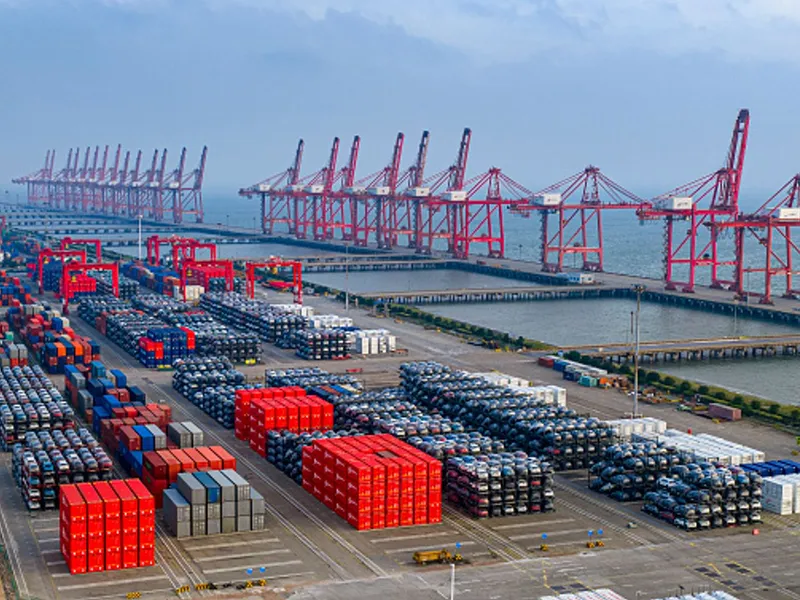
The SCFI rose 2.9% to 3,509.53 points on August 28, the fifth consecutive weekly gain; USEC climbed 3.57% to US$10,046/FEU, USWC rose 2.59% to US$6,940/FEU, and Asia–Europe fell 4.43% to US$2,716/TEU. Platts had the Platts Container Index at US$7,565/FEU on August 21, up 67% from the June 1 high of US$4,512, and Asia–USEC at US$11,000/FEU. Linerlytica estimates 4.3 million TEU — 12.6% of the global fleet — waiting at berth worldwide, exceeding the 4.0 million TEU peak recorded during the pandemic in 2022 in absolute terms.
- Panama Canal cuts September slots; Neopanamax auction slot hit US$4.6M
The Panama Canal Authority is reducing daily transits from a normal average of 34 to just nine Neopanamax slots and 25 Panamax slots from September. One carrier reportedly paid US$4.6 million for a single auction slot — up from a pre-war average of US$140,000. Eastbound transits are now seeing delays of up to 10 days, and carriers have announced Panama Canal surcharges of US$200 to US$1,000 per FEU starting in September. Shippers that built 2026 cost models around a "Cape routing buffer" should re-cut East Coast transit-time planning; Asia–USEC routings now routinely take 35–45 days.
- Asia-Europe bucks the surge — sixth consecutive weekly decline on falling demand
Drewry's World Container Index ticked up 4% to US$4,526 per 40-foot container for the week of August 17–21, but Asia–Europe routes dropped for the sixth consecutive week. Shanghai–Rotterdam fell 1% to US$4,401/FEU and Shanghai–Genoa fell 2% to US$4,955/FEU, with Freightos putting Asia–Northern Europe at US$5,034 — down more than US$1,000 from July peaks. Linerlytica called this the sixth straight weekly decline for European trades, blaming demand rather than capacity. Asia-Europe importers can hold or push on long-term contract negotiations; transpacific and Middle East lanes cannot.
"Suddenly there is no room on the ship, because there are plenty of other customers willing to ship at the spot price." — Peter Sand, Chief Analyst at Xeneta, on contract customers losing space to higher-paying spot cargo
Factory & Manufacturing
- China factory PMI rises to 51.5 in August — fastest output in three months, but factories cut selling prices for the first time in 2026
The RatingDog China General Manufacturing PMI climbed to 51.5 in August from 50.9 in July, beating the Reuters consensus of 51.0 and marking the ninth consecutive month above 50. Output rose at the fastest pace in three months, new orders expanded for a fifteenth straight month (longest since 2018), and new export business rose at the sharpest pace in six months. Employment was unchanged. Manufacturers cut their own selling prices for the first time in 2026, citing intense competition and promotional discounting. Cost pressures accelerated for the first time since April (metals and oil). Business confidence in the 12-month outlook slipped to its weakest level since January.

"The current upturn is the longest in five years … but the first cut to output prices in 2026 reflected ongoing competitive pressure even as demand, output and exports all accelerated." — RatingDog release, September 1, 2026
- Hua Hong commits US$2 billion to a third Wuxi fab — 55,000 wafers/month of 12-inch specialty capacity
Hua Hong Grace, China's second-largest contract chipmaker, disclosed in a Hong Kong Stock Exchange filing that it and its Shanghai subsidiary will put US$1 billion and US$1.1 billion respectively into a new 12-inch specialty-process line in Wuxi — its third fab in the city. State-backed vehicles including the Hua Xin Fund (a channel of China's National Integrated Circuit Industry Investment Fund) supply the balance, taking total project funding to US$4.2 billion; Hua Hong keeps a controlling 51%. Once fully operational the plant adds 55,000 wafers per month, roughly a 30% increase in its Wuxi capacity. The company is running existing lines above full utilisation, so the expansion is aimed squarely at power management, embedded memory and MCU capacity — the chips that gate consumer electronics, automotive and industrial assemblies.
Specialty-node capacity is the constraint buyers actually feel: relief here eases lead times on PMIC, MCU and embedded-memory content far more than any leading-edge announcement.
New Products & Sourcing Ideas
- ViewX Liber 15.6" & Immer 27" — glasses-free Spatial AI 3D monitors clear 1,000% of goal in 30 minutes on Kickstarter
ViewX's glasses-free spatial AI 3D displays hit 1,000% of their Kickstarter funding goal inside the first 30 minutes of launch on August 26, and stood at 1,880% funded within hours. The 15.6-inch Liber and 27-inch Immer combine 4K UHD panels, high-speed eye tracking, AI-powered 2D-to-3D conversion and on-display 3D processing. The ecosystem already supports 100+ games via SpatialGateway, DepthTransformer and 3D Playground, and is developed in collaboration with Tencent Games. Early-bird rewards are open now, with retail pricing expected to follow.

ViewX Liber & Immer on Kickstarter
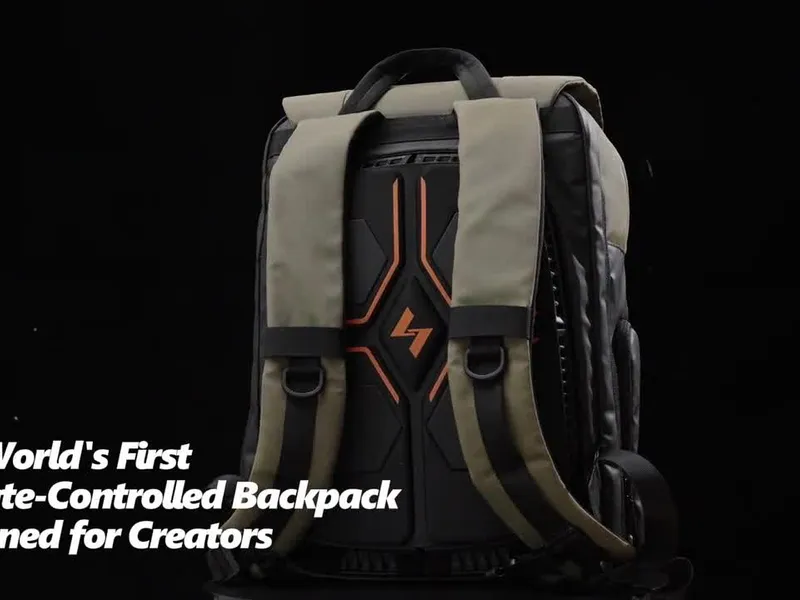
- PackThera — the world's first AI temperature-controlled camera backpack (103% funded, 5 days left)
PackThera's modular camera backpack with active AI-powered thermal management has cleared 103% of its Kickstarter goal with a week still to run. The system reads body temperature and ambient conditions in real time and delivers heating or cooling to the wearer's back panel in under one second — designed to solve body-temperature management during long outdoor and travel shoots. The pack is fully waterproof, modular for any camera kit, and ships with an extended battery rated for full shooting days.
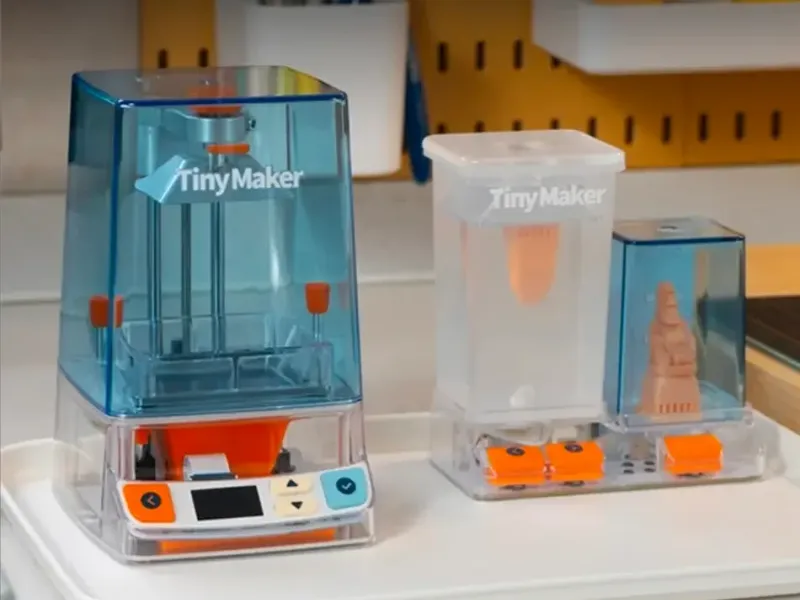
- TinyMaker — palm-sized, 6 W, open-source resin printer on Indiegogo ($129, 5,763 backers across 60+ countries)
TinyMaker folds into a purpose-built Go Bag, draws only 6 W (5 W while printing) and runs from a power bank — small and low-power enough to bring to events. The open-source platform uses a gasketed, leak-resistant resin tank cover and a metal build plate that levels from a single screw. Two of three production batches are already delivered or shipped; Batch 3 remains in production with no committed ship date as of August 2026.
Sourcing Platforms & Tools
- Alibaba's Accio Work launches Business edition — agent-to-agent sourcing goes mainstream
Alibaba International Station held an Accio Work Business launch in Hong Kong in late July / early August 2026, upgrading Accio from a buyer-side sourcing assistant into a "global AI e-commerce workbench" that covers Alibaba.com, 1688, Amazon, Shopify, Lazada and TikTok Shop in one interface. The platform runs daily version updates (100+ iterations in roughly 120 days), cut per-query credit usage by 50% in 12 months, and grew daily token consumption 10x. Alibaba says Accio Agent can automate roughly 70% of the manual tasks in a typical small-business procurement workflow, with buyer-side and seller-side agents now able to handle the first 80% of routine interactions before handing off to humans.
"B2B will eventually move from H2H (Human-to-Human) to A2A (Agent-to-Agent). The first 80% of front-end communication and data exchange will be completed automatically between agents; humans only need to make decisions at the last 20% of the key nodes." — Yang Yuan, Alibaba International, August 2026
- Coupa ships 250+ new features for September 2026 — autonomous sourcing events and Navi-guided supplier onboarding cut cycle times up to 40%
Coupa's September 2026 release — its largest to date — ships 250+ features built around Navi agents, with autonomous sourcing-event creation and Navi-guided supplier onboarding as the headline items. Fully automated intake-to-award flows target roughly an 80% cycle-time reduction; across the 450+ customers already running Navi in production, Coupa reports up to 40% shorter sourcing cycles and up to 50% shorter requisition cycles. A new Spend Pulse module correlates US Bureau of Labor Statistics inflation data against enterprise spend, and Navi Connect exposes 30+ spend tools over Model Context Protocol to external agents such as Microsoft Copilot. SAP Ariba, GEP SMART, Zycus (Merlin AI), Globality and Fairmarkit (Total Agentic Sourcing) are pushing comparable agentic-sourcing releases in the same window.
- ZG Group × Tencent WorkBuddy launches NextB2B — first B2B AI Agent stack built on WorkBuddy
Hong Kong-listed ZG Group (6676.HK) announced NextB2B on September 2, 2026 — the first B2B end-to-end AI Agent solution built on Tencent's WorkBuddy. NextB2B ships four enterprise agent modules (procurement, sales, inside sales, operations) covering supplier matching, RFQ handling, counterparty risk monitoring, order/AR/AP follow-up, and automated daily reporting. The roadmap includes native A2A (agent-to-agent) transaction capabilities.
- 140th Canton Fair runs Oct 15 – Nov 4 in three category-specific phases
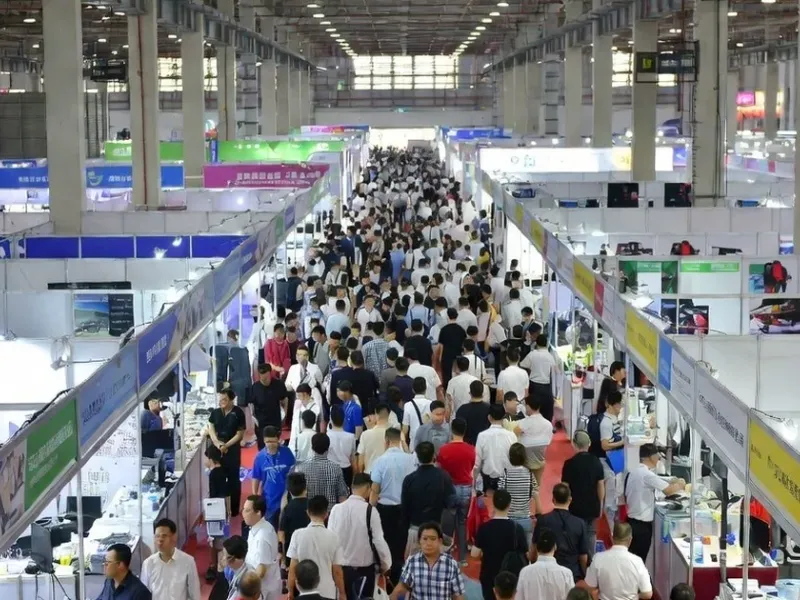
The Canton Fair Autumn 2026 session (the 140th edition) will run from October 15 to November 4 at the Canton Fair Complex in Guangzhou, split into three five-day phases by category. Phase 1 (Oct 15–19) covers advanced manufacturing, electronics, vehicles, lighting, machinery and tools. Phase 2 (Oct 23–27) covers homeware, gifts, ceramics and building materials. Phase 3 (Oct 31–Nov 4) covers apparel, textiles, footwear, toys and medical devices. Recent editions have drawn more than 200,000 overseas buyers.
Industry Trends
- Q4 sourcing math — today is the deadline for ocean-freight Q4 inventory, not October
For a standard consumer-electronics product sourced from China and sold in the US/EU, the minimum realistic timeline is 16–20 weeks. Working backwards from November 1 (the date inventory needs to be live for early Black Friday promotions), sixteen weeks lands in early July and twenty weeks in mid-June. August 10 is the hard deadline for placing a production order if you want ocean freight from China to a US/EU Amazon FBA center in time. As of this week, September buyers are limited to air freight on high-margin units, US-domestic supply, or existing inventory. Q4 2027 orders for ocean freight should now be locked.
- Global consumer-tech demand flattens in 2026 — small domestic appliances and Eastern Europe lead the growth
The global consumer-tech and durable-goods market is projected to be roughly flat in 2026 (-0.4% YoY) after a +3% 2025, reaching US$1.3 trillion, with growth led by Small Domestic Appliances (SDA) and IT while Telecom and Consumer Electronics soften. Regionally, Eastern Europe (+5%), Western Europe (+3%) and MEA (+3%) lead, North America stays flat, and Asia-Pacific declines (-3%, with China at -5%). Demand for smart air purifiers, steam cleaning, air fryers, diagnostic personal care, AI-integrated smart-home and domestic robots is strengthening.
- AIMRA–Techarc survey: 61% of Indian mobile retailers sold fewer handsets in H1, and 47% expect the festive season to get worse
The joint AIMRA–Techarc Retailer Pulse 2026 study — 1,126 verified retailer responses across 22 states — finds 61.3% of retailers sold fewer handsets in H1 2026 than a year earlier, while 43.7% still grew turnover: higher prices are masking lower volumes. Half of respondents are worried about the July–December festive window, 47.4% expect further sales declines, and 80.9% say the ₹10,001–30,000 band will take the hardest hit. 14% fear they may not survive to December. AIMRA is asking New Delhi for a GST cut on handsets and lower import duties on memory and components, plus wider no-cost EMI coverage from brands. For buyers sourcing India-bound or India-made electronics, the affordability squeeze is now a demand-side risk, not just a pricing story.
Payments & Trade Finance
- BDACS × Chungoose wire stablecoin-to-won settlement for Korean exporters (Aug 27)
Korea's BDACS (digital-asset custody) signed with Chungoose (DevAll Co., the operator of Chungoose B2B invoicing/collections automation) on August 27 to build a stablecoin-based B2B payment system for Korean exporters. The flow: an exporter sends an invoice to an overseas buyer through Chungoose, the buyer pays in USDT or USDC, BDACS holds custody and settles, and the exporter receives Korean won — without ever holding digital assets themselves. The companies plan to integrate the payment data with corporate ERP systems to automate accounting, and to extend the system using BDACS's won-pegged "KRW1" stablecoin. Korean FX and tax reporting frameworks remain the gating items before broad rollout.

- OpenPayd joins the Circle Payments Network — fiat in, stablecoin under the hood, fiat out
OpenPayd integrated with the Circle Payments Network on August 31, 2026. Businesses send and receive conventional currencies (euros, pounds, dollars) through OpenPayd's existing accounts; Circle's USDC and EURC settle cross-border in the background; recipients receive local fiat through their existing banking rails. Euro-to-Brazilian-real and pound-to-Mexican-peso corridors are live, with some routes settling in seconds. Circle does not take custody or become a counterparty on CPN — it provides the coordination and settlement layer. For corporate treasuries, the appeal is faster cross-border settlement without rebuilding internal blockchain infrastructure.
Buyer Voices & Insights
- "My cargo is only worth US$8,000, but the freight is US$12,000." — freight forwarder quoted in AE Global SCM on the Asia-Middle East spot market
- "A supplier's online profile is not proof of production ownership or capacity." — Dark Horse Sourcing, 2026 Amazon FBA sourcing guide
- "Rising memory and component costs are pushing phone prices beyond what our customers can afford." — Kailash Lakhyani, Founding Chairman, All India Mobile Retailers Association (AIMRA)