Weekly (Issue 4): Golden Week Meets $11K Freight as Memory Costs Bite Holiday Sourcing
This week: Transpacific spot rates break US$10,000/FEU for a sixth straight weekly gain while North American peak-season inventory deadlines collide with China's compressed Mid-Autumn / Golden Week production window; tariff front-loaders face a new 12.5% Section 301 floor and Canada's reciprocal list landing September 8; memory-driven handset costs, an industry separator-overcapacity warning and a 21-bank dollar stablecoin round out the week.
Trade Policy & Tariffs
1. Canada's reciprocal tariffs land September 8 — 15%, 25% and 50% rates on C$27.6 billion of US goods
Ottawa activated matching counter-tariffs at 12:01 a.m. ET on September 8, 2026, after Washington imposed 50% Section 338 tariffs on C$20 billion of Canadian-origin goods on August 22. The Canadian list spans steel and aluminum, dairy, appliances, agricultural equipment, pulp and paper, plastics, electronics, furniture, clothing, fish and seafood, and selected derivative products; rate depends on the tariff item. A federal C$7.5 billion support package backs affected workers and businesses. For US exporters and Canadian importers, this is now a paperwork problem: classification, country-of-origin and shipment date each determine whether the goods are in scope, and the remission process is reserved for "exceptional and compelling" cases rather than general frustration.
2. USTR issues Section 301 exclusion conforming amendments (Sept 2); CBP ACE HSU 2621 already in production
USTR published Federal Register conforming amendments on September 2 to four Section 301 product exclusions covering Chinese goods, retroactively to the July 1 USITC HTSUS reclassification effective date. Separately, CBP released ACE Harmonized System Update 2621 on August 22 (CSMS 69726413 published September 1) with 13 harmonized tariff records and 54 ABI records, including the Section 338 updates and an AES country-code change — Nauru is now officially the "Republic of Naoero" under a constitutional amendment. For buyers, the practical message is the same as last issue: re-verify that HTS classifications on entries and binding rulings still map to the revised exclusion language before the next shipment lands, or face unexpected Section 301 exposure.
3. Global-E's running tracker: 10% and 12.5% Section 301 floors now the baseline, Brazil at 37.5%
The direct-to-consumer cross-border compliance feed was last updated September 8 and is now anchored to the July 24 Section 301 forced-labor regime that replaced the expired 10% Section 122 tariffs. The de minimis suspension remains in effect. A flat 10% Section 301 tariff applies to Argentina, Bangladesh, Cambodia, Canada, Ecuador, El Salvador, Guatemala, Honduras, India, Indonesia, Jordan, Malaysia, Mexico, Pakistan, Philippines, Sri Lanka, Trinidad & Tobago, the United Kingdom and Vietnam; a flat 12.5% applies to China, Hong Kong, Japan, South Korea, Switzerland and a long list of other partners. Brazil sits on a stacked 12.5% + 25% = 37.5% total. EU and Taiwan products get a special treatment that caps the total duty at 10% for their lower-tariff items. USMCA-qualifying goods remain exempt.
Supply Chain & Logistics
1. Global on-time performance collapses 6.1pp in July — the worst monthly drop since January 2021
Sea-Intelligence's July 2026 data puts global container vessel schedule reliability at 56.4%, down 6.1 percentage points month-on-month, and the average delay for late vessels at 6.06 days (+0.59 days). All 14 of Asia's busiest ports saw on-time arrivals decline. Yantian took the steepest hit at 48.3% (-23.5pp), Hong Kong 51.6% (-20.4pp), Ningbo 34.6% (-20.1pp) and Singapore 43.2% (-5.7pp). Shanghai's 21.0% on-time figure is the lowest non-pandemic reading in 14 years of recorded data. The reliability drop is being driven by typhoon-disrupted turnarounds at Shanghai and Ningbo and a third named Pacific hurricane forming in parallel.
2. Transpacific breaks US$10K/FEU for the sixth straight weekly gain; Asia–Europe slides
Drewry's World Container Index for the week of September 3 saw Shanghai–Los Angeles up 5% to US$7,185/FEU and Shanghai–New York up 3% to US$9,587/FEU — the NY leg is now almost triple the US$3,677 reading from a year ago. The SCFI closed at 3,590.05 points on September 4 (+2.29%, sixth straight weekly gain), with spot transpacific quotes touching US$7,800–$8,000/FEU west coast and US$10,000–$11,000/FEU east coast as 1 September GRIs added US$300–$500 per box. The Freightos Baltic Index (FBX) Global fell 2% to US$3,520 and Drewry's WCI held broadly flat at US$4,465, masking a sharp Asia–Europe split: Shanghai–Rotterdam dropped 5% to US$4,092, Shanghai–Genoa 10% to US$4,368, and unsubsidised spot offers for China–Felixstowe were reported as low as US$2,799/40ft. Drewry is now tracking six additional blanked sailings on the transpacific for the following week — twice this week's count.
3. Peak-season shipment window closes late September to early October for Black Friday and holiday inventory
Freight Right's TFX update for the week of August 31 confirms that China-to-USWC spot moved into a US$7,000–$8,000/FEU band with China-to-USEC holding US$10,000–$11,000/FEU, supported by 9% week-on-week west coast volume growth and 3% east coast growth. Ocean carriers are running targeted blank sailings, modifying rotations and pulling capacity from select lanes to defend pricing power, while sustained consumer and e-commerce demand keeps pressure on the system. The actionable message for buyers is sharp: retailers and Amazon merchants are accelerating cargo to meet "mandatory early-to-mid-October fulfillment center delivery deadlines" for Black Friday and Q4 holiday stock — meaning ocean orders placed after late September will not land in time.
Factory & Manufacturing
1. China anode material output hits a fresh August high — but the graphitisation bottleneck keeps effective supply tight
SMM reports that China's anode material production reached 369,000 metric tons in August 2026, a new high for the period, on the back of front-loaded September–October peak-season orders from NEV and ESS cell makers and a consumption-tax pull-forward. Spot circulation remains tight and the industry continues a destocking trend because graphitisation capacity — the high-temperature treatment step that determines effective finished anode output — is still the binding constraint. September production is expected to climb further from the August base, but new effective graphitisation capacity is unlikely to come online in concentrated fashion in the short term, and petroleum coke / needle coke feedstock costs plus elevated graphitisation tolling fees are keeping margins tight. For battery and EV/ESS sourcing teams the read-across is direct: anode prices will hold their premium while the structural bottleneck persists.
2. Only three working days separate China's Mid-Autumn Festival and Golden Week — Q4 production math is now
Mid-Autumn Festival runs September 25–27 and National Day Golden Week October 1–7, leaving just September 28, 29 and 30 as regular working days between the two national holidays. ColliCare's Golden Week advisory warns that many factory employees, truck drivers, warehouse staff and office workers will use annual leave to bridge them, extending the practical slowdown from late September into mid-October. Confirmed supplier closure dates should be in hand, pre-production approvals locked at least three weeks before Mid-Autumn, greige goods pre-positioned and first-out shipping slots booked now, and freight booked three to four weeks before departure. The rule of thumb for B2B buyers is to plan for 3–5 additional weeks of total lead time across the two holidays and a 15–20% buffer on top of the factory's quoted lead time.
New Products & Sourcing Ideas
1. SonicMax Slice 10 — cordless ultrasonic cutter for makers and 3D-printing clean-up, 28x funded on Kickstarter

The Slice 10 is funding now on Kickstarter through September 10, 2026, with more than US$143,000 pledged from 1,000+ backers against a US$5,000 goal — a 28x multiple. Priced at US$149 on Kickstarter versus a planned US$215 retail, the device cuts fabrics, foams, composites and 3D-print supports with a vibrating blade that produces cleaner edges and significantly less debris than a rotary tool, with a cordless form factor aimed at craft, cosplay, model-making and post-processing use. For sourcing buyers, the product class is relevant: ultrasonic cutter accessories and 3D-printing post-processing tooling are a niche but high-margin category with growing interest from maker-channel retailers.
2. Violoop by BVIO — AI agent that drives your computer for you, US$399 on Kickstarter from September 15
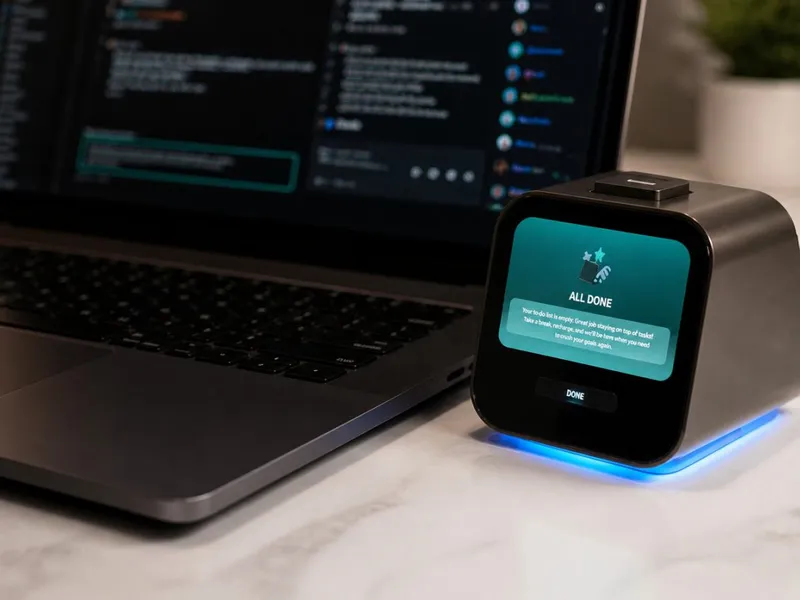
BVIO Technology unveiled Violoop at IFA Berlin 2026 — a palm-sized box that sits between your computer and monitor, captures the screen over HDMI 2.0 4K/30 and acts as a USB-HID keyboard and mouse, with a dedicated STM32H563 security MCU guarding a physical approval key. The on-device Qwen 8B Q4 model runs at 53 tokens/sec; for heavier reasoning the box routes to ChatGPT, Claude, Gemini or Codex via your own API keys, keeping raw screen pixels local. BVIO reports a roughly 70% GUI success rate on click-based paths and has closed a US$20 million seed round ahead of the campaign. Backer units ship from October 2026 at US$399 (US$699 retail), and the device runs on Windows, macOS and Linux with no driver install. For buyers, it is a concrete signal that "screen-aware agent" hardware is leaving the slide deck.
Sourcing Platforms & Tools
1. Globality launches Glo 2.0 — first platform to run autonomous sourcing events from intake to award
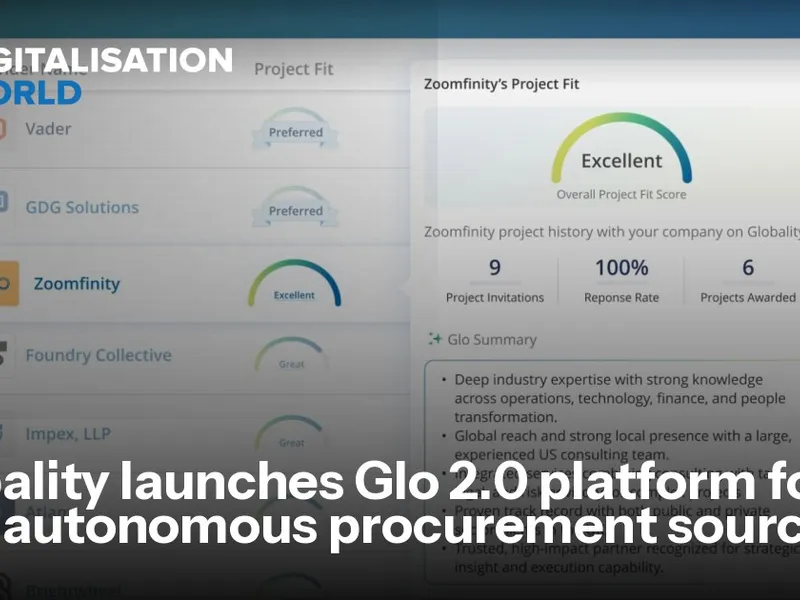
Globality launched Glo 2.0 on September 8, 2026, positioning it as the first enterprise platform capable of running an entire sourcing event — RFx drafting, supplier discovery, negotiation, scenario analysis and award recommendation — without a person managing each step. The platform uses specialized AI agents that reason, act and negotiate autonomously on price, quality, delivery, service and risk, with autonomy configurable organisation-wide, by category or per event. According to the company, customers run 5–9x more events without increasing headcount and report 10–20% annual cost savings on Global 2000 deployments, while an event that used to take six to ten weeks now closes in days. Glo Intake adds a conversational front door that interprets a stakeholder's request, applies the company's policies and runs a should-cost analysis against market data before any supplier commitment is made.
2. Agentic procurement wave rolls on: Levelpath ships no-code Agent Orchestration Studio; Coupa adds Navi agents; Fairmarkit ships Total Agentic Sourcing
CPO Rising's ProcureTech Pulse roundup (week of September 2) tracks the second wave of agentic procurement releases. Levelpath launched Agent Orchestration Studio, a no-code tool that lets procurement teams build their own AI agents and multi-agent workflows on top of the company's supplier graph, with hundreds of customers already spinning up custom agents. Coupa shipped two Navi agents: Navi Supplier Assistance resolves common supplier questions 50% faster and 24/7, while Navi Supplier Discovery uses natural-language queries to surface best-fit suppliers and accelerate sourcing cycles. Fairmarkit's Total Agentic Sourcing is the first platform to deploy agents that can autonomously run both tail and strategic spend — from a US$500 tactical purchase to a US$500M contract — with native integration to SAP Ariba, SAP S/4HANA, Coupa, Oracle and ServiceNow.
Industry Trends
1. Memory cost pass-through reshapes the 2026 holiday electronics bill — sub-US$100 handsets face an 80% YoY collapse

DRAM and NAND flash prices are up roughly 4.5x year-on-year as hyperscaler AI infrastructure demand absorbs consumer-grade memory supply, and the memory share of smartphone BOM has jumped from about 12% to 40–45% — a structural rather than cyclical shift with no relief expected for one to two years. Cumulative price hikes across old and new handset inventory in India have already reached an average of 60%, with another 100% possible before or just after Diwali as Samsung, Xiaomi, Vivo, Oppo, Nothing and OnePlus push through multiple rounds. IDC now expects the sub-US$100 smartphone segment to decline more than 80% in 2026 and the US$100–200 band to fall 9–10%; the US$200–400 tier is single-digit down, US$400–600 is double-digit up on premium pull, and US$600+ is low single-digit down. The 14% YoY July shipment decline and 27% drop in late-July footfall are evidence that demand is being deferred, not lost — buyers with mid-tier SKUs in their 2026 mix should assume more price-driven pushback from consumers and tighter retail margins.
Payments & Trade Finance
1. 21-bank stablecoin consortium sets H1 2027 launch for a US dollar token, euro next, GENIUS Act and MiCA compliant

A consortium of 21 financial institutions announced on September 1, 2026 that it will form a new company in the second half of 2026 to issue a US dollar-denominated stablecoin targeted for market launch in the first half of 2027. Participants include Bank of America, Citi, Goldman Sachs, Wells Fargo, Capital One, Fidelity Investments, PNC, Scotiabank, TD Bank, WisdomTree, Deutsche Bank, UBS, Santander, BBVA, Commerzbank, Crédit Agricole, Lloyds, Rabobank, MUFG Bank, Sirius International Holding and Standard Bank. The euro token is the second priority, with the full plan to cover the rest of the G7. The initiative is being structured to comply with the US GENIUS Act (signed July 2025) and the EU's MiCA framework, and will target wholesale, institutional and retail cross-border payments and digital-asset settlement. The backdrop is a stablecoin market that grew from roughly US$200 billion at the start of 2025 to about US$303 billion by September 2026 — still dominated by Tether (USDT, ~60%) and Circle (USDC, >20%), both of which saw downward pressure on the announcement.
2. OSL Group × Waka (Sept 9) — institutional stablecoin rails for Africa–Asia trade corridors
OSL Group (HKEX:863) and Waka announced a partnership on September 9, 2026 to integrate OSL's stablecoin-to-USD and USD payout infrastructure into Waka's emerging-market settlement network, with an initial focus on Africa–global trade corridors. The joint thesis is that long-underserved corridors can take fiat on, fiat off, with digital speed in the middle. According to a recent EY-Parthenon survey, 41% of organisations that have used stablecoins report cross-border cost savings above 10%, and surveyed financial institutions expect stablecoins to carry 5–10% of global payment value by 2030 — a US$2.1 to US$4.2 trillion pool — while Boston Consulting Group projects Africa to be the world's fastest-growing fintech market this decade. For B2B buyers and treasurers in Africa-bound or Asia-to-Africa flows, this is the most concrete move yet from an exchange-listed, regulated counterparty.
Buyer Voices & Insights
"With the region's busiest ports operating with more than half of their incoming vessels delayed, this backlog will naturally cascade through the maritime network, likely triggering a new wave of delays for critical head-haul trade lanes in the coming months." — Alan Murphy, CEO, Sea-Intelligence
"Q3 is on track to be the weakest festive quarter in years. We expect shipments to decline by 25–30% during this period, by far the steepest hit of any quarter this year. Normally, the festive quarter is when the market gets its biggest lift, this year it's set to be the biggest drag instead." — Upasana Joshi, Senior Research Manager, Devices Research, IDC Asia/Pacific
"49% of small importers sourcing from the U.S. have products directly hit by Canadian counter-tariffs. Impacted businesses reported median monthly costs of C$65,000, and 11% of affected importers would stop being financially viable if the Canada–U.S. trade war lasts three months or more." — Canadian Federation of Independent Business (CFIB), preliminary September 3 survey