Weekly (Issue 7): 30-for-30 Framework Lands as Pharma Tariffs Go Fully Live
This week: Washington and Beijing published the terms of reference for a "30-for-30" framework that would cut tariffs on roughly $30 billion of goods each way — but nothing has changed at the border, and USTR's 178 Section 301 exclusions still expire on November 9. October's compliance calendar starts to bite with a higher Merchandise Processing Fee and a third round of IEEPA refunds, pharma's 100% Section 232 tariff is now live for everyone outside Annex III, Asia–Europe container rates fall for a twelfth straight week, and TrendForce expects DRAM contract prices to climb another 10–15% in Q4.
Trade Policy & Tariffs
The "30-for-30" framework is a signal, not a duty cut — and the Section 301 clock is still running
On September 24, 2026, Chinese President Xi Jinping met with U.S. President Trump. Following the meeting, the two governments announced recommendations under what is being called a 30-for-30 framework: each side has recommended approximately $30 billion of the other's annual, non-sensitive goods for reduced tariff treatment. The White House released the terms of reference and the two product lists on September 27.
The crucial caveat is that the framework does not by itself change any tariff rate, and it sets no effective date. Each country may later reduce the tariffs currently applicable to products on its approved list, but only through its own domestic legal process — so duties on Chinese-origin goods still apply exactly as they did before. The recommended U.S. import list runs to 77 product categories, including toys, child safety seats, Christmas ornaments, microwave ovens, towels and bed linens. In the other direction, U.S. exports recommended for relief cover agricultural goods, fish and seafood, logs and wood products, cosmetics and medical devices.
"The 30-for-30 framework is a signal, not a duty change. The products are recommended, the reductions are not defined, and no effective date exists yet." — Aprio, Customs and Tariffs
Importers should hold their current entry practice until CBP issues implementing guidance, because the effective date, scope and stacking rules will live in that instrument rather than in the framework itself. Two constraints matter in the meantime: longstanding Section 301 measures continue to apply unless a product is excluded, and a future reduction under this framework may not displace duties already in place under Section 232, forced-labour measures, or AD/CVD orders. USTR's 178 current exclusions remain scheduled to run through November 9, 2026.
- October's compliance calendar: a higher MPF, CAPE Phase 3 refunds, and a shrinking exclusion window
Three dates land this month. From October 1, CBP's annual COBRA user-fee adjustment raises the Merchandise Processing Fee minimum to $34.58 and the maximum to $670.86, while the 0.3464% ad valorem rate stays unchanged; the Harbor Maintenance Fee is not affected. On October 6, Phase 3 of the CAPE refund programme opens, letting eligible importers covered by the court's reliquidation order submit further IEEPA refund requests — CBP has already certified and sent roughly $122 billion in refunds and interest to the U.S. Treasury. And November 9 remains the expiry date for the current Section 301 exclusion set, which is the one deadline here with a genuine cliff attached.
The sequencing is awkward for anyone modelling landed cost. The consumer categories most likely to benefit from a 30-for-30 reduction — toys, ornaments, small appliances, child seats — are exactly the ones with peak-season purchase orders already committed. Since both sides have said adjustments will come no more than once a year, the practical approach is to build a landed-cost view with and without the reduction rather than to price on the expectation of relief.
- Tariffs are back at the Court of International Trade — this time over forced-labour duties
On September 30, a three-judge panel at the U.S. Court of International Trade heard arguments on whether the president can use a 1970s trade law to impose tariffs on nearly everything the United States imports. Since late July, goods from 80 countries — China, India and Japan among them — have faced rates of 10% to 12.5%, imposed after the administration determined those countries had failed to address the use of forced labour in goods shipped to the US. The Liberty Justice Center, which won the earlier landmark Supreme Court tariff case, argues the administration is using Section 301 improperly to preserve a predetermined global tariff policy.
The commercial reality for buyers is that the duties are being collected now and will keep being collected while the case runs. A ruling could take weeks or months, and either side could appeal to the Federal Circuit — which may also decide whether to pause enforcement in the meantime. The earlier Supreme Court loss on a separate authority triggered $168 billion in refunds for importers, so the refund tail here is worth tracking even for companies that are not party to the suit.
- Pharmaceuticals: the 100% Section 232 tariff is now live for everyone outside Annex III
Since 12:01 a.m. Eastern Time on September 29, the Section 232 pharmaceutical tariff applies to every company not named in Annex III of Proclamation 11020 — which means the exemptions that had sheltered the 17 largest drugmakers no longer cover the field. The 100% figure is a ceiling rather than a uniform rate: products from the EU, Japan, South Korea, Switzerland and Liechtenstein face 15%, UK-origin products 0% through January 19, 2029, and companies with an approved onshoring plan face 20% rising to 100% on April 2, 2030. Countries outside those arrangements — India and China among them — fall under the 100% default.
Coverage is defined by patent status and listing, not by drug name: a "patented pharmaceutical article" must be protected by a valid, unexpired U.S. patent and listed in the FDA's Orange Book or Purple Book, with APIs and key starting materials pulled in alongside. Generics and biosimilars sit outside the tariffs for now, and clinical-trial and R&D imports carry 0%, as do orphan drugs, cell and gene therapies, antibody-drug conjugates and several other specialty categories — but only when they come from one of 19 listed jurisdictions. China is not on that list. For buyers sourcing API and intermediates, the exposure is concentrated in exactly the segment that had the least pricing power to absorb it.
- Polysilicon gets minimum import prices and a 15% tariff — with anti-stockpiling rules already live
A Section 232 investigation into polysilicon and its derivatives has produced minimum import prices of $21 per kilogram for polysilicon, $100/kg for ingots and wafers, $0.22 per watt for solar cells and $0.38 per watt for solar modules, plus a 15% ad valorem tariff on the derivative products. The MIPs and tariffs take effect December 4, 2026, but the anti-stockpiling restrictions are effective immediately — Commerce and CBP are monitoring import volumes against 2025 and 2026 baselines to stop a pre-deadline surge, and are explicitly watching for new importers of record and affiliates used to bring goods in.
Importers must submit documentation to CBP showing that the first arm's-length sale will occur at or above the MIP, or that it is covered by fixed contract terms entered into before August 6, 2026. Miss either and the full MIP stacks on top of the 15%. The UK faces a 10% rate, while Japan, Korea, Taiwan, Switzerland, Liechtenstein and EU members get a cap so that tariff plus standard duty does not exceed 15% — a reminder that in this round of measures the country of origin determines the rate at least as much as the product does.
Supply Chain & Logistics
- Drewry's index slips to $4,434 as Asia–Europe falls for a twelfth straight week
The World Container Index fell 1% to $4,434 per 40-foot container in the October 1 assessment, with almost the entire decline coming from Asia–Europe. Shanghai–Genoa dropped 3% to $3,702 and Shanghai–Rotterdam fell 2% to $3,399; both routes have now declined for twelve consecutive weeks, from $3,835 and $3,485 a week earlier. The transpacific moved the other way: Shanghai–New York rose 1% to $10,428 while Shanghai–Los Angeles held stable at $7,835.
The mechanism on Asia–Europe is capacity, not just demand. More services are returning to the Suez Canal instead of routing around the Cape of Good Hope, and Suez transits in Week 39 ran 68% higher than the same week last year. A shorter route frees ships, so the same fleet makes more voyages and effective capacity rises without a single new vessel. Carriers have announced base rate increases for the second half of October to try to reverse the slide, but Drewry itself calls the outcome uncertain. For anyone shipping to Europe after Golden Week, the index is a useful independent reference point — and it is worth checking whether a quote already embeds the announced increase, since base rate increases can apply to bookings already made if the contract allows it.

- AI demand is stretching the peak into Q4 — with up to 11% of the container fleet stuck in congestion
The traditional October slowdown has not arrived. Sustained demand for AI hardware and semiconductor components is holding volumes up, and the congestion that comes with it is severe: 8.5% to 11% of the global container fleet, roughly 3 million to 3.8 million TEU, is tied up in Asian port congestion, with berthing waits at Shanghai exceeding five days and waits at the Waigaoqiao terminal surpassing nine days. On-time performance has fallen to 21% at Shanghai and 34.6% at Ningbo, compounded by typhoon backlogs and a 120% container receiving cap imposed at Shenzhen's Yantian terminals on August 26.
Analysts now project seven to ten months to normalise, which would push disruption past the February 2027 Lunar New Year — and carriers have blanked just under 13% of planned Asia–US and Asia–Europe capacity around Golden Week. The practical consequence is the one buyers most dislike: transit times on major routes are running 15 to 24 days, intra-Asia bookings on high-demand corridors are being advised one to two weeks out and long-haul two to three weeks out, and a growing share of high-value cargo is expected to shift from ocean to air freight as Q4 progresses. Air cargo demand rose 4.4% year on year in August even as capacity was trimmed 0.1%, with jet fuel up 8.3% month on month.
- The Premier Alliance returns to Suez, adding still more effective capacity to Asia–Europe
The alliance of ONE, HMM and Yang Ming was among the last to keep the Cape of Good Hope routing adopted in early 2024, and it is now bringing its FE1 service between Southeast Asia and North Europe back through the canal. The first vessel, the roughly 8,100 TEU ONE Continuity, is expected at the canal on November 9 and in Rotterdam on November 19, with three more ships to follow between November and December.
It is a North Europe service, so it does not directly change transit times to Italian or Mediterranean ports. It matters for the market as a whole: every service that returns to Suez adds effective capacity on the Asia–Europe trade, and that downward pressure transmits into the Mediterranean too. For buyers planning Q1 2027 shipments, the useful question is not only the rate but which route the booked service actually takes — two offers at the same price can carry very different delivery times.
Factory & Manufacturing
- China's September PMI returns to expansion at 50.1 — the second consecutive monthly improvement
China's official manufacturing PMI came in at 50.1 in September, up 0.3 points from August and back above the boom-bust line, according to the National Bureau of Statistics. The improvement was broad rather than cosmetic: the production sub-index climbed 1.3 points to 51.7, new orders held at 50.5, and the procurement volume index rose 0.5 points to 51.0. Of the 21 industries surveyed, 12 reported a PMI above the expansion threshold, four more than the previous month, with equipment manufacturing at 51, high-tech manufacturing at 52.5 and consumer goods at 50.7.
The number worth flagging for sourcing teams is not the headline but the input side. The purchasing price index for major raw materials jumped 4.2 points to 60.8, and the ex-factory price index rose 3.6 points to 54 — the widest gap between input costs and output prices in recent months, and a sign that upstream cost pressure is building faster than factories can pass it downstream. Small manufacturers remain in contraction at 48.9 despite a 1.0-point improvement, so capacity and pricing power are still unevenly distributed across the supplier base.
- Morgan Stanley puts a $12 trillion figure on China's manufacturing upgrade
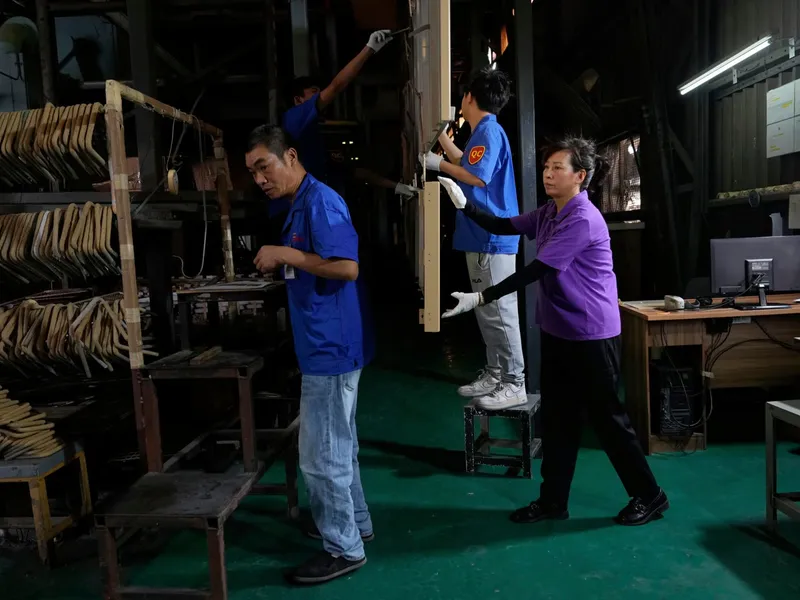
Morgan Stanley's "Thoughts on the Market" series has framed China's industrial transformation as a $12 trillion manufacturing upgrade — the bank's shorthand for the scale of value it expects to be reshaped as automation, electrification and AI diffuse through the country's factory base. The framing matters for buyers because it describes a supplier landscape moving up the value curve rather than simply competing on cost.
The practical read is that the competitive question is shifting from "which country is cheapest" to "which supplier has already automated". That favours buyers who can qualify higher-capability Chinese suppliers for more complex assemblies, and it raises the cost of staying with suppliers who have not reinvested. It also implies continued divergence inside China's own supplier base — consistent with the PMI split between large and small enterprises above.
New Products & Sourcing Ideas
- TALIX Zeta — a modular power station that went past HK$1 million on Kickstarter
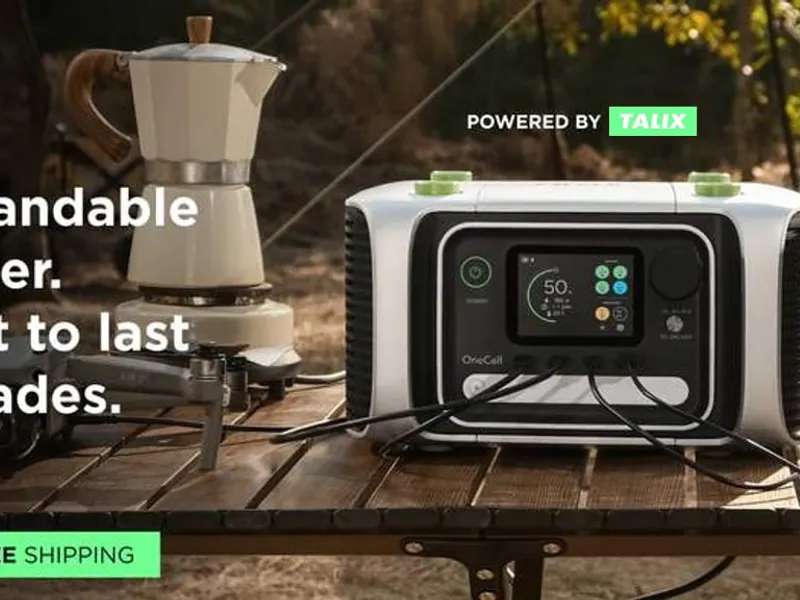
TALIX's Zeta campaign has raised HK$1,067,764 from 213 backers against a HK$78,000 goal, roughly thirteen times over. The pitch is modularity: a power station built so capacity can be expanded in modules rather than replaced wholesale, which is the same argument that has driven the category's shift from sealed units to stackable systems.
For buyers watching the portable power category, the signal is that modularity has crossed from premium positioning into the mainstream crowdfunding tier — campaigns at this funding level are now being validated by a few hundred backers rather than thousands, which says more about niche depth than mass adoption.
- CIO SmartCoby Ultra Slim SS5K — a 6.83mm stainless-steel power bank, from $45.74
CIO launched the SmartCoby Ultra Slim SS5K on Kickstarter on September 30, pairing a semi-solid battery cell with a stainless steel shell in a 6.83mm body — thinner than nearly every iPhone on the market, including the iPhone 17 Air. The 5,000mAh unit offers wireless charging up to 15W for EPP-compatible Android phones and 7.5W for iPhone 12 through the newest models, plus a USB-C port delivering up to 20W wired, and uses CIO's NovaCore C3 battery health and cycle tracking system rated for 300 charge cycles. Super Early Bird pledges start at $45.74, with an estimated ship date of December 2026 and the campaign running through October 28.
The category signal is in the predecessor. CIO's SmartCoby Ultra Slim 3K funded on Makuake at 10,192% of its goal, raising roughly $200,000 from 3,856 backers, and then added about $16,000 more from 267 backers on Kickstarter; it now sells on Amazon at $73.99. That is a useful reminder that in accessory categories the crowdfunding campaign is increasingly a launch marketing channel with an installed base behind it, rather than a make-or-break funding event.
- LetPot LPH-Home — a two-tier indoor garden where each tier has its own reservoir
LetPot launched the LPH-Home Smart 2-Tier Indoor Garden on Kickstarter on October 1 at 11:00 a.m. Eastern Time. The differentiator is agronomic rather than cosmetic: each tier carries its own 6-litre water reservoir and separate EC monitoring, so compact tomatoes or peppers can grow on the upper tier while herbs and leafy greens grow below without being forced onto a single shared nutrient plan. Together the two tiers support up to 32 plants, with adjustable growing height upstairs and a dedicated harvest zone downstairs.
The system measures EC and pushes information and reminders rather than dosing nutrients automatically, leaving nutrient decisions with the grower, and it uses an open growing system so buyers can source their own seeds and compatible sponges instead of a single seed subscription. Lighting and water-circulation schedules run from a built-in TFT touchscreen or the LetPot app. For sourcing, the notable design choices are the two independent reservoirs and the open seed model — both push the consumables revenue away from the brand and toward the user, which is unusual in a category built on recurring pods.

LetPot LPH-Home on Kickstarter
- Flourish One — a $3,555 home robot with a 50-unit first batch
Flourish, a robotics company headquartered in San Francisco and Paris and founded in January 2026, opened sales for its Flourish One home robot on September 29. The initial production run is limited to 50 units at a retail price of $3,555, with first shipments planned for December 2026. The hardware is a six-wheeled base with lidar obstacle detection and arms rated for a 1.5 kg payload, running on a Raspberry Pi architecture with battery life supporting 12 hours of arm operation.
The interesting part is the training model. Rather than promising general-purpose autonomy, Flourish One is taught individual chores by moving a smartphone to mirror the motion, with inertial measurement units recording the movement and cloud AI models refining it — roughly 30 minutes of manual teaching per new task. That is an honest admission that in the home, task-specific learning beats general-purpose claims today. For buyers it is a data point on how far consumer robotics has actually travelled: the constraint is not the arm, it is the teaching time.
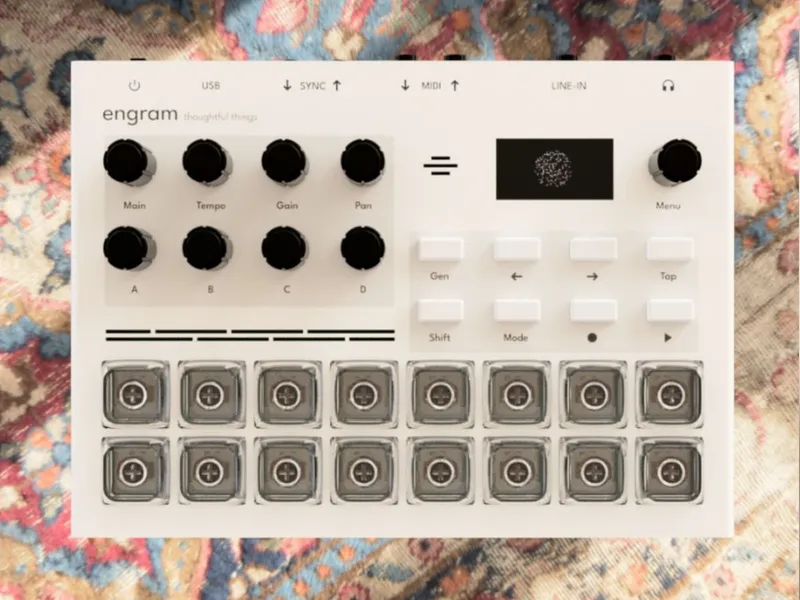
- Engram — a $770 sampler that runs its AI models on the device
Thoughtful Things, a Los Angeles startup, put Engram on Kickstarter on September 26 with a $10,600 funding goal. By September 29 the campaign had reached about 72% of goal from 11 backers, per Kicktraq; the $675 early-bird tier had sold out, leaving 40 production units at $770 with delivery estimated for May 2027. Everything runs on the hardware — no internet connection, app or subscription.
Engram is a sampler and groovebox with four AI features layered on top: sample generation from a prompt, neural audio processing of your own recordings through an embedded codec, pluggable audio models, and "model bending" — knobs that deliberately push the model into glitches, named after circuit bending. The training-data position is stated explicitly: models are trained only on open datasets containing audio licensed for commercial use, such as CC-BY, with the company saying it has not and will not train on non-commercial or pirated data. Buyers evaluating AI-enabled consumer hardware should note both the on-device constraint and the licensing disclosure — the latter is becoming a differentiator rather than a footnote.
Sourcing Platforms & Tools
- Levelpath launches Ranger, an autonomous procurement platform with five prebuilt workflows
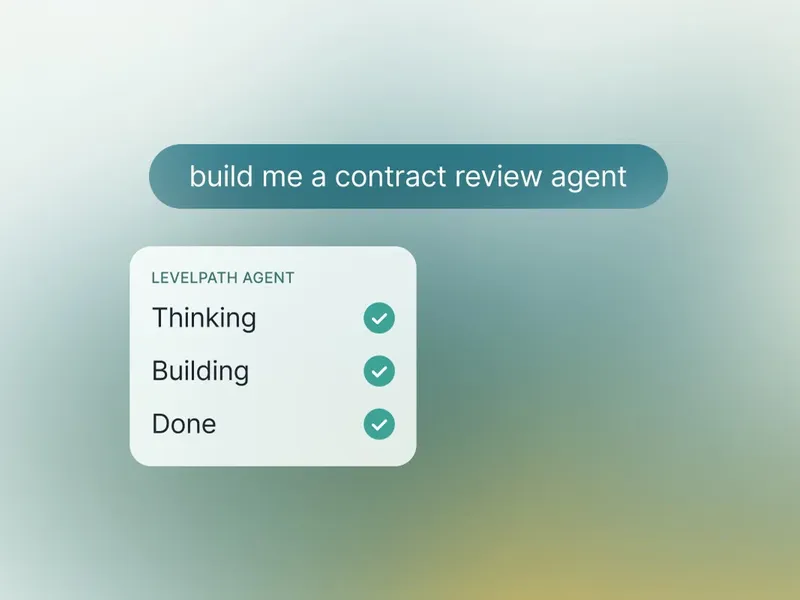
Levelpath launched Ranger on September 30, designed to move enterprise buying from AI-assisted administration to end-to-end execution. Ranger accepts a natural-language or voice request and then coordinates the work to source suppliers, review contracts, onboard vendors, assess third-party risk, and match and approve invoices. It ships with five autonomous workflows — sourcing, contract review, supplier onboarding, third-party risk protection, and invoice matching and approval — operating on Levelpath's shared procurement data model and connecting to ERP, CLM, finance and collaboration systems through prebuilt integrations and APIs.
Two capabilities stand out. Contract Discovery lets a team ask one question across as many as 10,000 contracts and receive an answer linked to evidence in the underlying documents — a citation layer that matters in legal and procurement work, where a plausible answer without a traceable source is not sufficient. And the governance design is structural rather than advisory: each agent can be enabled or disabled at an individual step and constrained by policies, approval thresholds and playbooks, with an approval agent potentially permitted to approve a qualifying request but technically prevented from rejecting one, forcing every rejection to a person. Levelpath says Ranger is available now at no additional cost to existing customers, and names American Airlines, CBRE, Amgen, New York Life, Levi Strauss & Co. and Western Union among users of its technology.
- Aron raises $8 million for an "AI Chief of Staff" for procurement
Aron, a San Francisco startup founded by former Apple procurement executive Dominic Toselli, launched its AI procurement tool alongside $8 million in disclosed funding: a $6 million seed round led by Storm Ventures and a $2 million pre-seed led by Menlo Ventures. The product is positioned as an AI Chief of Staff for procurement departments, handling spend and contract data analysis, identifying savings opportunities, and managing source-to-contract work, with customers ranging from mid-market businesses to Fortune 10 companies.
The distribution choice is the notable one. Rather than requiring customers to migrate to a separate procurement platform, Aron works across the communication and workplace tools teams already use — users send emails, post messages or drop files into folders, and the system processes requests such as RFQs, contract redlining, invoice checks against agreed prices and supplier follow-up on open orders. Menlo Ventures said Aron's customer adoption justified doubling down. Early customer TransPak deployed it first in MRO procurement before expanding to other categories.
Industry Trends
- TrendForce: DRAM contract prices up 10–15% in Q4, NAND up 15–20% — and enterprise SSDs are the only accelerating category
TrendForce's latest memory research projects conventional DRAM contract prices rising 10–15% quarter on quarter in 4Q26 and NAND Flash contract prices rising 15–20%, with the pace of DRAM increases moderating from earlier quarters but the market still undersupplied. Suppliers continue to prioritise advanced-process capacity for high-performance server products, and server DRAM is expected to remain undersupplied through the quarter, with some suppliers' increases lagging the market average because of long-term agreement pricing mechanisms.
The outlier is enterprise storage. Bit demand for enterprise SSDs is projected to grow more than 80% year on year in 2026 as cloud providers expand AI inference infrastructure, with demand shifting from LLM training toward actual AI deployment; the large-scale rollout of agentic AI is driving exponential growth in data volumes for real-time retrieval and caching, and QLC penetration in vector databases keeps rising. Enterprise SSD price growth is therefore expected to accelerate — the only memory category to see a larger increase than in the previous quarter — and most incremental supply is already committed, leaving little available on the open market.
The consumer side is the mirror image. Client SSD buyers are drawing down inventory built in the first half of the year and PC brands are cutting SSD capacities in mainstream models to lower bill-of-materials cost, which has forced NAND suppliers into a more flexible pricing stance. Mobile DRAM growth is moderating as handset production is weighed down by rising costs. For procurement, the divergence is the whole story: the same shortage is producing accelerating prices in enterprise AI infrastructure and moderating ones in consumer devices, so a single "memory cost" assumption across a product portfolio is now the wrong model.

- Gizmodo's September gadget round-up is a useful read on what is actually shipping
Gizmodo's best-gadgets-of-September round-up is worth reading less for the individual winners than as a cross-check on what made it to market in the month the peak season began. Round-ups like this are effectively a free competitive scan: they surface the products that reviewers actually handled, which is a different and often more honest signal than crowdfunding totals or vendor press releases.
For sourcing teams, the value is in the pattern rather than any single item — which categories are generating genuine product iteration, and which are generating announcements. It pairs usefully with the new-products section above: several of this week's campaigns will not ship until 2027, while the items in a monthly round-up are already in reviewers' hands.
Payments & Trade Finance
- Japan's FSA clears a fourth stablecoin pilot — this time for cross-border trade finance
Japan's Financial Services Agency approved its fourth stablecoin pilot under the Payment Innovation Project on September 29, adding cross-border trade finance to the areas regulators have cleared for stablecoin settlement. The programme brings back the country's three megabanks — Mizuho Bank, MUFG Bank and Sumitomo Mitsui Banking Corporation — with Mitsubishi UFJ Trust and Banking also joining, and is built around TradeWaltz, a SaaS platform that digitises international trade paperwork, alongside NTT Data.
The mechanics are narrowly scoped but pointed. Stablecoin payments are triggered after an exporter uploads shipping documents and the bank signs off on buying the resulting export receivable — so the exporter collects faster while the bank automates payment instructions and receipt confirmation. For now only the receivable purchase and settlement between an exporter and its bank is open to participants, though expansion to importers and their banks could follow. This is the fourth approval under the Payment Innovation Project and the fifteenth overall since the FSA launched its FinTech Proof-of-Concept Hub in 2017; the participating megabanks hold a combined $6.8 trillion in assets, and the joint trust-backed yen stablecoin the three lenders are building under the first project is expected to be ready for live commercial transactions during the fiscal year ending in March 2027. The FSA set no end date, saying only that the trial runs from September 2026 for the time being.

- Visa and Lloyds settle $750,000 in USDC — in under an hour, including over a weekend
Visa and Lloyds Banking Group completed a seven-day live pilot in which Lloyds settled US$750,000 of payment obligations with Visa using stablecoins, with funds reaching Visa in under an hour including over the weekend. Under traditional cross-border processes, settlement initiated outside banking hours can take a day or more. Lloyds used USDC purchased through Archax, a UK-regulated digital asset exchange, with the volume booked through its Corporate Markets branch in Jersey and transferred to Visa in the US.
Two details matter more than the headline speed. First, the pilot tested settlement across private and public blockchain environments — Lloyds used its own node on Canton, while Visa supported settlement on a separate public chain — which is an interoperability test rather than a single-rail proof of concept. Second, it was framed explicitly as a settlement trial, the behind-the-scenes process through which institutions exchange funds, not a change to how payments are made. For exporters and marketplaces the signal is that bank-to-bank settlement, not consumer payment, is where stablecoins are proving out first.
Buyer Voices & Insights
- "I was handed savings targets with deadlines, spent a lot of my capacity mapping what we bought and what we agreed to pay, and lost the rest to the daily fires." — Dominic Toselli, founder, Aron; former head of Worldwide Logistics Procurement at Apple
Toselli's point is about where procurement capacity actually goes. Before founding Aron he led worldwide logistics procurement at Apple, and his description of the job — mapping spend, then losing the remainder to a supply line down, a team needing a vendor in two weeks, a one-off part needed today — is a fair summary of why so much sourcing work stays tactical. It is also the strongest argument for tools that adapt to existing workflows rather than imposing a new one: anything that requires a process migration adds work before it removes any.
- "The biggest value isn't cost savings, it's time. It's a Chief of Staff for our procurement team, handling the tactical work so they can stay on the strategic projects." — Scott Eisenberg, Vice President of Global Supply Chain, TransPak
Eisenberg's account of the deployment is specific enough to be useful: TransPak started in maintenance, repair and operations procurement, saw ROI in the first month, and then expanded into other categories. Note what he says the benefit is. Not savings — time — and specifically the ability to stay on strategic work. Buyers evaluating procurement AI should press vendors on exactly this distinction, because time savings are measurable in weeks while savings claims often take quarters and are frequently unattributable.
- "We spent the last 30 years automating the steps. The Chief of Staff automates the space between them." — Dr. Elouise Epstein, Partner, Kearney
Epstein's framing is the sharpest articulation of where procurement software is moving. Her argument is that attention, follow-through, sensing, memory and orchestration are not tasks at all — they are the connective tissue between tasks, and that connective tissue is precisely what no prior system automated. It explains why the current wave of tools looks different from the workflow engines of the last two decades: those digitised and controlled transactions, while these are aimed at the coordination work that happens between formal process steps. For buyers, the test of any such tool is whether it genuinely reduces the coordination burden or simply becomes another system to coordinate.