
Weekly (Issue 8): Two Section 301 Clocks Run to November 9
This week: Two Section 301 clocks run to the same date. USTR's suspension of the port fees on Chinese-owned, Chinese-operated and Chinese-built vessels ends at 11:59 p.m. Eastern on November 9, and the agency's current product exclusions expire the same day — with no Federal Register notice yet extending either. Elsewhere: the EU sets a EUR 2-per-item handling fee from November 1, the USMCA review docket opens, three shipping chokepoints improve at once, and Counterpoint now expects 230 million budget smartphones a year to disappear by 2030.
Trade Policy & Tariffs
Two Section 301 clocks run to November 9 — and only a Federal Register notice can stop them
Two separate instruments expire in the same week. USTR's one-year suspension of the port fees it imposed on Chinese-owned, Chinese-operated and Chinese-built vessels ends at 11:59 p.m. Eastern on November 9, 2026, and USTR's current batch of Section 301 product exclusions runs out on the same date. Treasury Secretary Scott Bessent said on September 23, after meeting Chinese Vice Premier He Lifeng, that the "Busan" truce scheduled to end on November 10 would be extended to January 10, 2027 — but no document accompanied the remark, and the Federal Register listing of USTR notices through October 5 contains nothing extending the maritime suspension.
"The USTR notice that suspends the Section 301 port fees on China-linked ships still says the suspension ends at 11:59 p.m. Eastern on 9 November 2026." — CargoLinked, Trade Policy and Customs Update, October 2026
The fee structure is what makes this awkward to plan around. Covered Chinese vessel operators and Chinese-owned vessels would face US$50 per net ton, while non-Chinese carriers operating a China-built ship would pay the higher of US$18 per net ton or US$120 per discharged container, with rates escalating in later years and fees capped at one chargeable call per rotation and five per vessel per year. Liability sits with the vessel operator rather than the cargo owner, so the exposure reaches any buyer whose carrier deploys Chinese-built tonnage. More than 200 trade associations, from the National Retail Federation to the American Farm Bureau Federation, wrote to USTR Ambassador Jamieson Greer on September 23 asking for an extension, and their letter states the suspension "is currently scheduled to expire on November 9, 2026." The honest position is that officials probably will extend it — and that carriers will keep pricing against the written rule until they do.
- The EU's EUR 2 handling fee lands on November 1, alongside mandatory product identifiers
On September 21, 2026, the European Commission adopted the delegated regulation setting a Union handling fee of EUR 2 per item on goods sold through distance sales and released for free circulation in the EU. It is charged per item rather than per parcel, and it sits alongside the existing temporary duty instead of replacing it. The same date, November 1, is when product identifiers become mandatory in customs declarations for B2C imports — the merchant's own product code, the manufacturer's model or part number and, where one exists, a standard code such as a GTIN or EAN.
The layering is what catches sellers out. A flat EUR 3-per-item duty has applied since July 1, 2026, when Council Regulation (EU) 2026/382 removed the EUR 150 duty exemption for consignments up to that value; that duty is temporary and runs to July 1, 2028, after which normal tariff treatment resumes. So a low-value order that cleared duty-free in June now carries a per-item duty plus a per-item handling fee, plus the classification data needed to support both. One timing caveat: the Commission's timetable targets introduction by November 1, but the delegated act had not been published in the Official Journal at the time of the last published check, and it applies from the tenth day after publication. Budget for the fee, and confirm the start date with your broker rather than assuming it.
- The sanctions law's leverage: tariffs of up to 100% on major buyers of Russian oil and gas
The Sanctioning Russia and Iran Act of 2026 gives the president authority under Section 113 to impose tariffs of up to 100 percent on major purchasers of Russian oil and gas, and on countries facilitating sanctions evasion, while Section 115 provides broad waiver authority. CSIS's reading is that the legal architecture matters at least as much as the political signalling: for India, China and other buyers of Russian crude, the open question is whether Section 113 is primarily a threat, whether Section 115 becomes the preferred escape hatch, or whether the two are designed to work together as a bargaining tool.
For sourcing teams the takeaway is asymmetric. No landed cost changes on the strength of a diplomatic statement, and a tariff authority that is granted is not a tariff that will be applied uniformly — the waiver is the tell. What does change is the risk profile of supplier contracts, because measures of this kind are re-examined periodically rather than settled once. The practical work is to identify which suppliers' cost structures would break if the authority were used, and to price that possibility into the agreement rather than discover it at renewal.
- Canada: the Section 338 import bans are live, and the USMCA review docket is open
The five Section 338 proclamations signed on September 8 turned what had been a 50 percent duty on a slate of Canadian goods into an outright entry ban for certain alcoholic beverages, categories of dairy, molasses, non-alcoholic beer and motor-vehicle products, effective 12:01 a.m. Eastern on September 29. Two details govern cargo planning. The duties apply "regardless of whether a good originates under the U.S.-Mexico-Canada Agreement" and in addition to Section 232 duties, so USMCA origin buys no relief on the affected lines. And goods imported but not yet entered for consumption before September 29 stay subject to the 50 percent duty rather than the ban — which means the treatment of a shipment that crossed the border around that date depends on entry status, not on physical location.
Then, on October 5, USTR opened a Federal Register consultation and announced a public hearing on the operation of the USMCA ahead of the 2027 joint review, with written comments and requests to appear due by 11:59 p.m. Eastern on January 12, 2027. That is a consultation rather than a rule change — nothing in the notice alters a duty — but it is the formal channel through which tariff-free treatment of North American freight will be argued, and cross-border forwarders and truckers should get their evidence on the record while the docket is open.
Supply Chain & Logistics
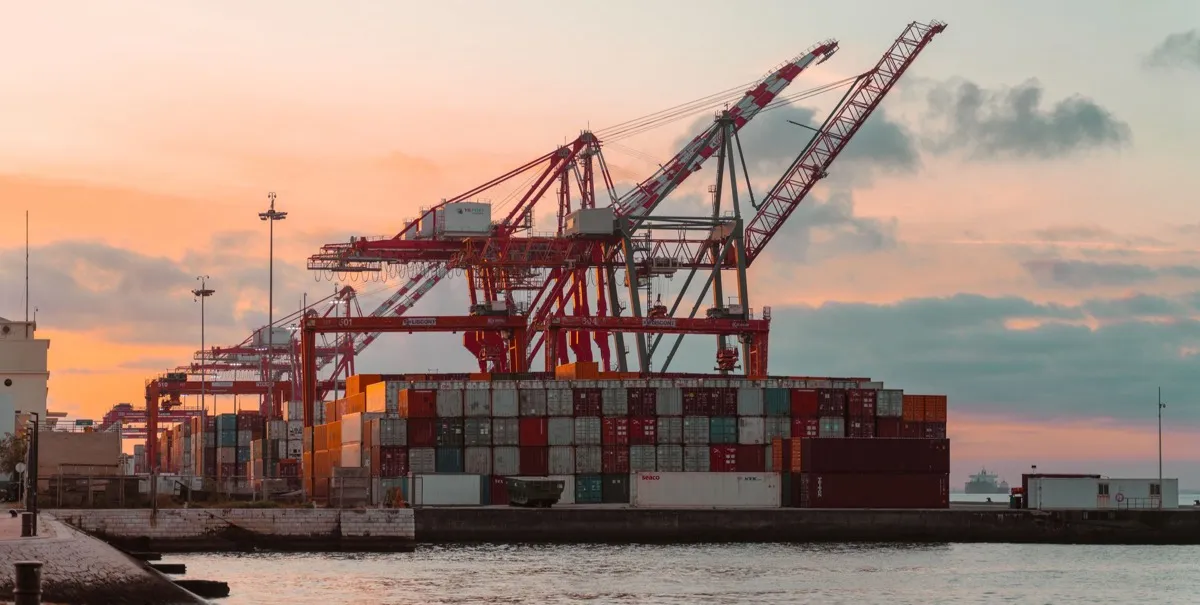
- The "great snapback": Suez, Panama and Hormuz are all improving at once — and the first symptom may be congestion
Three of the world's most important chokepoints are showing signs of recovery at the same time. More than 140 containerships carrying upward of 2 million TEU have returned to Suez routings since May, the Panama Canal Authority will add a tenth daily Neopanamax slot on October 15 for a total of 33 per day, and Middle East crude exports reached 16.33 million barrels per day in September. Normalisation can release effective capacity almost as quickly as disruption absorbed it, because the same fleet makes more voyages on shorter loops without a single new ship being built.
The counterintuitive risk sits on the receiving side. Ship Universe's modelling shows that an instant return of Cape-routed capacity would lift port workload 39 percent above the previous historical peak, and that even a gradual eight-week phase-in lands about 10 percent above the old record — which is why its conclusion is that the first symptom of normalisation could be more congestion, not less. Its capacity accounting is also a useful warning against loose arithmetic: port congestion is absorbing 3.76 million TEU, the Cape-routed fleet accounts for 3.5 million TEU, a full Suez release is modelled at 2.1 million TEU, and the container orderbook stands at 15.6 million TEU. These are different concepts and should not be added together.
- Hormuz: a tanker struck and 12 crew injured, as October's incident count passes nine
On October 6, a Panama-flagged tanker, MT On Peace, was struck by a projectile off the coast of Oman while transiting the Strait of Hormuz. Twelve of the 19 crew were injured, including 11 Indian nationals, and India's Ministry of External Affairs publicly condemned the attack by name and IMO number. UKMTO has reported at least nine incidents since the beginning of October, at least three of which resulted in a fire, and the same week brought reports of a tanker hit by projectiles off Qatar alongside a US operation to redirect commercial vessels away from the risk area.
For buyers, the operational question is no longer only war-risk insurance. A strait that is intermittently closed to specific vessels changes routing and schedule reliability for Gulf-origin cargo, and it feeds directly into the bunker and fuel-surcharge assumptions that most Q1 2027 contracts are being written against right now. Where a supplier sits in the Gulf, it is worth asking which routing assumption the quoted lead time is built on.
- Air cargo: a selective peak, with technology freight tightening the transpacific from mid-October
C.H. Robinson expects capacity pressure to develop unevenly through the fourth quarter rather than tightening across the board. Technology-related freight remains the strongest demand driver, particularly on transpacific routes, where servers, semiconductor equipment, data-centre components and other high-value electronics continue to generate significant volumes — with new consumer-device launches adding time-sensitive shipments on top. General cargo is expected to build more gradually as inventories are replenished ahead of early Black Friday promotions and Cyber Monday.
Two structural shifts matter for forwarders. E-commerce is expected to account for a smaller share of this year's peak-season growth, after changes to tariff rules for low-value imports reduced some flows into the US, while Asia-Pacific-to-Europe volumes remain below last year's levels on e-commerce-heavy routes. And because airlines respond to concentrated demand by moving aircraft rather than adding it, the risk is displacement rather than a uniform increase: if freighter capacity is redirected towards US-bound services, shippers moving cargo to Europe or within Asia could find fewer viable options even where underlying demand on those lanes has not changed.
- Panama unwinds its restrictions: a 49-foot draft and a tenth daily slot
The Panama Canal Authority raised the maximum Neopanamax draft to 49.0 feet on September 29 and will add a tenth daily Neopanamax slot on October 15, bringing total daily capacity to 33 slots. Per-customer booking limits have been dropped and consecutive-date bookings are allowed again, reversing the cuts made in early September to prepare for El Niño conditions.
This is the least dramatic of the three chokepoint improvements and, for East Coast and Gulf importers, the most immediately useful. Draft and slot recovery tends to show up first as shorter waiting times and then as a wider choice of services — the point at which a routing decision made two months ago is worth revisiting rather than defending.
Factory & Manufacturing
- Asia's factories expanded in September on AI and chip demand — Korea at its fastest in four months
September's private surveys put the export powerhouses firmly in expansion territory. South Korea's S&P Global manufacturing PMI came in at 53.9, up from 52.3 in August, its highest reading since May and its tenth consecutive month above the 50 mark, with export demand growing at the fastest pace in 15.5 years. Taiwan's PMI rose to 56.7 from 54.7, and Japan's stood at 54.1. China's factory activity also expanded in September as easing weather disruption allowed plants to resume operations. S&P Global's economist attributed Korea's gains to the combined strength of the semiconductor and automotive sectors, describing new orders and production growth as the highest in around five and a half years.
For buyers the reading is specific rather than general. The demand is concentrated in chips and AI-related goods, which is exactly where capacity is tightest and lead times longest, so expansion in that segment does not translate into shorter lead times for commodity categories — and it does put upward pressure on component pricing for everyone downstream.
- IFR: 603,000 industrial robots installed in 2025, and China accounts for 59% of them
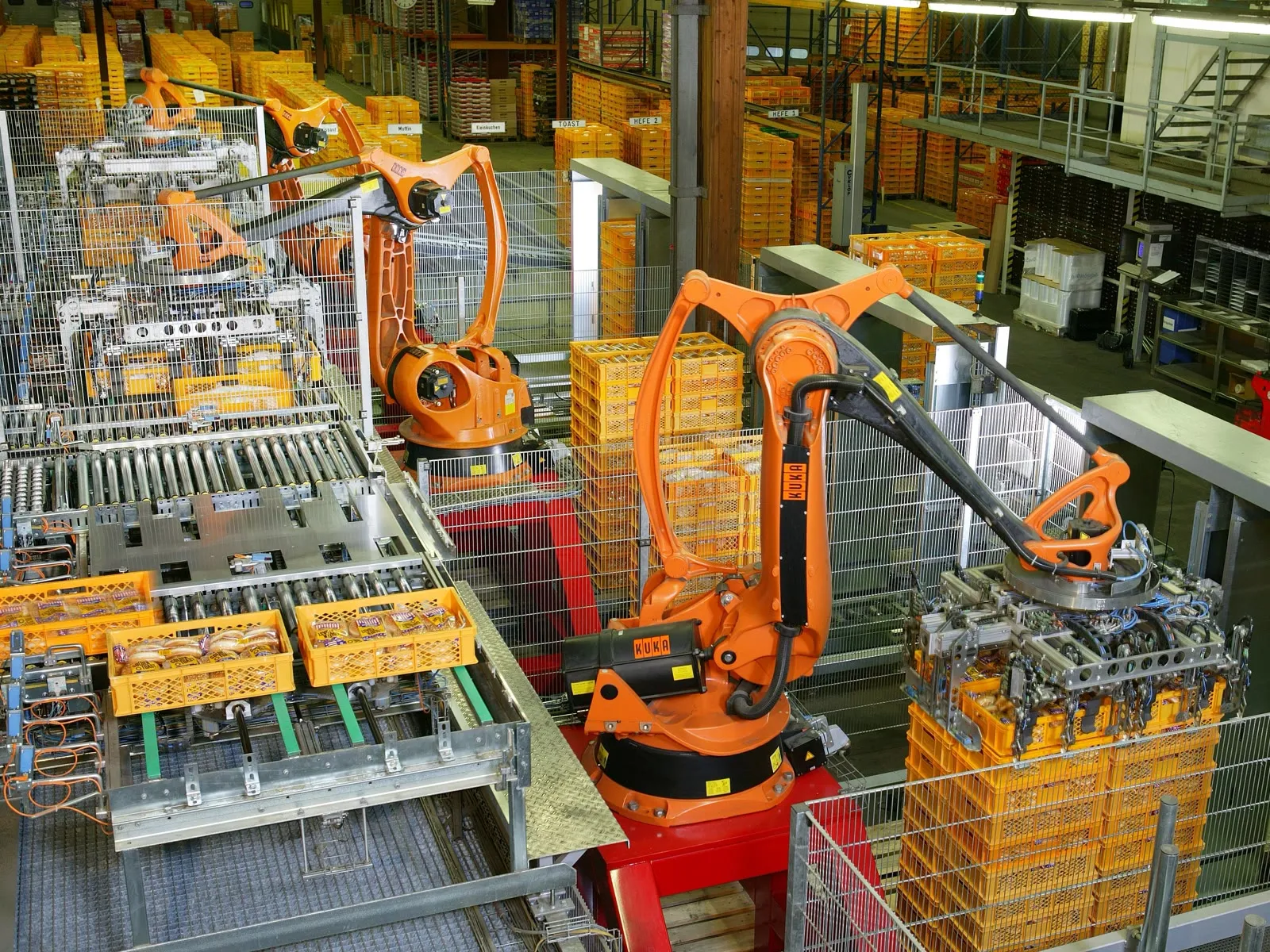
The International Federation of Robotics' World Robotics 2026 report puts global industrial robot installations at about 603,000 units in 2025, up 11 percent, with the operational stock crossing 5.079 million units, up 9 percent. Both are firsts: the first year above 600,000 installations, and the first time the installed base has passed five million. China alone accounted for 354,000 installations — 59 percent of the global total.
The sourcing implication is about supplier selection rather than headline automation. In a supplier base where roughly three in five new robots are installed in a single country, automation capability is becoming a qualifier for complex assemblies rather than a differentiator — and the cost of staying with a supplier that has not reinvested tends to appear later, as slower changeover, worse quality consistency and less willingness to take on engineering change.
- Golden Week is over: October 8 is the first working day, and October 10 is a make-up day
China's National Day break ran from Thursday October 1 to Wednesday October 7, with the first working day on Thursday October 8 and Saturday October 10 designated as a make-up working day, per the State Council notice. The 2027 schedule has not been published; the notice that fixes it usually appears in November.
Two practical points follow. The first week back is short and calendar-awkward, so production start dates and any outstanding pre-holiday quality issues should be chased now rather than assumed. And because the 2027 calendar is not yet fixed, any purchase order that assumes specific factory shutdown windows in January and February is currently built on assumption rather than notice — which is worth flagging to suppliers before the Q1 booking window closes.
New Products & Sourcing Ideas
- SOXAI RING X — a 5.19 mm smart ring that cleared US$635,200 in 72 hours
SOXAI, a smart ring company based in Yokohama, opened its Kickstarter campaign on October 2 and announced on October 5 that the Ring X had reached US$635,200 from 2,868 backers within 72 hours, after passing US$400,000 from 2,000 backers on day one. The pitch rests on two numbers: a 5.19 mm width, which the company describes as the narrowest in the category, and up to 10 days of battery life. SOXAI says the device is engineered in-house rather than rebranded, with manufacturing, testing and post-purchase support planned in Japan, and it cites more than 80,000 cumulative users of its app as evidence of an installed base. The campaign runs to October 10.
The category signal is the pace rather than the total: a first-time international launch clearing US$400,000 on day one at a four-figure price tier says the smart ring segment now has enough buyer familiarity to fund a newcomer immediately. For anyone sourcing in consumer wearables, width is the specification worth verifying, because it is the constraint that has kept rings out of the mainstream.
- abxylute M6 and M5 — sliding phone controllers that blew past 25 times their funding goal
abxylute opened a 40-day Kickstarter campaign for the M6 and M5 on October 6. Both attach magnetically and slide around the phone. The M6 is the fully equipped model: Bluetooth 5.3 or wired USB-C, capacitive thumbsticks with a 20-degree range that the company says resist drift, linear triggers with a hair-trigger mode, a re-mappable Z button that can fire multi-step macros, six-axis gyro and a 500 mAh battery rated for ten hours. The M5 goes the other way — 8.5 mm at its thinnest, USB-C only, no battery and no pairing, with low-profile thumbsticks that still include clickable LS/RS buttons.
Early-bird pricing starts at US$65 for the M6 and US$59 for the M5 against MSRPs of US$89.99 and US$84.99, with an M5 Founders Edition in translucent green limited to 1,000 units at US$109. Shipping is scheduled for November and December 2026. The design story is a collaboration between the Canadian brand and Jinjiang, a hardware tinkerer from Guiyang whose homemade slide controllers drew more than three million views. The commercially interesting part is the pricing logic: a modular accessory launching US$25 below its eventual retail price, on a sliding mechanism borrowed from an earlier era of phone engineering, is a reminder that accessory categories now compete on mechanical novelty at least as much as on electronics.

- Pongbot Aura — HK$31.48 million from 4,836 backers, and still shipping
Pongbot's Aura campaign stands at HK$31,482,453 from 4,836 backers for a 7 kg multi-sport AI coaching robot covering tennis, pickleball and padel, with more than 10,000 drills, five hours of runtime and voice control driven by a language model. The fulfilment story is the honest part: the company's most recent update says another 400 units have shipped, with a target of completing nearly 80 percent of Kickstarter orders in October and the rest in November, while a separate AI Vision module and a Spotter base ship separately from the base unit.
Two things are worth extracting for buyers rather than backers. First, the crowdfunding total is not the commercial signal — the accessory roadmap is, because a machine that needs add-ons to deliver its advertised experience carries a materially higher real cost than the pledge tier suggests. Second, the campaign's comment thread shows the classic hardware risk in plain sight: backers with identical configurations shipping out of order, and a discounted retail offer running before backers had received units. Anyone using crowdfunding as a supplier discovery channel should read the comments, not the funding bar.
Sourcing Platforms & Tools
- SAP puts Joule to work inside its own 110,000-person operation
At SAP Connect on October 6, SAP positioned its autonomous-enterprise offering around Joule Work, Joule Assistants and the SAP Business AI Platform. The adoption data it chose to lead with was internal rather than customer-facing: Joule Work is already live with 110,000 SAP employees, with the company reporting 20 percent productivity gains across finance, HR and procurement. On the sourcing side, SAP says early deployments of its International Trade Assistant cut trade classification effort by up to 50 percent, while supply-chain planners can resolve multi-hour disruptions in a single action. The stack is designed to run on existing data, authorisations and audit trails so that customers control the level of autonomy, and Joule connects to third-party AI and agents through the Agent2Agent protocol. Named users include Novartis, Morgan Foods, Nestlé and PwC.
The trade-classification figure is the one worth testing in a pilot, because classification effort is a bounded, measurable task rather than a judgement call — which makes it a rare case where a vendor's productivity claim can be checked rather than argued about. The broader point is architectural: SAP's pitch is that agents are only safe when they inherit the governance of the system of record, which is a direct contrast to tools that sit outside it.
- Diginex launches a multi-tier supply chain due diligence platform
Diginex has launched an end-to-end supply chain due diligence platform aimed at a sustainability software market it expects to exceed US$7 billion by 2029. It maps suppliers across multiple tiers and combines company, worker and third-party data to identify risks and track corrective actions — the remediation loop being the part most first-generation tools lack. The commercial timing is regulatory: the EU is preparing to enforce new due diligence requirements and a forced-labour product ban from December 2027.
For buyers, the forced-labour ban is the operative date, because it attaches to the product rather than to the company's reporting process — goods can be refused at the border if the exposure is not documented and remediated. Multi-tier mapping is the only way to answer the question a customs authority will actually ask, which is not who your supplier is but who your supplier's supplier is.
- SCSK SuccessChain for Procurement connects design, purchasing, production and quality
SCSK launched SuccessChain for Procurement on October 1, a platform that links design, procurement, production, quality and supplier data so manufacturers can visualise sourcing risk and evaluate alternative suppliers. It is a Japan-market play aimed squarely at the gap between engineering change and purchasing execution.
That gap is where a lot of supply risk actually lives. A component substitution agreed in design but never reflected in purchase orders is a delay waiting to happen, and a tool that puts both sides of that handoff into one data model is addressing a real workflow failure rather than a reporting problem. The question to ask in a demo is not whether the data is visible but who is responsible for closing the loop when design and purchasing disagree.
Industry Trends
- The memory squeeze has moved from component quotes into product pricing
Counterpoint Research now forecasts that shipments of sub-US$200 smartphones will fall roughly 40 percent between 2025 and 2030 — more than 230 million units a year disappearing — even as the total smartphone market recovers towards 2025 volumes. The mechanism is bill-of-materials arithmetic: memory and storage now account for nearly 60 percent of the BOM for phones under US$400 and more than 64 percent for devices below US$99, up from around one-fifth in early 2025. Entry-level manufacturers have very little margin left to absorb that, so several have stopped trying — Nothing's budget sub-brand CMF cancelled its planned Phone 3 Pro, and OnePlus has scaled back its regional footprint. Counterpoint's principal analyst expects the affordable segment never to return to its previous standing, with the opportunity shifting towards better-specced mainstream devices and premium products.
For buyers, the consequence is that "entry level" is becoming a moving target rather than a fixed price band. Where a supply plan assumed a US$100 to US$150 device as the volume driver, the same specification now costs materially more, and the realistic alternatives are a higher tier, a longer replacement cycle or refurbished stock — each of which changes the accessory and aftermarket volumes that sit around the device.

- Europe's operator channel is gaining share because the low end is collapsing
The same memory squeeze is visible in channel mix. Counterpoint's Europe Channel Share Tracker shows total European smartphone sales down 8 percent year on year in Q2 2026, but sales through operators down only 4 percent against an 11 percent decline in the open market. Because operator sales skew towards contract purchases and premium brands, the collapse of the low end has benefited that channel rather than hurt it: Apple overtook Samsung to lead Europe's operator channel with 37 percent share against Samsung's 34 percent, while vivo grew 90 percent and Motorola 27 percent. Counterpoint expects the operator channel to keep gaining share while the memory crisis weighs on the lower end, though it flags a steady increase in promotional activity by independent retailers as a partial offset.
The supply-chain read is about where the margin sits. When component costs push the cheapest devices out of the market, retail channels that depend on volume at low price points lose their economics first, and premium-weighted channels absorb the shift. Buyers selling into European retail should be modelling a smaller addressable low end and a larger share of purchase decisions happening under contract.
- Germany's electrical industry is the clearest sign that AI capex is reaching European suppliers
ifo's survey of Germany's electrical industry recorded its business climate index jumping 8.3 points in September to 24.8, with the assessment of current conditions climbing 14 points to 29 and expectations improving as well. The improvement is demand-driven: manufacturers reported significantly more new orders and, for the first time in a while, satisfaction with their order backlogs, and companies are planning higher production. Earlier ifo surveys had already identified digitalisation, data centres, AI and automation as the drivers of stronger orders in the sector. The constraint is now supply rather than demand — around 40 percent of companies reported shortages of intermediate products, and a growing number are considering higher selling prices.
That is the shape of the current cycle for anyone buying electrical equipment. Order books are filling from AI-related construction, and the bottleneck is the supplier's ability to produce rather than the buyer's willingness to spend. It is also a reminder that lead-time and price pressure on switchgear, transformers and control equipment is a demand story — and demand stories do not reverse quickly.
Payments & Trade Finance
- Visa: 17% of stablecoin-linked card volume is now business and commercial
New Visa data shows that approximately 17 percent of stablecoin-linked card volume in fiscal 2026 year-to-date occurred across business and commercial card programmes. Visa supports more than 160 stablecoin-linked card programmes spanning consumer, business and commercial activity, with payment volume across them up nearly 200 percent year on year. "Businesses aren't looking for new payment technologies for the sake of innovation. They're looking for trusted, reliable ways to move money," said Visa's global head of product for Commercial and Money Movement Solutions. Allium research cited by Visa puts annual stablecoin payment volume at US$401 billion to US$527 billion, led by service fees at US$56 billion, payroll at US$43 billion and supplier payments at US$28 billion — and finds that B2B had the highest cross-border share at 43 percent.
For importers, the last figure is the one that matters. A payment type where 43 percent of volume crosses a border is no longer a crypto-market curiosity but a settlement rail competing on speed and cost with correspondent banking. It is worth asking suppliers which one they would rather be paid through, and what that does to the terms.
- Korean corporates are testing stablecoins abroad — and settling in about seven minutes
Hyundai Motor America converted US$20,000 into USDT in July and transferred it to a Mexican affiliate, which converted it back into dollars; the entire transaction and verification process took about seven minutes, against several hours for a comparable bank transfer. Hyundai Card facilitated the test and is reportedly planning further trials, while Coupang and Woori Bank have tested real-time settlement using won-backed stablecoins. Per Allium's blockchain data, stablecoin payments linked to goods and services involving Korean companies reached approximately US$620 million between January 2021 and September 2026. Korea's Digital Asset Basic Act is expected to address stablecoin regulation, with the Financial Services Commission planning to submit the framework by November.
The pattern is a familiar one from other markets: experimentation happens offshore, through an overseas subsidiary, because the domestic rulebook is not finished. Buyers with Korean suppliers should expect the settlement conversation to move faster than the regulation does, and should be explicit about who carries the conversion and compliance risk in the interval.
- Hong Kong and Malaysia set up a joint workstream on cross-border stablecoins
The Hong Kong Monetary Authority and Bank Negara Malaysia held a high-level bilateral meeting in Hong Kong on October 2, agreeing to explore cross-border stablecoin applications and to strengthen links between their financial systems, alongside discussion of banking regulation and fintech. Hong Kong's Stablecoins Ordinance came into effect in August 2025 and established a licensing framework for issuers of fiat-referenced stablecoins, with the HKMA focused since then on licensing and supervising issuers while pursuing interoperability.
This is a policy workstream rather than a payment product, so nothing changes for a buyer this quarter. It matters as direction of travel: two regulators with different currencies and different legal traditions agreeing to study a shared settlement rail is the precondition for the corridor-level use cases that could eventually reduce cost for trade between Southeast Asia and Greater China.
Buyer Voices & Insights
- "World-class teams of any type share common objectives, common process/policy, and common data." — Reagan Smith, Chief Procurement Officer, Iron Mountain
Smith's framing is deliberately unglamorous, which is what makes it useful. The profile it comes from describes moving procurement from a reactive back-office function to a proactive partner by anchoring it in common goals, consistent policies and shared data, so that procurement initiatives connect directly to P&L results and finance-backed metrics. The test of the claim is not the ambition but the data layer: without a single view of spend and contracts, "common objectives" stays a slogan rather than an operating model.
- "Do we have a supply chain that we are building that is going to allow us to navigate and be agile enough, no matter what the world continues to throw at us?" — Frank Mckay, Chief Supply Chain & Procurement Officer, Jabil
Mckay's question is the one to ask before any resilience investment, because it reframes the objective. The point of the conversation is that procurement and supply chain at Jabil have been brought together around a common source of truth, and that procurement's measures of success have expanded beyond cost reduction to include balance-sheet health, resilience and revenue generation. If the goal is confidence in the business's ability to deliver, then a supplier scorecard weighted almost entirely on price is measuring the wrong thing.
- "Spend is like water. It will take the path of least resistance in most situations." — Michael Shields, Vice President of Procurement, Tropic
Shields reframes maverick spend from a behavioural problem into a design problem, and the follow-on question is the useful one: not why there is so much off-process buying, but how the process should change to be a better experience. Water does not break rules — it finds the gap. Which means every recurring exception is evidence about the routing rather than about the requester.
- "The goal isn't to catch maverick spend. The goal is to make it unnecessary." — Clarice Camacho, global energy procurement and risk leader
Camacho's line is the standard the function should hold itself to, and it comes with a diagnostic attached: if the compliant route is slow, complicated or simply does not meet the business need, people will find another way, and that is a user-experience problem rather than a compliance one. The same thread runs through the other contributions — track exception reasons and procurement cycle time together, and within a quarter you can tell whether you have a compliance issue or a process-design issue.