
Weekly (Issue 9): Five November Dates the Truce Does Not Cover
This week: The political calendar and the regulatory calendar disagree. The U.S.–China truce runs to January 10, 2027, but four separate measures resolve on November 9 and 10 — the BIS Affiliates Rule suspension, the Section 301 port-fee suspension, 178 Section 301 exclusions, and China's rare-earth licensing round — and none of them is contingent on how the truce plays out. Elsewhere: China adds five more rare-earth elements to its licensing list while European applicants wait in the queue, the 2018 Section 301 actions survive their four-year anniversary on 162 continuation requests, transpacific spot rates hold near 12-month highs straight through Golden Week, and Q4 memory contract prices are confirmed upward.
Trade Policy & Tariffs
Your November compliance calendar has five dates, and the truce covers none of them
The mismatch fits on one page. The political calendar says the U.S.–China truce runs to January 10, 2027. The regulatory calendar says several separate measures resolve on November 9 and 10, 2026 — two months earlier — with nothing on the Federal Register extending them. On November 9 the BIS Affiliates Rule suspension ends and the rule reinstates automatically, worldwide. On the same date the Section 301 maritime and shipbuilding port-fee suspension ends and the fees reinstate. On November 10 the 178 remaining Section 301 exclusions expire and duties reinstate on the affected tariff lines. Also on November 10, China's expanded rare-earth export controls take effect, attaching new licensing requirements to goods made anywhere in the world using Chinese-origin rare earths above a threshold of the item's value.
"None of the November dates are contingent on how the truce plays out. These are standstills ending on their own terms, on a date two months earlier than the headline suggests." — Thomson Reuters, Section 301 exclusions expiration
The Affiliates Rule is the one most often mis-scoped, because it is tempting to assume that a suspension which lapsed quietly is a suspension that will be quietly renewed. BIS published the interim final rule on September 29, 2025, expanding end-user controls to majority-owned affiliates of listed entities; it suspended the rule for one year on November 10, 2025; the licence requirements and provisions are reimposed on November 10, 2026 unless BIS acts first. Reinstatement is automatic — no new publication or affirmative step is required. For exporters that makes ownership review a booking-process problem rather than a compliance afterthought, and the documents have to be collected at quotation, not at booking: certificate of incorporation or trade registry extract, shareholder register naming every holder above ten percent, and an ultimate beneficial ownership statement.
- China added five more rare earth elements to its licensing list — and the licence queue is the story, not the list
Beijing has added five more rare earth elements, together with refining technology, to the items requiring an export licence — extending the controls beyond raw material shipments to the process know-how that would let other countries build their own separation capacity. The practical effect shows up in approval rates rather than headlines: according to a review of figures from the EU Chamber of Commerce in China, fewer than one quarter of more than 140 monitored licence applications had been approved by mid-September 2026. The European Commission's REsourceEU plan aims to cap dependence on any single country at 65 percent of demand, and recycling could cover roughly 20 percent of the bloc's permanent magnet needs — a share that will take years of investment to reach. Licence lead times look likely to stay a problem for European industry through 2027 at least.
The price signal is the clearest part. The controls did not create scarcity so much as a two-tier market: April 2025's Announcement No. 18 imposed per-shipment licences on seven heavy rare earths, the October 2025 round added holmium, erbium and thulium plus extraterritorial provisions, and in 2026 Beijing barred dual-use supplies to ten U.S. companies including MP Materials and USA Rare Earth, then to 14 EU firms. The IEA's estimate is that full enforcement would put $6.5 trillion of downstream production at risk, with the U.S. and Europe accounting for nearly half. For sourcing teams the working assumption should be that licensing friction, not a ban, is the permanent state — and that the next things to watch are the Chamber's approval rate, any additions to the control lists, and the first accepted price undertakings.
- USTR confirmed the 2018 Section 301 duties survived their four-year anniversary — on 162 requests
USTR published its Continuation of Actions notice on October 7, 2026 at 91 FR 64212 (FR Doc 2026-20510): the July 6, 2018 action did not terminate on July 6, 2026, and the August 23, 2018 action did not terminate on August 23, 2026. Both remain in effect, subject to possible further modification. The mechanism is one of the few genuinely participatory features of U.S. trade remedy law — a single qualifying request from a benefiting domestic industry is enough to prevent termination, and USTR has no discretion over continuation once one is filed. It received 68 producer requests and 18 association requests for the July action, and 57 plus 19 for the August action: 162 in total. One request would have sufficed. The volume is a signal about constituency breadth, not legal substance.
The architecture the notice silently preserves covers roughly $370 billion in Chinese imports at the trade values prevailing when the lists were drawn: List 1 at 25 percent on about $34 billion effective July 19, 2018; List 2 at 25 percent on about $16 billion effective August 23, 2018; List 3 on about $200 billion, initially 10 percent and raised to 25 percent effective May 10, 2019; and List 4A at 7.5 percent on about $120 billion effective February 14, 2020. A separate notice the same day (Doc 2026-20511) made a conforming amendment to one exclusion for a July 1, 2026 statistical-code change. USTR will now publish a further notice opening the statutory review — and that review can raise rates rather than merely hold them. The last cycle ended with semiconductors at 50 percent, solar cells at 50 percent and steel and aluminium products at 25 percent. Screen the affected lines at the eight- and ten-digit level now, and treat the review docket as a live pricing input rather than a formality.
- The EU and China signed 16 points in Beijing, including a brake on Chinese hybrid exports
European Commissioner Maroš Šefčovič and Chinese Commerce Minister Wang Wentao reached what both sides describe as a WTO-consistent understanding on trade in hybrid and plug-in hybrid vehicles during consultations in Beijing on October 8–9, alongside a joint statement and a list of 16 understandings. Šefčovič said the proposal could reduce projected Chinese hybrid and plug-in hybrid exports to the EU by more than 50 percent over the next four years, compared with a scenario assuming no policy change. On rare earths and permanent magnets, China expressed willingness to keep facilitating licences through an existing fast-track mechanism, and both sides discussed more predictable licensing and advance notice of relevant controls.
The procurement-relevant caveat is that none of it is in force. The hybrid arrangement still requires EU political assessment before implementation, and no new treaty, enacted tariff reduction, removal of export controls or individual licence award was confirmed for October 9. The 16 points also sit alongside measures running the other way: the same week the EU opened a sunset review on Chinese aluminium flat-rolled products and re-registered a polyvinyl alcohol case, while China raised anti-dumping duties on European pork. A ministerial video conference is planned for January 2027, with the next formal consultations in March 2027. Plan against the controls that exist today, not the ones a communiqué gestures at.
Supply Chain & Logistics
- Transpacific spot rates held near 12-month highs through Golden Week, and Shanghai is still the constraint
Golden Week is normally the week the ocean market catches its breath. Not this year. Freightos data as of October 6 put Asia–U.S. West Coast spot rates at $8,322 per FEU, down 3 percent week on week but still at the top of the year's range, and Asia–U.S. East Coast at $9,606 per FEU, flat week on week. The backlog is the reason: 157 vessels were waiting at berth in Shanghai as of mid-September, average delays were running seven to ten days, and typhoon-related disruption at major Asian gateways produced port omissions, vessel bunching and schedule changes that Ascent Global Logistics says will take several weeks to work through. Carriers met the holiday by pushing already-elevated rates up rather than discounting.
The planning implication is that a softening headline index does not mean a soft booking. Blanked sailings tied to weather disruption may keep the floor under transpacific rates even as volumes ease, and the recovery timetable is measured in weeks, not days. If your fourth-quarter replenishment depends on space out of China, price the sailing you can actually book rather than the index — and treat mid-to-late October as the window when delayed Golden Week tonnage and regular services arrive together.

- The real peak-season risk is space disappearing before you book, not the rate you agree
Capacity, not price, is where the fourth quarter is tightening. Zencargo's October 6 market update reports overall capacity heavily restricted with carriers announcing full ships into the second half of October, peak-season surcharges continuing on named account contracts throughout the month alongside separate Panama Canal surcharges, and blank sailings tracking at roughly 8 percent into Golden Week before easing to about 5 percent. Its recommendation is blunt: book three to four weeks in advance. Lingering typhoon disruption is still costing roughly five days out of Shanghai and Ningbo, and volume shifting from all-water routings to inland rail is pushing up dwell times at the main rail ramps, with pressure already visible at Los Angeles and Long Beach.
Reliability data explains why advance booking beats negotiating. Asia–U.S. West Coast schedule reliability fell to 60.6 percent across July and August, an 8.8 percentage point month-on-month drop, with late vessels averaging just over six days of delay; Asia–U.S. East Coast reliability fell 9.6 points to 61.7 percent with delays averaging 6.39 days. On the transatlantic, carriers have kept a 6 to 9 percent cancellation rate to defend a post-summer rate increase, and mid-to-late October is expected to bring bunched double arrivals at Rotterdam, Antwerp and Hamburg. Treat October schedules as placeholders and build a roll allowance into the delivery date you promise.
- Air cargo buyers are moving to three-month contracts because a one-year fixed rate no longer fits
The way shippers buy air freight capacity has changed faster than the rate itself. Xeneta's analysis of contracts effective from Q3 2026 found 60 percent were for three months or less, against 25 percent a year earlier and 47 percent in Q2 2026; three-month agreements alone accounted for 42 percent of new contracts, up from 16 percent, while the share of 12-month deals fell from 40 percent to 25 percent and contracts longer than 12 months all but disappeared at 3 percent. Global spot rates valid for up to one month averaged $3.10 per kilogram in September, up 27 percent year on year but only 2 percent month on month, on September volumes 6 percent higher year on year against capacity up 2 percent — enough to lift Xeneta's dynamic load factor two points to 62 percent.
"A one-year fixed rate deal doesn't fit the current conditions. Shippers are looking to build mechanisms which add flexibility to their commercial relationships with forwarders, and which will help to ensure they hold across the year." — Niall van de Wouw, Chief Airfreight Officer, Xeneta
Fuel is what puts a floor under the market: jet fuel has roughly doubled from its pre-conflict level, with Brent above $100 a barrel in early September, and technology lanes are absorbing freighter capacity faster than general cargo can compete for it. Data centre components alone now account for 1.4 million tonnes of annual air freight and have expanded 39 percent year on year. The operational conclusion is that last-minute air freight is no longer a reliable backup for routine replenishment. If a late order has to fly, price the current lane quote and the fuel surcharge before agreeing — the air market is heading into peak from a higher base, not a lower one.
- Chittagong's yard is full, and it is eating close to two fifths of the port's capacity
Chittagong is the counter-example to the idea that congestion always shows up in vessel waiting times. The seven-day average vessel waiting time for the week of September 30 to October 6 was about 1.07 days, with gearless vessels held inside a 48-hour port-stay window — figures that look healthy. Yard density, however, remains at 75 to 80 percent, above the 60 percent level normally treated as the working threshold, and stranded import cargo is eroding close to two fifths of the port's operational capacity. The bottleneck has moved from the anchorage to the yard, which is where it hurts forwarders: yard capacity and empty-container return are the constraint, not berth availability.
The commercial backdrop is unsettled. On October 6 the Chittagong Port Authority warned media and port users against publishing photographs, videos or operational information without prior permission, citing security concerns and the Official Secrets Act. Opponents of a proposed 15-year lease of the New Mooring Container Terminal have demanded the resignation of the port chairman, and customs removed nine containers holding 150.89 tonnes of expired hazardous chemicals that had occupied yard space for more than two decades. If you route Bangladesh volume, confirm destination yard acceptance, empty-container return and pick-up capability before booking, not after.
Factory & Manufacturing
- Global manufacturing output grew at its fastest pace since July 2021 — and the recovery is spreading beyond tech
The J.P. Morgan Global Manufacturing PMI posted a 55-month high of 53.0 in September, up from 52.3 in August and the highest reading since February 2022, with the headline index signalling expansion for 14 consecutive months and all five sub-components consistent with improvement. Manufacturing production increased at the quickest pace since July 2021 — a 62-month high — underpinned by the steepest gain in new business for 55 months. Output grew in 22 of the 33 economies surveyed: Thailand recorded the sharpest rise, while Ireland and the Netherlands posted their best readings since early 2022, Taiwan and the U.S. their highest since mid-2021, South Korea its strongest since March 2021, and Germany helped lift eurozone output growth to its fastest since February 2022.
The detail that matters for buyers is breadth. Orders at basic-materials producers grew at their fastest rate since February 2022, narrowing a gap that had persisted for much of the past two years, which means the upturn is no longer carried by technology exporters alone. That is good news for availability and less good for pricing: rising demand plus lengthening supplier lead times is the classic combination that precedes firming input prices. U.S. data points the same way — unfilled orders rose 0.6 percent in August to $1,609.6 billion, up in 25 of the last 26 months, and inventories rose for an eleventh consecutive month to $972.4 billion.

- A wheeled humanoid hit 60 tote moves an hour on a live factory floor — measured, not demoed
The interesting part of Siemens' work with Humanoid and NVIDIA is the methodology, not the robot. The HMND 01 Alpha, a wheeled humanoid built on NVIDIA's physical AI stack, completed a deployment at Siemens' electronics factory in Erlangen, Germany, autonomously handling tote logistics — picking, transporting and placing containers. It met every target set for the trial: 60 tote moves per hour, pick-and-place success above 90 percent, and more than eight hours of continuous autonomous uptime, working alongside automated guided vehicles and existing machinery without a dedicated safety perimeter. Training ran through Isaac Sim and Isaac Lab with Jetson Thor at the edge, and simulation-first design cut prototype development from the industry-standard 18 to 24 months to seven.
What makes this relevant to a sourcing decision is the integration layer rather than the hardware. Siemens' Xcelerator portfolio supplied the digital twins, AI-enabled perception, PLC-to-robot interfaces, fleet management and industrial communication networks that let the robot exchange data with production systems in real time — the part that decides whether a robot is a production asset or an isolated device, and the part most humanoid pilots skip. The caveat still stands: a validated single task is not a validated process, and a two-week trial is not a service contract. Ask vendors for measured throughput per hour, uptime across a full shift, and the integration stack by name before you compare unit prices.
- China's main shipyards are booked into 2029 and 2030, and the forward order cycle has stretched to 3.5 years
Capacity, not demand, is now the binding constraint in shipbuilding, and the numbers say so. In the first half of 2026 the world placed 1,481 new ship orders totalling 42.95 million compensated tons; Chinese yards took 1,131 of them — about 31.0 million tons, 72 percent by compensated tonnage and a fourth straight year on top. Korea took 195 orders, about 19 percent; Japan about 1 percent. In June China's share of new contracting hit 85 percent and by August it still held 85.4 percent against Korea's 7.3 and Japan's 3.7. By the end of August the global orderbook stood at 216.4 million compensated tons, with China holding 67.2 percent at 145.4 million.
The delivery math is what procurement should absorb. China's main yards are booked into 2029 and 2030, and the forward order cycle has stretched from 2.5 years to 3.5 — latecomers are stuck in the queue. The global orderbook-to-fleet ratio has reached 21 percent, double the 10 percent of 2020 but far below the 55 percent peak of 2008. Prices reflect full slots rather than input costs, with steel easing from 2021 highs while Clarksons' newbuilding index read 185.15 in June 2026, just above the 2007 record of 184.83; a 174,000 cbm LNG carrier was quoted around $248.5 million and a VLCC around $130.5 million. If tonnage is on your 2027–2028 capital plan, the quote you get next quarter will not be the quote you get next year.
New Products & Sourcing Ideas
- Tiiny AI Pocket Lab — a 300-gram box that runs a 120B-parameter model offline, and a case study in crowdfunding delivery risk
Tiiny AI's Pocket Lab is a 300-gram device that claims to run 120-billion-parameter language models entirely offline at more than 20 tokens per second, in a 14.2 × 8 × 2.53 cm chassis with a 12-core ARMv9.2 CPU, a neural processing unit rated at roughly 190 TOPS, 80 GB of LPDDR5X unified memory, a 1 TB SSD and a 65-watt power envelope. It cleared $1 million on Kickstarter within five hours of its March 11 launch from 728 backers, with 70 percent of backers in the United States, at a $1,399 super early-bird price and delivery targeted for August 2026. The efficiency claims rest on two proprietary technologies — TurboSparse for neuron-level sparse activation, and PowerInfer, an open-source inference engine with more than 8,000 GitHub stars, for distributing workloads across CPU and NPU.
For anyone sourcing edge AI hardware, the useful part is the gap between the pitch and the evidence. The device is positioned as an "AgentBox" for agent deployment rather than general-purpose compute, and it supports one-click deployment of models including Llama, Qwen, Mistral and Phi plus agent frameworks such as OpenManus and ComfyUI — but whether the hardware can sustain multi-agent workloads rather than single-model inference remains undemonstrated in public benchmarks. Treat campaigns like this as a supplier-risk exercise: ask for production yield on the first run, a named contract manufacturer, and a ship date backed by a logistics provider, not a target month.
- Meta open-sourced the hardware layer behind its AI assistant — with a commercial-use catch
Meta published the Muse Gadget SDK and device firmware as open source under Apache 2.0, giving the personal agent an official hardware layer developers can program. There are two tracks: an ESP32 Device SDK and firmware, which connects compatible boards to Muse over Wi-Fi with Bluetooth Low Energy pairing and an encrypted session with the user's Muse virtual machine, and a Linux Device SDK for Raspberry Pi 3B+, 4, 5 and Zero 2 W plus other Bluetooth LE machines on Raspberry Pi OS Bullseye or later, Debian 11 or later, and Ubuntu 22.04 or later. The agent itself does not run locally — it stays in Meta's infrastructure and the device acts as a thin client for screens, buttons, microphones, speakers and sensors.
The Linux track is where the sourcing question sits, because it reaches below the interface. The SDK lets the agent execute shell commands, read and write files, and inspect system information such as CPU load, memory, storage and temperature — and Meta warns explicitly that if the account running the Linux client has sudo access, Muse can use those privileges too. Meta also shipped a reference device, Muse Home Link, built on an ESP32-C5 with 8 MB PSRAM, 8 MB flash, Wi-Fi 6 on 2.4 and 5 GHz, and USB-C and USB-A ports, producing 5,000 units for eligible U.S. Muse subscribers. Read the licence before you design around it: the firmware is open, but every gadget still needs a revocable Meta-issued SDK token, tokens are limited to personal, non-commercial use, and the terms restrict selling or publicly listing devices that use the service.
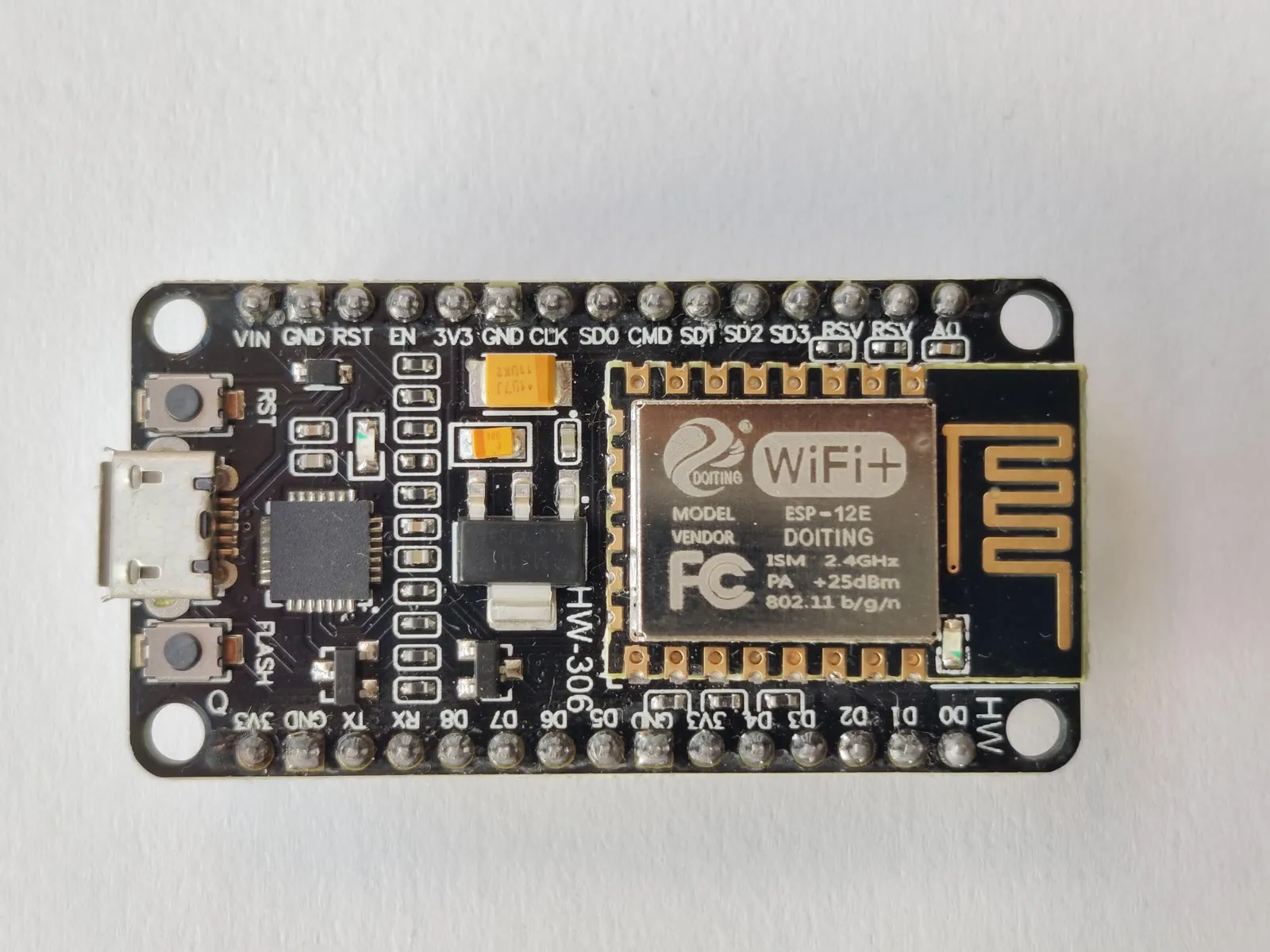
- A $119 build-it-yourself 4G phone that ships in mid-2027 — and the sector's 4.24/5 reputation average
Croatian firm CircuitMess has put MAKERphone 2.0 on Kickstarter and passed its funding goal with weeks still to run, at nearly 790 percent of target. The kit removes the biggest barrier of the first version: no soldering. It runs an ESP32-S3 dual-core processor with 4 MB of flash and 4 MB of PSRAM, supports 4G LTE with 2G fallback through a Nano SIM so users can make real calls and send texts, and pairs a 1.77-inch 160×128 colour display with a 12-key numpad, a navigation joystick and four function keys, plus a DAC, speaker, I²S microphone, 3.5 mm jack, 1000 mAh USB-C battery, microSD slot and Wi-Fi, Bluetooth and USB. The kit starts at $119 for super early backers and rises to $169 for retail backers, with shipping estimated for July–August 2027 — more than a year after most backers pay.
Two things make this more than a novelty listing. First, the module set is a genuine sourcing menu: infrared, camera, 2W speaker, LED, and a temperature and humidity sensor ship in the box, with a perfboard for custom sensors, and coding runs through MicroPython or Arduino C++ with CircuitMess's VibeBoy AI-assisted coding tool. Second, the reputational context is finally measurable — Trustburn's consumer-electronics sector data across 221 companies with enough reviews puts the average customer rating at 4.24 out of 5, with 75.1 percent of firms at four stars or above and only 2.7 percent at two stars or below. Crowdfunding popularity is not a proxy for delivery: check the previous product's actual shipping record before treating a campaign page as a supplier reference.
Sourcing Platforms & Tools
- Beacon Bid put an AI reviewer in front of every solicitation
Beacon Bid has launched Procure AI Solicitation Review, which runs as the final step of its e-procurement posting workflow — after buyers complete a solicitation's basic information, important dates and contact information, and before it publishes to suppliers. The reviewer returns a plain-language summary of how close the draft is to release plus a short list of specific issues marked by priority, and fields with feedback are starred in the earlier steps so buyers can go straight to what needs attention. It checks for the wrong file uploaded, unclear titles, missing proposal deadlines or question-and-award timelines, incomplete scope and background, placeholder phone numbers and email addresses, category adjustments, and whether the selected solicitation type actually fits the procurement. Buyers can talk the analysis through with the tool or re-run it after editing.
- Avant built an AI model on 17 years of channel data to fight AI-assisted buying
Avant rolled out an AI model called Orion and an intelligence layer called The Grid at its Special Forces Summit in Dallas on October 7. Orion accesses Avant's product and sales information through The Grid, which mines 17 years of proprietary channel data, and third-party models can be plugged into The Grid's API. The Grid is being trialled with a small group of technology advisors and Orion is in internal testing, with a beta planned for the first quarter of 2027 and general availability in the second; successful features are expected to be folded into Avant's Pathfinder platform as first-party capabilities.
The commercial problem Avant is answering is worth noting on its own. One technology advisory firm recently lost a $40,000-per-month engagement after a client bought directly from the vendor on an AI agent's recommendation, and an AI Revenue Institute survey found 82 percent of B2B buyers would be skeptical of third-party advisors or avoid them entirely if AI disagreed with the partner. The bet is that industry context beats scraped public data — as Avant's CEO puts it, the large models learned the industry by scraping public data, while distributors learned it by living it. If you are being advised on technology purchases, ask what data the recommendation rests on and whether it includes validated deal outcomes or only public marketing material.
- ProcureAbility's 2026 CPO Benchmark: expectations are rising faster than capacity
ProcureAbility's 2026 CPO Benchmark Study, based on 160 procurement leaders across 21 industries, finds 61 percent of leaders expecting to deliver more savings than last year while 71 percent describe their team capacity as moderately or highly constrained. The biggest single barrier to savings is timing: 43 percent identify late engagement as the number one obstacle, meaning procurement is simply not in the room when requirements and budgets are set. The study frames the five priorities as connected rather than sequential — engage earlier, move AI from experimentation to enterprise value, build trusted data, build future-ready capability, and strengthen supply resilience.
The AI and risk numbers are the ones to take to a budget conversation. Forty percent of organisations are still running AI pilots and only 11 percent have scaled AI across multiple procurement processes, yet reported value rises as adoption broadens — a signal that the blocker is governance and use-case definition, not technology selection. On data, 51 percent of leaders name data quality as their biggest analytics gap, which is what caps the ceiling on any AI investment. And on resilience, 62 percent identify geopolitical exposure as a high-impact supply risk while only 6 percent have predictive or real-time supplier risk monitoring. Capability building is following the same pattern: 46 percent are upskilling existing talent, 31 percent are using automation to cut workload, and 19 percent are hiring.
Industry Trends
- Q4 memory contract prices are now confirmed upward — and compounding is the real story
TrendForce's fourth-quarter guidance is out, and it points to a second consecutive quarter of increases for conventional DRAM at 10 to 15 percent quarter on quarter and NAND at 15 to 20 percent. Read alone, that looks like cooling — DRAM's rise is narrower than the 13 to 18 percent recorded in Q3. Read across the year, it is something else. Contract prices have risen in every quarter of 2026: NAND up 33 to 38 percent in Q1 and 70 to 75 percent in Q2, conventional DRAM up 55 to 60 percent in Q1 and 13 to 18 percent in Q3. Chained together, those four forecasts imply contract prices 2.86 to 3.33 times their level going into 2026 if each quarter landed at the bottom and top of its published range. That is an implication of the forecasts, not an observation — but it is the arithmetic your 2027 bill of materials is being built on.
TrendForce expects enterprise SSD to be the only memory category to rise by more than it did in Q3, with client SSD increases restrained by inventory and limited procurement, and wafers up only modestly. One side effect is worth flagging for anyone comparing options: the enterprise flash premium has nearly vanished. The cheapest tracked enterprise NVMe drive is $117 per terabyte, only 12 percent above the cheapest consumer NVMe per terabyte — a spread that normally reflects endurance ratings an order of magnitude apart. When that gap closes, "enterprise-grade" stops being a meaningful price differentiator and the discipline has to come from specification instead.

- 84 percent of supply chain chiefs now rank resilience above cost reduction
DP World's Global Trade Observatory surveyed 103 chief supply chain officers across 14 markets and nine industries in August, and 84 percent said resilience and optionality have overtaken cost reduction as the primary drivers of supply-chain strategy. The shift is already showing up in network design: 71 percent plan to diversify their supplier base over the next 12 months, 59 percent expect to increase inventories, 57 percent plan to move operations closer to home markets, and 48 percent intend to shift operations to allied or partner countries. The single most common combination, chosen by 22 percent, is doing three at once — diversifying suppliers, increasing inventories and nearshoring simultaneously. Access to alternative and multimodal trade routes is now called a competitive advantage by 86 percent.
The report calls the move one from optimisation to optionality, and it is candid about the trade-off: additional suppliers, higher inventories and alternative routes all add cost and complexity, so the real decision is which options are worth maintaining before disruption arrives. Capability differs sharply by size — 80 percent of organisations with more than 1,000 employees plan to increase inventories, against 44 percent of those employing 50 to 250 people — which is a reminder that working capital, not conviction, sets the ceiling for smaller buyers. The most frequently named growth capabilities are digital integration and end-to-end visibility, cited by about half of respondents, ahead of lower-carbon supply chains at 38 percent and faster customs processes at 35 percent. Notably, 97 percent are optimistic about global trade over the next year despite 90 percent saying recent tariff changes reshaped their investment and sourcing decisions.
- The extended peak season is finally winding down — August was the busiest month, not September
The Global Port Tracker report from the National Retail Federation and Hackett Associates has closed the book on an unusually long peak. U.S. ports covered by the tracker handled 2.3 million TEU in August, up 0.4 percent from July but down 0.7 percent year on year, making August the busiest month of 2026 — a revision from the previous forecast that September would take the top spot. September is now projected at 2.28 million TEU, cut from 2.31 million a month earlier though still up 8.2 percent year on year; October is forecast at 2.25 million, up 8.5 percent; November at 2 million, down 1 percent; and December at 2.02 million, up 0.6 percent. That would put the full year at 25.8 million TEU, up 1.4 percent on 2025's 25.4 million.
The pattern behind the numbers is a peak that arrived early and refused to leave, rather than a demand surge that peaked and fell. Frontloading ahead of tariff deadlines pulled volume forward into spring, and resilient consumer spending plus shipping delays stretched the season through the summer and early autumn. Individually the monthly moves are small — as the NRF's supply chain lead puts it, the month-to-month differences amounted to little more than a rounding error. For import planning, the practical read is that most holiday merchandise has landed and the remainder of the year is replenishment plus preparation for an early 2027 Lunar New Year, with January imports forecast at 2.07 million TEU, down 1.9 percent, and February at 1.92 million, up 1 percent.
Payments & Trade Finance
- ESMA gave EU platforms three months to stop servicing non-MiCA stablecoins — the deadline is 8 January 2027
The European Securities and Markets Authority published an opinion on 8 October 2026 telling national regulators that crypto-asset service providers authorised under MiCA should stop providing services related to non-MiCA-compliant stablecoins to EU clients, and that supervisors should require remediation of remaining exposures as soon as possible and no later than three months after publication — which puts the deadline at 8 January 2027. The scope is deliberately broad, covering exchange services, trade execution, transfers, custody, advice and portfolio management. During the wind-down, platforms may only help clients sell, convert, withdraw, transfer or safeguard tokens they already hold; new purchases, promotion and continued trading availability are not permitted. ESMA states explicitly that relying on warnings, disclosures or client acknowledgements would not sufficiently address the concerns.
What the opinion does not do is name a token. It is supervisory guidance to national authorities rather than new legislation, and enforcement runs through each member state, so how strictly it lands will vary. In practice the tokens most affected are Tether's USDT, which is not authorised under MiCA, and PayPal's PYUSD; MiCA-authorised e-money tokens such as Circle's USDC and EURC sit outside the opinion's scope. Several large platforms had already restricted USDT for European users, and MiCA's full platform rules took effect on 1 July 2026. For treasury teams settling in stablecoins with European counterparties, the question is no longer whether a token is accepted but whether the platform on the other side can legally keep offering it.
- Circle and Tereina put USDC and EURC directly inside SAP Cloud ERP
Circle and Tereina — a payments company backed by SAP and led by Cedric Bru, previously of Taulia — announced a partnership on October 7 to integrate USDC and EURC into Tereina's payments infrastructure, starting with SAP Cloud ERP and available to eligible SAP customers through SAP Pay. USDC is the preferred stablecoin for eligible dollar-denominated workflows and EURC covers euro-denominated activity, sitting alongside conventional rails rather than replacing them. The pair plan joint proof-of-value programmes with customers, training for treasury and payments specialists, and work with ecosystem partners over the coming months.
The distribution argument is the reason this matters more than a typical stablecoin pilot. SAP describes its customer base as generating 84 percent of global commerce, and the integration targets that installed base instead of asking finance teams to stand up separate custody and blockchain infrastructure just to test settlement. SAP Pay launched on October 6 after 2.5 years of development, is available in the United States and the United Kingdom at launch, supports ACH, wire, checks, EFTs and stablecoin settlement across more than 40 currencies and 89 payment corridors, and uses Circle's Arc network — which launched its mainnet on September 16 — as the preferred blockchain for eligible transactions. Two caveats belong in the file: Tereina's claim of up to 25 percent lower payment costs is a company figure that has not been independently verified, and automated agent-initiated payments raise governance and audit questions that most treasuries have not yet answered.
- About $126 billion of invalidated IEEPA duties has already gone back to importers — and a class action now covers the rest
The U.S. Court of International Trade certified a class action on October 8, 2026 in Freestyle World, Inc. v. United States (Court No. 26-01088), with Judge Richard Eaton certifying a class of all importers of record who paid duties under the challenged IEEPA tariff orders between February 1, 2025 and February 19, 2026, excluding those who separately filed suit. The class seeks an injunction directing Customs and Border Protection to liquidate or reliquidate the affected entries without IEEPA duties. The court rejected the government's arguments that certification came too late, that the relief sought was primarily monetary, and that individualised refund amounts prevent class-wide relief, finding instead that refund calculations are mechanical and can run through existing Customs systems. Class membership is automatic — there is no opt-in or opt-out.
The money involved is already enormous. Customs assessed about $166 billion in IEEPA duties on roughly 330,000 importers; as of October 2 its CAPE refund system had accepted about $136.6 billion and sent roughly $126 billion in duties and interest to the Treasury. The court found that CAPE does not accept certain finally liquidated entries from importers that never filed individual lawsuits, and estimated that about $30 billion in unlawfully collected duties could remain with the Treasury if the voluntary process stopped working today — largely because the remaining claimants are small importers deterred by cost, effort or simple unawareness. Class certification does not itself order refunds, the government has until November 23, 2026 to appeal, and a scheduling conference is set for October 13. If you paid IEEPA duties in that window and have not filed, check your liquidation status now rather than assuming the class will reach your entries.
Buyer Voices & Insights
- "This agreement reflects a shared commitment between the U.S. Government and BD to strengthening America's healthcare infrastructure, expanding U.S. manufacturing capacity and supporting reliable access to essential medical technologies." — Tom Polen, Chairman, CEO and President, Becton Dickinson
BD signed a partnership with the U.S. government on October 6 committing roughly $19 billion in U.S. capital, operational and supply chain investment over several years, including $3 billion directed at manufacturing expansion. The obligations are specific: increase annual U.S. output of essential medical consumables by approximately 5 billion units, lift the share of domestically supplied essential consumables to about 80 percent, and manufacture 100 percent of the needles BD uses in America domestically from American-made steel. In exchange, BD receives relief from future Section 232 tariffs on covered products and inputs — conditional on the final scope and implementation of those measures and on hitting agreed milestones, and BD is not yet quantifying the financial impact.
That conditionality is the part other buyers should read closely. Tariff relief is increasingly being granted as a function of multi-year domestic investment rather than as a bound rate in a trade agreement, which makes it a negotiating instrument that has to be budgeted for years ahead and monitored against milestones — and it means the relief can shrink if the rules or the scope change. The same week also showed the limit of the model: complying with the DFARS restriction on the full neodymium-iron-boron magnet supply chain from January 1, 2027 is running years behind available capacity. A commitment you can sign is not the same as a supply chain you can buy from.
- "Successful AI implementation at the functional level is fundamentally a role redesign challenge." — Fareen Mehrzai, Senior Director Analyst, Gartner Supply Chain practice
Gartner's October 8 survey work lays out a gap that should stop a budget cycle. Sixty-three percent of senior procurement leaders expect AI to significantly improve procurement performance over the next three years, yet only 25 percent have undertaken job and role redesign as a direct result of AI implementation. The findings draw on two surveys concluded in April 2026 — the 2026 Gartner Chief Procurement Officer Survey of 213 senior procurement leaders, and the 2026 Gartner C-Suite AI Survey of 1,303 respondents including 134 procurement leaders. Gartner's term for the failure mode is "job chaos": AI hollows out standardised, middle-skilled work while responsibilities, workflows and required skills shift underneath people who were never told the shift was coming.
The pressure lands hardest where most procurement headcount actually sits. Middle-skilled roles built around structured, well-documented output — running the RFQ process, normalising supplier responses into a comparison grid, updating the spend cube, chasing contract renewal dates — are exactly what AI absorbs first, while demand shifts toward heavily AI-augmented junior roles and senior roles requiring creativity and complex problem-solving. Gartner's prescription is an audit conducted with employees rather than about them, separating what stays human from what moves, plus deliberate development of the skills that erode when unused — creativity, influence, agility and ethical judgment. Mehrzai's point on agency is the one most often skipped: CPOs must give employees a role in shaping how their roles evolve, because role redesign cannot be a one-time exercise.
- "Strategic value starts with when procurement is engaged." — Conrad Snover, CEO, ProcureAbility
ProcureAbility's 2026 State of Procurement Report, produced with ProcureCon from a survey of 100 senior procurement leaders, finds a function that is now widely seen as strategic but is still building the foundations to deliver on it. The timing numbers are the sharpest: 45 percent of respondents said procurement is involved before supplier discussions begin, but only 11 percent said it participates during business-case development and requirements definition — the earliest and most strategic point in the purchasing cycle. Thirty-nine percent said procurement is brought in after suppliers have already been identified, and 5 percent only at contract negotiation. The consequence shows up in leverage: 71 percent describe themselves as having moderate negotiation leverage, while 19 percent say their leverage is poor precisely because they arrive late, with few suppliers left to choose from.
The readiness gap runs through the rest of the function. Seventy percent describe their supply chain resilience strategy as still developing rather than operationalised, and only 8 percent report a proactive, comprehensive framework that is continuously updated and tested. Eighty-one percent of leaders want cost reduction plus increased strategic value, or procurement functioning as a strategic growth enabler, against just 3 percent who see the function as strictly cost control and compliance. Snover's reading is that early involvement lets procurement shape requirements, strengthen leverage, expand supplier options and mitigate risk before critical decisions are made. The implication for anyone who owns a category: the most valuable thing you can change this quarter is not your tooling but the point at which you are invited into the room.
- "No stock, no production. No production, no sales. No sales, no revenue. No revenue, start firing people." — Charlie Villaseñor, Chairman and CEO, Procurement and Supply Institute of Asia
Villaseñor used the opening address of PASIAWorld 2026 in Manila to launch a nationwide ethics and supply chain integrity programme, with at least eight volunteers including retired executives lined up to help assess companies and professionals, and plans to seek funding from global organisations for training and certification. He tied the programme directly to investment: the Philippines and its Southeast Asian neighbours compete for capital partly on institutional trust, and, in his words, investments are not going to come if investors do not trust you. He also put numbers on the operating environment — Philippine inflation rose from 1.7 percent in September 2025 to 7.1 percent in the same month this year, and he estimates global supply chains will need three to five years to stabilise.
Two of his other claims deserve a place in the planning file. Semiconductors and microchips now make up 68 percent of Philippine exports, yet Malaysia, Singapore and Vietnam are moving faster at building specialised export industries — a concentration risk for the region's suppliers. And on AI, he draws a line between augmentation and replacement: automation is absorbing most operational procurement work such as turning purchase requests into purchase orders and expediting, tasks that historically consumed about 80 percent of staff time, which frees professionals for category management and supplier alliances. Whether that freed time gets reinvested or removed is the question every procurement organisation is about to answer for itself.