Weekly (Issue 13): A Two-Month Reprieve, One Deadline That Didn't Move
This week: USTR proposes a two-month extension for the Section 301 port fees and crane duties while the 178 product exclusions stay on their November 9 cliff, Xeneta calls the top on transpacific rates, China takes EU apparel share as Bangladesh slides, Made-in-China pushes AI deeper into the sourcing workflow, and DBS finds 88% of large corporates already running tokenised money.
Trade Policy & Tariffs
- USTR proposes a two-month extension of the Section 301 maritime suspension
USTR's notice, published in the Federal Register on October 26, proposes suspending the Section 301 actions against China's maritime, logistics and shipbuilding sectors from 12:00 a.m. ET on November 10, 2026 through 11:59 p.m. ET on January 9, 2027. Inside that window no party would accrue liability for the maritime transport service fees under Annexes I–III of the April 23, 2025 notice, nor for the Annex V.A duties covering ship-to-shore cranes, intermodal chassis and certain chassis components. Written comments are due 5 p.m. ET on October 30 under docket USTR-2026-0694 — a window of less than one week. Two things to price in: it is a proposal, not a final notice, so the current suspension still ends November 9; and two months is far shorter than the original year, so assume the fees can resume on January 10, 2027.
- The 178 product exclusions were left out — they still lapse November 9
USTR's December 1, 2025 notice extends "the 178 current exclusions ... through 11:59 p.m. eastern daylight time on November 9, 2026," and nothing published since extends them further: a Federal Register check this week turns up only conforming amendments, not a new extension. Treasury has said the broader US–China truce runs to January 10, 2027, but a statement is not a USTR notice, and until a notice issues the published expiry governs what brokers file on November 10. If the exclusions lapse, the Section 301 list duty applies again — 25% on the first three lists and 7.5% on the fourth. The trigger is the moment goods are entered or withdrawn for consumption, so cargo ordered today can still land on the wrong side of the date.
Supply Chain & Logistics
- Xeneta: the transpacific has peaked, Asia–Europe is climbing again
Asia–US West Coast sat at US$8,311 per 40-foot container and Asia–US East Coast at US$11,525, both up 0.2% on the week, while Asia–North Europe rose 6.8%. "This confirms the US trades have peaked and we expect them to soften through the remainder of 2026," said Peter Sand, Xeneta's chief analyst. Context matters: US-bound rates are still up 342% (West Coast) and 335% (East Coast) from pre-Hormuz-crisis levels, so "softening" is relative — and it arrives just as importers start tendering 2027 transpacific contracts, which usually take effect May 1.
- Drewry composite holds at US$4,585; November volumes seen down 11%
Drewry's World Container Index reached US$4,585/FEU in the Week 43 assessment (October 19–25), up 2.23% on the week, with Xeneta putting Asia–US West Coast at US$8,329/FEU — up just 0.08% week on week and 0.79% month on month, a market that has stopped climbing rather than one that has started falling. Carriers are managing the transpacific with selective blank sailings instead of broad capacity cuts, and forecast data points to US import container volumes dropping 11% in November from October. Separately, CBP has granted a second cohort — importers whose IOR numbers were registered after the July 30 data cutoff — access to file CAPE Phase 3 refund claims; access is not an automatic refund, and the filing deadline for that supplementary group is still undefined.
Factory & Manufacturing
- China takes EU apparel share as Bangladesh slides
January–August 2026 Eurostat data compiled by Bangladesh Apparel Voice: Bangladesh's apparel exports to the EU fell 11.67% to €11.93 billion, with volumes down 4.58% and average price down 7.43% to €13.76 per kilogram; its share of EU apparel imports went from 21.5% to 19.8%. China was the only major supplier to grow in both value and volume, up 2.38% to €19.71 billion and moving from 30.7% to 32.7% of EU apparel imports. Vietnam added 4.46% to €3 billion with average unit value up 10.11%. The read for buyers: the price war is being lost on unit value, not on capacity.
- AI and 3D printing cut ceramic prototyping from weeks to hours
At the Canton Fair's daily-use ceramics section, Chaozhou Haihong Ceramics uses AI to analyse popular patterns, motifs and colour combinations in overseas markets and generates artwork that is then printed by automated equipment — fresh, floral and pastoral motifs for the US and Europe, crescent shapes and leopard prints for Middle Eastern buyers. At Quanzhou Shunmei Group in Dehua, Fujian, general manager Zheng Pengfei says AI-assisted design, 3D modelling and 3D printing have shortened prototyping from several weeks to a few hours and cut development costs by 60%. For buyers running custom-shaped programmes, the sampling clock — and the cost of getting a shape wrong — just moved in their favour.
New Products & Sourcing Ideas
- Morpho — a desktop UV printer that raised US$10.45 million from 2,918 backers
Shenzhen Ruyuan Technology's Morpho closed its Kickstarter campaign at US$10.45 million against an initial US$50,000 goal — 209 times the target — from 2,918 backers, averaging about US$3,580 each. Founder Wang Mingyu is a former DJI vice president of R&D. The machine prints colour and raised relief onto finished objects: phone cases, wooden plaques and cups. Early-bird tiers were US$1,599 (standard) and US$2,799 (Pro), and the ink system is open, with CMYK bottles at US$13.99 — the company advertises maintenance costs 90% below comparable machines. For sourcing scouts the interesting part is the business case: desktop decoration hardware aimed at print-on-demand micro-sellers, with consumables as the recurring line.
- Creality SPARKX i8 — US$4.63 million overseas, then a domestic presale
Creality's multi-colour 3D printer raised more than US$4.63 million from over 10,000 backers on Indiegogo, setting multiple records in the platform's 3D-printing category, and has now opened domestic pre-sales at RMB 2,509 (about RMB 2,199 with platform coupons). Desktop digital manufacturing keeps clearing eight-figure crowdfunding rounds on high average order values — a category worth watching for component and consumables suppliers.
Sourcing Platforms & Tools
- Made-in-China.com launches SourcingAI 3.0
Introduced on October 23 at the Global Business Gala in Guangzhou, held at the Canton Fair complex with overseas buyers from more than 20 countries and regions and manufacturers from Jiangsu province, SourcingAI 3.0 adds market potential analysis, AI-assisted supplier matching and background checks, and an AI negotiation agent that structures requirements and organises responses from multiple suppliers. It also links to the marketplace's transaction services: supplier verification, the Secured Trading Service, product quality inspection and after-sales support. Treat the output as a shortlist, not as qualification — the company has published no independent evidence of forecast accuracy or measured sourcing-cost reduction, and declared factory capability still has to be reconciled with available production slots.
- Canton Fair Phase 3 — October 31 to November 4
Phase 2 closed on October 27 with 278,000 overseas buyers from 218 countries and regions, up 13.4% from the same point of the previous session, across 515,000 square metres and more than 25,000 booths. Phase 3 runs October 31–November 4 on toys and maternity/baby products, fashion, home textiles, stationery, and health and leisure goods — the last large sourcing window before Chinese New Year shutdowns, and the one to use if 2027 apparel, textile or toy assortments are still open.

Industry Trends
- PC shipments fell 21% in Q3 — memory prices are doing the damage
Counterpoint Research estimates vendors shipped 57 million PCs in Q3 2026, down 21% year on year and 13.8% quarter on quarter. Lenovo led with 15 million units and 26.3% share despite a 23% fall; HP dropped 31% to 10.3 million; Dell fell 25% to 7.6 million; Apple declined 11% to 5.6 million, the smallest fall among the majors. Q4 is forecast at -27% year on year, with 2027 roughly flat at the lower level. Rising memory and component costs are pushing system prices up and stretching replacement cycles — the same squeeze that now determines what spec a buyer can hold at a given price point.
- Notebook displays: Mini-LED down about 75% by 2027, OLED up 86%
Counterpoint expects Mini-LED notebook panel shipments to fall 38% in 2026 and a further 60% in 2027, leaving roughly a quarter of 2025 volume, driven in part by Apple's expected switch of the MacBook Pro to OLED and by demand from premium AI PCs. OLED notebook panels are forecast to grow 50% in 2026 and another 24% in 2027 — an 86% increase on 2025 — even as the overall notebook display market shrinks 3% in 2026. Panel mix, not unit volume, is where the money is moving.
Payments & Trade Finance
- DBS: 88% of large corporates are already deploying or piloting tokenised money
Released October 28, a DBS survey of 422 senior business and treasury leaders at companies with more than US$500 million in annual revenue found 88% deploying or piloting digital assets and stablecoins, with stablecoins the most-adopted instrument at 63%, tokenised commercial bank deposits at 53% and tokenised money market funds at 52%. More than half of Australian and UK executives surveyed said they are considering settling cross-border trade in yuan over the next one to two years, as Chinese exporters sharpen pricing and credit terms for RMB-denominated contracts. For importers, that is a real negotiating variable, not just a currency story.
- Singapore's BLOOM initiative adds two central banks and nine industry participants
Bank Negara Malaysia and the Bank of Thailand joined BLOOM as policymaker members on October 23, and the participant list expanded to include Airwallex, Mastercard, Maybank, Monee, Nium, Ripple, ShopeePay, Visa and the World Bank Group. The focus is wholesale, not retail: how institutions accept and settle tokenised deposits and regulated stablecoins across borders, how different arrangements interoperate, and programmable controls such as identity verification, sanctions screening and transaction limits. The stated goal is to remove the need for a separate arrangement with each counterparty — which is exactly the friction trade finance runs into today.
Buyer Voices & Insights
- "The decline in average selling prices has hurt export revenue far more than the drop in volume." — Mahiuddin Rubel, founder and CEO of Bangladesh Apparel Voice and former director of the BGMEA, on Bangladesh's 11.67% fall in EU apparel revenue; he also points to 2027 changes in EU trade preferences and a planned India–EU free trade agreement as the next pressure on the sector.
- "Stablecoins, as you know, offer better fungibility across payment intermediaries, not just across banks. They are less cumbersome from a permissioning standpoint." — Lim Soon Chong, group head of global transaction services, DBS Bank, on why treasury teams are reaching for stablecoins before deposit tokens.
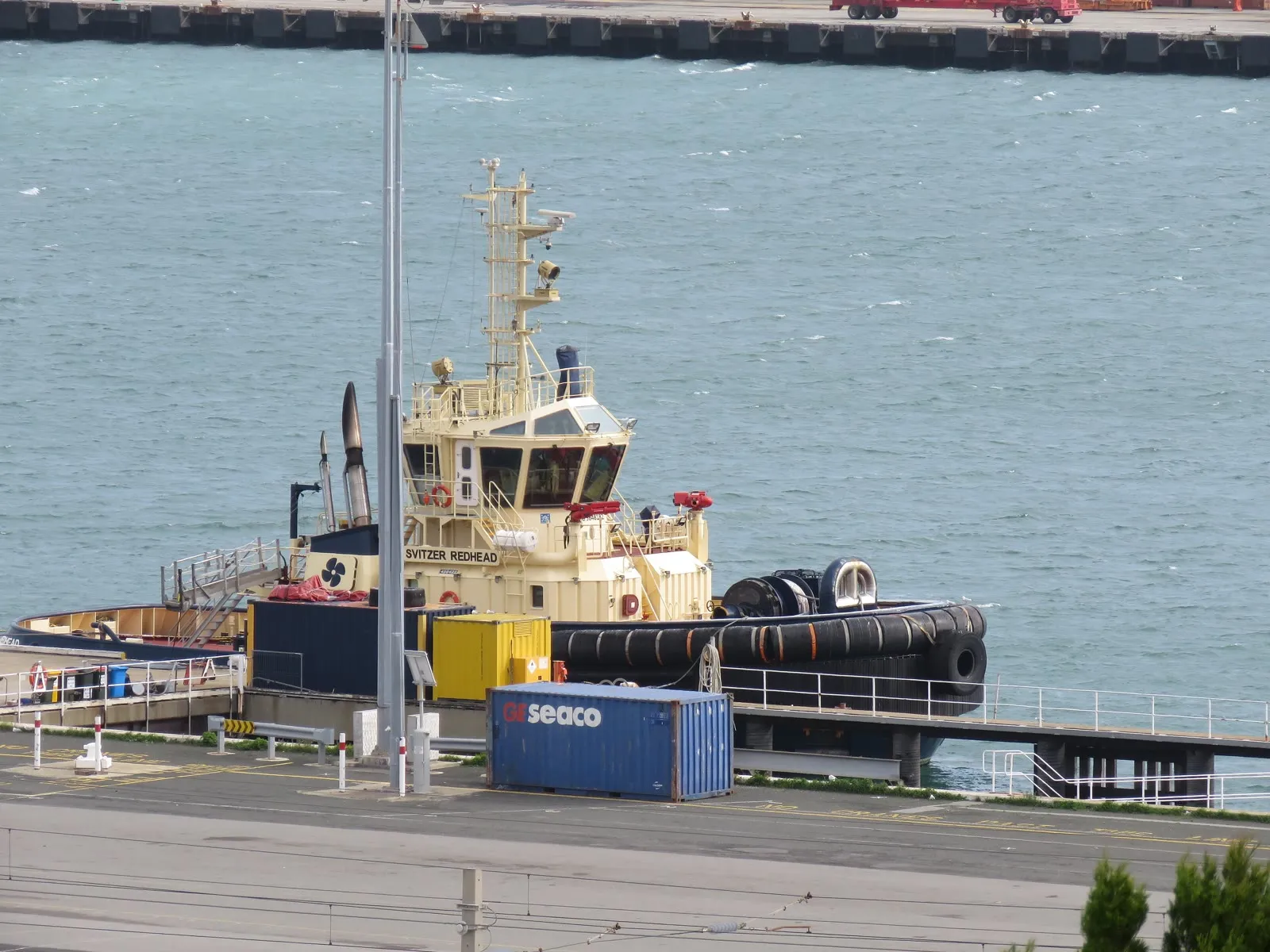
Cover photo: Calistemon / CC BY-SA 4.0 / Wikimedia Commons.
