Weekly (Issue 14): A 343% dumping claim, a freight slide and seven days to the tariff cliff
This week: US producers file for 165–343% dumping duties on Chinese shopping carts while chassis orders survive their sunset review, the transpacific posts its steepest weekly fall since June 2025, China's October manufacturing PMI slips to 49.3, and the 178 Section 301 exclusions sit seven days from expiry with no extension published.
Trade Policy & Tariffs
- US producers file for 165–343% dumping duties on Chinese shopping carts
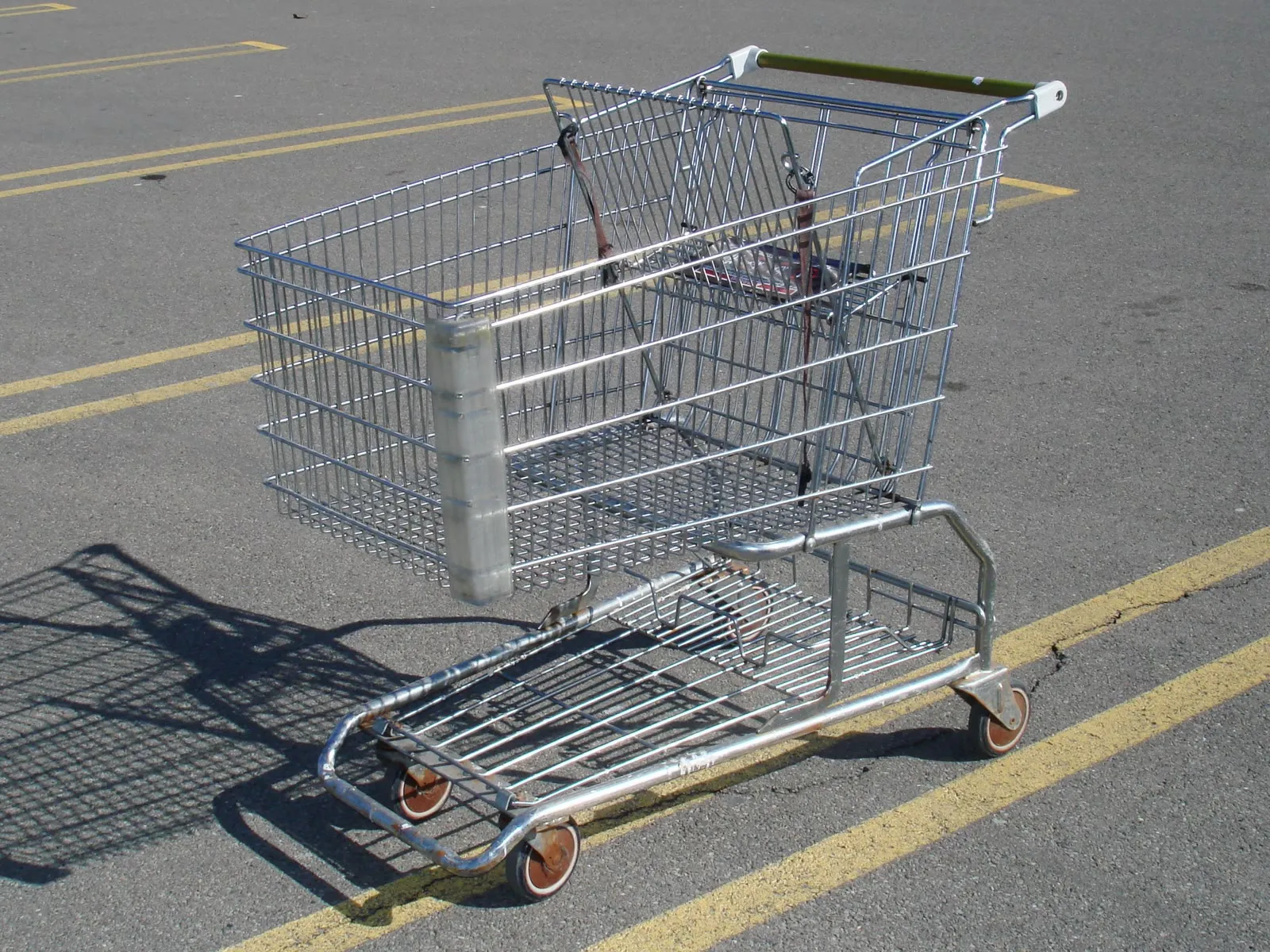
On October 28, Precision Wire Products and Wanzl North America petitioned Commerce and the ITC for antidumping and countervailing duties on shopping carts and parts from China, alleging dumping margins of 165% to 343% and subsidies above the de minimis level. The ITC instituted the investigations on November 2 under Nos. 701-TA-811 and 731-TA-1813, covering goods classified in HTS subheading 8716.80.50. These are allegations, not rates — but if the cases proceed, cash deposits could begin as early as January 2027 for countervailing duties and April 2027 for antidumping. The proposed scope reaches finished and unfinished carts, components sold separately, and carts further assembled in a third country, so retailers, distributors and their Chinese suppliers should map their bill of materials against it now rather than after a preliminary determination.
- Chassis from China stay under AD/CVD after the sunset review
The ITC determined on October 29 that revoking the countervailing and antidumping duty orders on chassis and subassemblies from China would likely lead to continuation or recurrence of material injury (Nos. 701-TA-657 and 731-TA-1537), so the orders remain in force. Chassis sit across two regimes at once: the AD/CVD orders and the Section 301 Annex V.A duties that cover chassis and chassis parts. Anyone buying intermodal equipment should keep both layers in the landed-cost model instead of assuming the sunset review would thin them out.
- The midterms will not reset tariff policy
Americans vote on November 3 with tariffs on the ballot: 75% of registered voters surveyed for the Cato Institute said tariffs would be "important" to their vote, and a September Fox News poll found 64% saying tariffs hurt the US economy. Even a change in congressional control does not change the mechanics — the tariff lines are set by executive action, and the revenue they raise makes a fast reversal expensive. Canada–US negotiations collapsed in August and both sides have kept duties in place since. Plan the first half of 2027 on current rates and treat any rollback as upside, not as the base case.
Supply Chain & Logistics
- Drewry's composite falls 3% as carriers undercut their own November increases
The World Container Index stood at US$4,429 per 40ft on October 29, down 3% week on week. Shanghai–Los Angeles fell 6% to US$7,514 and Shanghai–New York fell 5% to US$9,631 — the steepest one-week fall on the transpacific eastbound trade since June 2025 — while Shanghai–Rotterdam rose 1% to US$3,686 and Shanghai–Genoa held at US$4,151. Linerlytica found Asia–North Europe offers for early November at US$3,000–3,200 per 40ft from Hapag-Lloyd and US$3,200–3,400 from Maersk, against published increases of US$4,500 and up, and concluded that "the 1 November rate hike is effectively doomed." The capacity behind the discounting is a scheduling artefact rather than demand: Sea-Intelligence put average weekly capacity above 350,000 TEU on Asia–North Europe and near 393,000 TEU on Asia–US West Coast, inflated by vessels delayed out of the third quarter arriving in a heap. If you are tendering first-quarter 2027 volume, the leverage has moved back to the buyer side.
- Two port risks stack up for November: UAE congestion and a US west coast strike deadline
As of October 30, Kuehne+Nagel put average vessel waiting at Khor Fakkan at 7.25 days and at Fujairah at 8.86 days, with arrivals running 7.4 and 7.58 days behind schedule; terminal transfers from those ports to Jebel Ali, Sharjah and Abu Dhabi that used to take about five days now take 12 to 15. Some carriers are cutting allocations, restrictions remain on foreign cargo, dangerous goods and special equipment, and the forwarder expects conditions to worsen. Separately, the Pacific Maritime Association moved the Los Angeles–Long Beach deadline to November 4 while talks with ILWU Local 26 continue under federal mediation — no strike has been confirmed, but the roughly 250 watchmen involved cover terminals handling about 85% of Long Beach cargo and 33% of Los Angeles cargo. Check both before committing drayage appointments.
Factory & Manufacturing
- China's October manufacturing PMI falls to 49.3
The official manufacturing PMI dropped 0.8 points to 49.3 in October, with the production sub-index at 49.8 (down 1.9 points) and new orders at 49.4 (down 1.1), according to the National Bureau of Statistics. The NBS attributed part of the retreat to demand pulled forward ahead of the National Day holiday, alongside a complex international environment. High-tech and equipment manufacturing stayed in expansion, which is where most export-grade electronics and machinery capacity sits. A sub-50 print with falling new orders argues for shorter order commitments and earlier capacity bookings for the spring shipping season rather than longer ones.
- Memory costs push HP, ASUS and Acer to move some PC production back to China
HP, ASUS and Acer are shifting part of their production from Thailand and Vietnam back to China, with Dell reportedly considering the same, according to Nikkei reporting cited by TrendForce. The driver is cost, not policy: CPU, DRAM and SSD now account for about 68% of a mainstream notebook's bill of materials, up from 45% in the first quarter of 2025. TrendForce expects notebook production outside China to fall from roughly 24% in 2025 to 21% in 2026 and below 20% in 2027 — a partial reversal of China+1. For buyers, the practical effect is that "China plus one" sourcing plans built on Southeast Asian PC assembly may need re-testing against quotes, and that memory content is now the single largest lever on notebook cost.
New Products & Sourcing Ideas
- XGIMI AURA 3 — US$15 million on Kickstarter in 23 hours
XGIMI's ultra-short-throw laser projector went live on October 20 and, by the company's count, passed US$10 million in about two hours and US$15 million within 23 hours from more than 5,800 backers — a claimed Kickstarter record for the fastest campaign to US$10 million. The AURA 3 Pro is rated at 4,100 ISO lumens and the Max at 5,700, both with a 0.163:1 throw ratio, and the headline spec is 4K at 120Hz, delivered by running two Texas Instruments DLPC 8545 controllers in parallel. Kickstarter pricing is US$2,199 for the Pro against a US$3,999 MSRP and US$2,399 for the Max against US$4,999; the campaign runs to December 4 with shipping promised for December 2026. Note the mechanism: US$50 reservations opened September 1, and every depositor was emailed a launch link on October 20. This is pre-order engineering with a press-release attached, and it is now the standard launch playbook for established hardware brands.
- AirCannon GPX — a 118mph handheld blower at 10,451% of its goal
Kicktraq's tracker shows the AirCannon GPX at US$522,562 against a US$5,000 goal as of November 2, from 2,912 backers, with the campaign closing November 6. The pitch is density: 118mph (190km/h) of airflow from a 0.77lb body on a 16.8V brushless motor, with three nozzles and a vacuum shell case. Whatever the retail outcome, the bill of materials is a familiar sourcing cluster — high-rpm brushless motor, small lithium pack, injection-moulded housing and tooling — which is why these campaigns are worth watching as demand signals for component suppliers rather than as finished-product competitors.
Sourcing Platforms & Tools
- Keelvar: 90% of sourcing events now run by AI agents
Keelvar reports that nine in ten sourcing events on its platform are operated by AI agents — a trailing three-month average for July 2026, up from roughly 71% a year earlier — and that machine-to-machine negotiation has arrived: a supplier-side agent bidding into a buyer-side agent's event first ran in December 2025 and reached 1,420 events in July 2026, about 8% of all events, clustering in freight, express parcel and formulaic categories. Its companion survey also found that organisations adopting AI or sourcing automation in the past 12 months were 3.7 times less likely to suffer major demand contraction during tariff-driven disruption. The caveat is sample composition: these are Keelvar's own customers, so the 90% describes a self-selected, already-automated population, not the market.
- CIIE opens November 5 with 4,142 overseas exhibitors
The ninth China International Import Expo runs November 5–10 in Shanghai with 4,142 overseas exhibitors, and for the first time the total exhibition area exceeds 440,000 square metres. Participants come from 162 countries, regions and international organisations; the business exhibition covers more than 370,000 square metres with over 300 Fortune Global 500 companies and more than 2,000 first-time exhibitors, and more than 480 products are scheduled for global, Asian or China debuts. US companies hold more than 50,000 square metres, up 1,500 from last year. It is an import show rather than an export sourcing show, but it is the densest concentration of component and equipment suppliers available before Chinese New Year.
Industry Trends
- Smartphones: Q3 shipments fall 20% to the lowest third quarter since 2013
Omdia puts third-quarter global smartphone shipments at 254.7 million units, down 20% year on year — the weakest third quarter since 2013 — and attributes the drop to higher device prices. Samsung shipped 57.8 million units (-5%), Apple 56.5 million (flat), Xiaomi 30.7 million (-29%), Oppo 23.4 million (-39%) and vivo 19.3 million (-33%). Brands are concentrating on profitable markets, adjusting RAM and storage configurations and trimming model lineups to protect margins. Omdia expects a further 12% decline for the full year, with the market continuing to fall in 2027 at a slower pace. Component buyers should read this as demand destruction driven by price, not by saturation — the same memory bill that is squeezing PC makers is now shrinking the phone market.
- NAND spot prices crack while DRAM holds
TrendForce's October 28 spot update shows the memory market splitting. Mainstream DDR4 (1Gx8 3200MT/s) edged up 0.55% to US$47.04, but 512Gb TLC NAND wafers fell 9.19% to US$16.883 on October 26 as Chinese smartphone brands cut prices for Double 11 promotions to clear inventory, pushing sellers into more aggressive discounting. Contract prices and spot prices are different animals — AI server demand is still pulling contract DRAM upward — but a 9% weekly fall in NAND spot is the first clear sign of softening on the consumer side of the memory complex this quarter, and it changes the timing case for locking NAND-based component purchases.
Payments & Trade Finance
- ACI and Circle bring USDC settlement into existing bank rails in Colombia
Announced October 27, the collaboration runs Circle's USDC infrastructure through ACI Connetic, ACI's cloud-native payments orchestration platform, to show how financial institutions can add stablecoin settlement without replacing their existing operations. The initial focus is Colombia, where ACI built the central infrastructure powering Bre-B, the country's interoperable instant payments system. The framing matters for trade: this is not a new wallet or a crypto on-ramp, it is settlement inside infrastructure banks already run. For importers paying suppliers in Latin America, the practical question is whether the receiving bank credits USDC at par and how FX conversion is priced — neither is disclosed in the announcement.
- Liquidity Services moves its B2B payments to Flywire across 100+ countries
Liquidity Services, the Nasdaq-listed marketplace operator for surplus and circular-economy goods, has implemented Flywire for both domestic and cross-border B2B payments, covering buyers in more than 100 countries and, according to the release, lowering transaction fees across the organisation. The marketplace has processed over US$15 billion in completed transactions across its 25-year history. Cross-border collections are where mid-sized marketplaces bleed margin — local payment methods, FX spreads and reconciliation — so this is a useful reference case if you are buying or selling surplus inventory and settling across dozens of currencies.
Buyer Voices & Insights
- "The data this year is the clearest signal we've seen that procurement technology adoption isn't a nice-to-have – it's what separates organizations that absorb volatility from those that get hurt by it." — Alan Holland, founder and CEO of Keelvar, on the gap between buyers running automated sourcing and those still working reactively.
- "Vessels originally scheduled to depart during Q3 were heavily delayed, cascading into the October and November, and ultimately artificially inflating deployed capacity." — Alan Murphy, chief executive of Sea-Intelligence, explaining why record capacity on Asia–Europe and the transpacific is a scheduling artefact rather than a demand signal — and why plentiful capacity does not mean plannable schedules.
Cover photo: Stilfehler / CC BY-SA 3.0 / Wikimedia Commons.
