Weekly (Issue 15): Seven Days to the Tariff Cliff, and a Robot Probe That Ends in Talks
This week: Washington has seven days left to extend 178 product exclusions and still has not signed anything; a Section 232 probe into robots and industrial machinery ends in negotiations rather than duties; and trans-Pacific spot rates fall the hardest as US ocean imports are forecast to drop 11% month on month in November.
Trade Policy & Tariffs
Seven days to the cliff: the exclusions were never in the USTR proposal
USTR's 26 October notice (docket USTR-2026-0694) proposes pausing the Section 301 maritime, logistics and shipbuilding measures — vessel fees and the extra duties on certain cargo-handling equipment — from 10 November 2026 to 9 January 2027. Comments closed on 30 October at 5:00 p.m. ET. Nothing in that proposal touches the 178 product exclusions, which run on their own clock.
"As of November 2, 2026, no notice extends them. They end at 11:59 p.m. Eastern on November 9, 2026."
That is the operational fact of the week for importers: goods entered for consumption on or after 10 November lose excluded treatment unless they match the U.S. note text for HTS Chapter 99 (20(vvv) or 20(www)) and clear before the deadline. Duty already paid on eligible entries can still be recovered through a post-summary correction, or by protest within 180 days of liquidation.
- Section 232 on robotics and industrial machinery ends in talks, not tariffs
Proclamation 11077 (signed 28 October, published 2 November) accepts Commerce's finding that imports of robotics, industrial machinery and their parts threaten to impair national security — then prescribes negotiation instead of duties. Commerce and USTR must report back within 180 days, and tariffs, quotas and fees stay explicitly on the table.
"Depending on the status or outcome of such negotiations, I may consider alternative remedies in the future, including imposing or modifying tariffs, duties, quotas, and fees."
Read it as a 180-day clock for automation capex: no new duty on robot arms or machinery today, but no permanent exemption either. Equipment contracts that run past April 2027 should carry a duty-change clause.
- Three China dumping orders come through their sunset reviews
Commerce published final sunset-review results on 4 November for metal lockers, magnesia carbon bricks and ironing tables from China. For metal lockers, the agency found that revocation would likely lead to continuation or recurrence of dumping at the rates set out in the notice. The same day brought preliminary results in the 2024–2025 administrative reviews of light-walled rectangular pipe and tube and of certain steel nails.
For buyers in these categories the message is continuity: no relief in landed cost, and no reason to re-quote the tariff line. The steel-nails and pipe cases are worth watching instead, because preliminary margins set the cash-deposit rate that applies while the review runs.
Supply Chain & Logistics
- Trans-Pacific falls hardest as November imports are forecast to drop 11%
Drewry's World Container Index fell 3% to US$4,429 per 40ft container: Shanghai–Los Angeles down 6% to US$7,514 and Shanghai–New York down 5% to US$9,631, while Shanghai–Rotterdam rose 1% to US$3,686 and Shanghai–Genoa held at US$4,151. The US National Retail Federation expects American ocean imports to fall 11% month on month in November.
If your volume is intra-Asian rather than trans-Pacific, the discount is not there: the Drewry Intra-Asia Container Index rose US$46 to US$1,504 per 40ft, roughly 200% above year-earlier levels, and average vessel waiting time in Ho Chi Minh City stretched from 8 to 22 hours in the fortnight ending Week 43.
- Suez transits hit a 2026 high while Hormuz narrows to two vessels
62 vessels passed through the Suez Canal last week, the highest weekly figure this year, while only two transited the Strait of Hormuz. Six blank sailings are scheduled for next week against five this week; on Asia–Europe the count drops from eight to four, and Shanghai–Jebel Ali held at US$8,584 per container.
Two blank sailings fewer on Asia–Europe is small comfort. Carriers have announced higher FAK levels for November, and the capacity still in the water is what will decide whether those hold.
- Two benchmarks, two directions: NYFI up 1.92%, Drewry down 6%
NYFI recorded Asia–US West Coast up 1.92% to US$7,724.52 and Asia–US East Coast up 1.89%, with Asia–North Europe up 5.40% to US$3,203.78 — the opposite sign to Drewry's spot assessment on the same lanes. NYFI is built on containers that actually shipped; WCI tracks quoted spot rates over a reporting period.
When a forwarder shows you one number, ask which index it references. The gap is not noise, it is the difference between what was paid and what is being asked.
Factory & Manufacturing
- Hai Phong draws US$3.8bn in ten months as Chinese electronics capacity keeps landing
Foreign investment into the northern Vietnamese port city reached an estimated US$3,802.92 million in January–October, up 69% year on year and equal to 96.4% of the annual target, with industrial parks and economic zones accounting for US$3,453.39 million. More than 800 Chinese-invested projects worth over US$13 billion are already operating there.
The pipeline is concrete: TongWei Vietnam Electronics plans to bring its Phase 3 plant in An Duong Industrial Park online in Q4 2026, and Pegatron's US$800 million, 35.71-hectare project is in its second construction phase, with the company guiding 2026 revenue about 19.59% higher. For sourcing teams, northern Vietnam keeps adding EMS and electronics sub-assembly depth — worth a second quote on any cable, charger or board assembly currently single-sourced inland China.
- Musashi adds three lines in San Luis Potosí
The Japanese drivetrain supplier completed an expansion of roughly 8,000 m² in San Luis Potosí, a US$40 million investment that adds three production lines to its Mexican footprint.
New Products & Sourcing Ideas
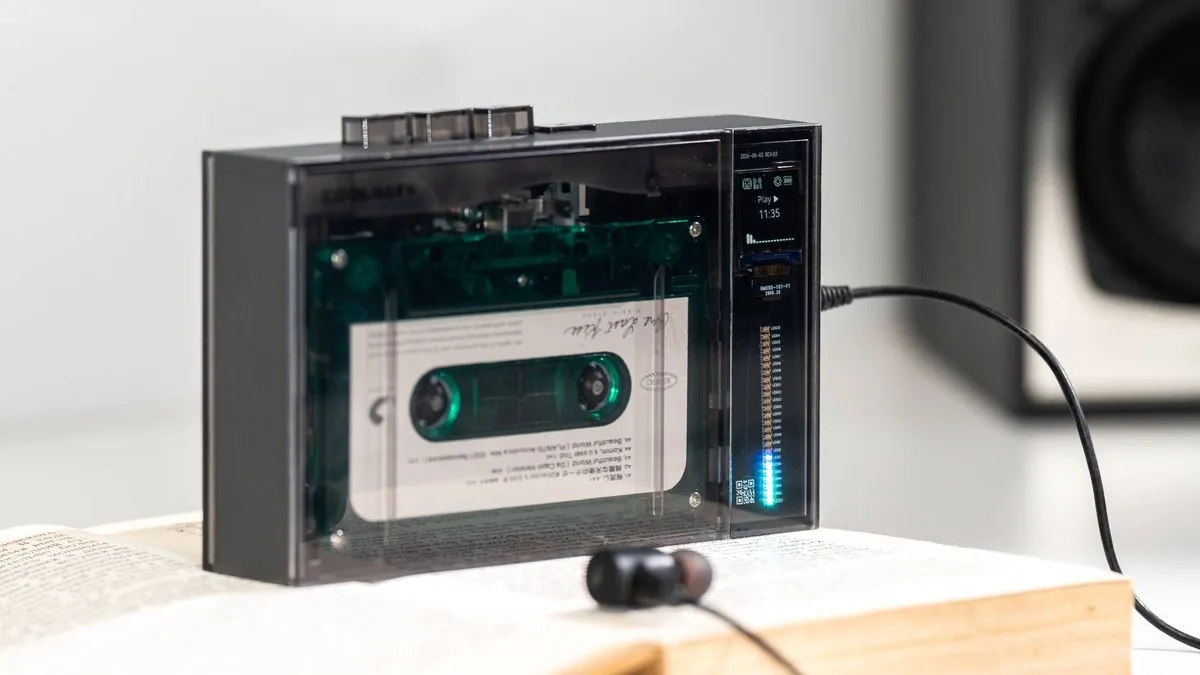
- CoolGeek P1 Cassette Player — a see-through deck that puts Bluetooth on tape
The P1 leaves the mechanism visible behind smoked plastics and adds Bluetooth 5.3 for wireless headphones, a 3.5mm jack, USB-C charging and a small HD display. List price is US$179 (about £130 / AU$260), with the Super Early Bird wave at half that and prices climbing from there.
For private-label buyers the differentiator is the finish, not the format: a mechanical, industrial look against the pastel retro wave it competes with. Cassette hardware is a small, fashion-driven category, but the same treatment — transparent shell plus one modern radio — is being applied to far more categories right now.
Sourcing Platforms & Tools
- "Verified" is a subscription; "Assessed" is an audit
A practical checklist for buyers sourcing electrical assemblies on Alibaba.com: a Gold or Verified badge is a paid membership, while an Assessed Supplier has a third-party report from the likes of SGS, TÜV or BV listing floor area, assembly lines, QC headcount, monthly capacity and equipment. Three documents have to name the same legal entity — the audit report, the business licence and the store registration — and the registered scope must say manufacturing, not sales.
The category behind the warning is large: China's low-voltage electrical equipment trade surplus reached US$12.96 billion in 2025, up 24.1% year on year, with Guangdong, Zhejiang and Jiangsu accounting for 70.8% of exports, spread across roughly 10,000 panel makers of which more than 70% are SMEs.
Links:
Industry Trends
- Marvell buys Lumentum, and optical interconnect consolidates
Both boards approved the transaction on 2 November; it still needs shareholder and multi-jurisdiction regulatory approval. TrendForce ranks Marvell fourth and Lumentum eighth in 2026 semiconductor wired-communications revenue, and puts their combined share at nearly 7% — behind only NVIDIA and Broadcom.
For buyers of 800G and 1.6T optics and optical engines, consolidation cuts both ways: fewer qualified roadmaps, but stronger pricing power at the top of the supply chain.
- AI networking: US$37.9bn in 2024 to US$279.8bn in 2027
TrendForce projects the AI networking and interconnect market at a 95% CAGR over the period, with the scale-up segment rising to 24% of revenue as accelerator bandwidth requirements climb.
- High-capacitance MLCC shortage runs through 1H27
AI inference and agents are pulling a new wave of CPU demand, and each CPU drags its power modules and DDR5 with it — so high-capacitance MLCC content per board is climbing and standard high-capacitance supply stays tight into the first half of 2027. Extend allocation agreements rather than assuming spot availability.
Payments & Trade Finance
- A Japanese car exporter now takes USDT and USDC and books dollars
SAT Japan's 29 October integration routes stablecoin payments through processor Triple-A, which handles conversion and compliance and settles the exporter in US dollars; the merchant never holds the tokens. This is the adoption shape that fits mid-market exporters — the buyer picks the rail, the seller keeps its accounting currency.
The open questions are the ones that decide repeat use: which networks are eligible, how long a quote holds, and how refunds are priced when a deal collapses.
- In dollar-starved markets, stablecoins became the import rail
The reported unit economics are concrete: a fabric importer in Kumasi paying a Guangzhou supplier about US$10,000 a quarter settles in under ten minutes at roughly 0.5% all-in, against a 2.5% bank conversion fee and a four-to-six-day wire; a Nigeria–China bank transfer takes ten to fourteen days. USDT accounts for an estimated 88.5% of Nigerian stablecoin activity.
The hidden cost sits at the ramps, where local-currency spreads run from 1.5% to 19%. Compare the all-in number, not the transfer time.
- Bloquo raises US$3.7m for enterprise stablecoin settlement in Brazil
The Brazilian fintech announced the seed round on 3 November to build cross-border infrastructure that connects stablecoin settlement to local fiat rails for enterprise clients.
Buyer Voices & Insights
- "When an importer in Lagos or Nairobi waits weeks for a dollar allocation, a dollar stablecoin that settles in minutes becomes a treasury tool." — Ryan Kirkley, Global Settlement Network
- "They replace one slow hop, the correspondent leg, not the stack." — Lightning News, on what stablecoin rails actually remove
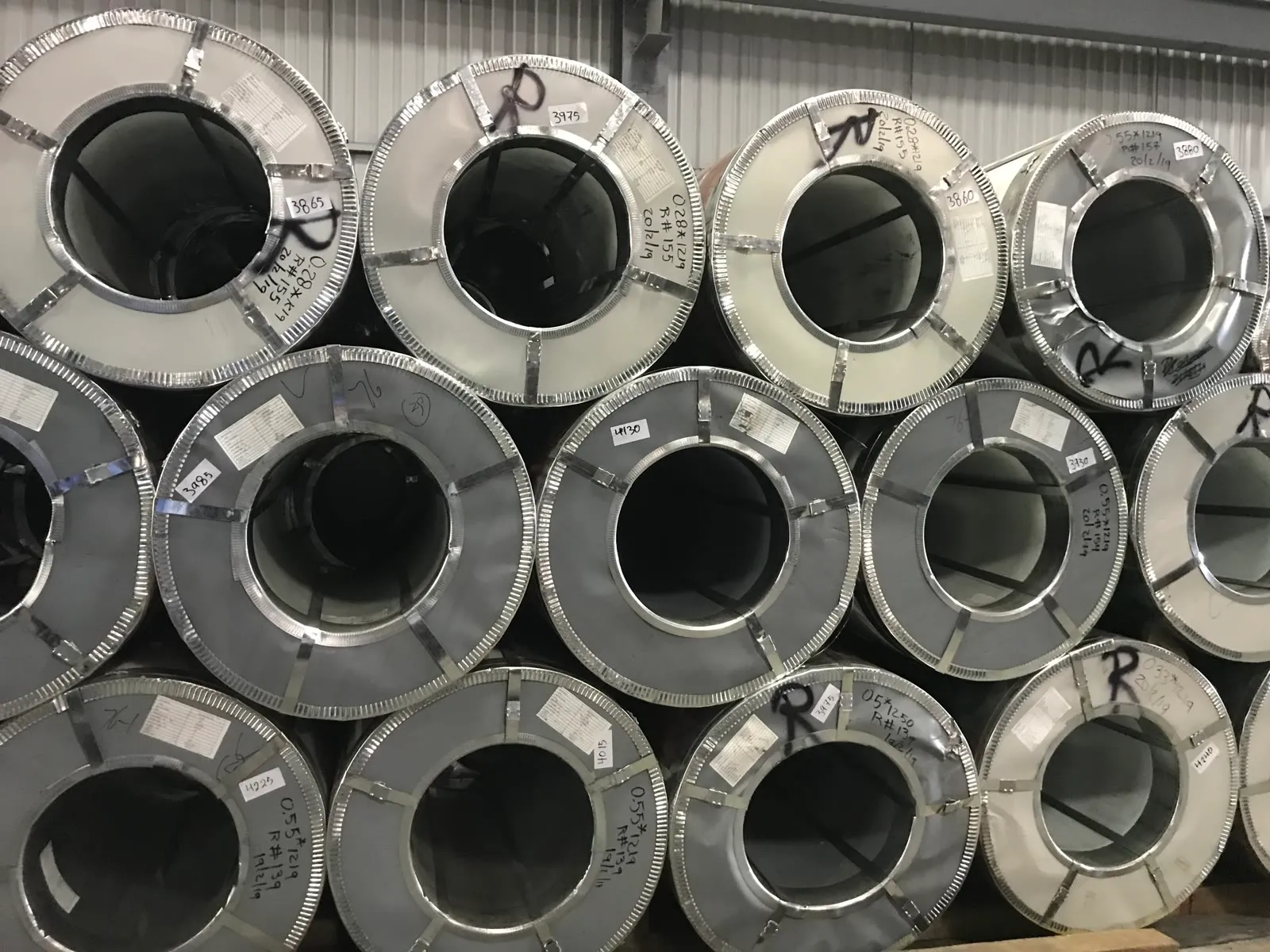
Cover photo: Arosset / CC BY-SA 4.0 / Wikimedia Commons.
