Weekly (Issue 17): The 301 Cliff Moves to January
This week: USTR moved both Section 301 clocks to January 9-10, 2027, giving importers a two-month reprieve rather than a resolution. Freight and import volumes are easing off an extended peak, CIIE closed on record intended deals, and memory lead times are stretching far faster than stock availability is falling.
Trade Policy & Tariffs
The 301 cliff moves to January
Two Federal Register notices published on November 10 reset the deadlines that had been hanging over importers since the last issue. Buyers get roughly two months of continuity, but no new products became eligible and no underlying duty rate changed.
"The modifications announced in the annexes to this notice further extend the exclusions through 11:59 p.m. eastern time on January 9, 2027."
- All 178 current product exclusions extended. USTR extended every exclusion under HTSUS headings 9903.88.69 and 9903.88.70 for goods entered for consumption on or after 12:01 a.m. ET on November 10, 2026 and before 11:59 p.m. ET on January 9, 2027. The article descriptions are amended by deleting "November 9, 2026" and inserting "January 9, 2027"; U.S. Customs and Border Protection will issue instructions on entry guidance and implementation. For sourcing teams, the practical action is to re-validate Chapter 99 filing instructions against the 10-digit HTSUS scope, not to re-negotiate landed cost.
- Port fees and cargo-handling duties stay suspended. Effective November 9, 2026, the Section 301 maritime, logistics and shipbuilding action is further suspended until January 10, 2027. No party accrues liability for the maritime transport service fees or for the ship-to-shore crane and cargo-handling equipment duties during the suspension, and HTSUS headings 9903.91.12 through 9903.91.16 are amended accordingly. USTR reviewed approximately 60 unique comments before the determination and will keep monitoring ahead of the new deadline.
- Short-term relief, not a resolution. EY reads the two notices as parallel two-month extensions tied to ongoing US-China talks: 164 general exclusions plus 14 solar-manufacturing equipment exclusions on the product side, and a suspension of the maritime action through January 10, 2027 on the shipping side. Holland & Knight advises vessel owners, charterers, shippers and importers of cargo-handling equipment to treat January 10, 2027 as a live deadline and avoid assuming another extension.
Supply Chain & Logistics
- Spot rates keep sliding, but benchmarks disagree. Drewry's World Container Index fell 1% to $4,389 per 40ft container in the November 5 assessment, down from $4,429 the week before, while the Freightos Baltic Index fell 2% to $3,452. China's CCFI rose 2.28% over the same period, a reminder that index methodology matters when a contract is indexed to a benchmark. Carriers are still pushing mid-November FAK increases ahead of 2027 contract talks, but softening demand and returning effective capacity make those increases hard to hold.
- The longest peak season on record is finally winding down. NRF and Hackett Associates report 2.37 million TEU of loaded imports in September, up 12.6% year over year and the busiest month of 2026. November is forecast at 2.05 million TEU and December at 2.03 million, bringing the full year to 26 million TEU, up 2% from 2025. The outlook turns softer in early 2027: January at 2.04 million TEU, down 3% year over year, and March down 11.2%. The LA/LB watchmen contract has been extended three times, most recently through Nov. 20, with no long-term agreement in place.
- Blank sailings fall, double sailings rise. Between November 9 and December 14 carriers have announced 46 blank sailings across the main East-West trades, about 6% of planned departures, leaving 94% of scheduled sailings expected to operate. Sea-Intelligence puts "double sailings" — delayed vessels departing alongside the next scheduled ship — at 19% of Asia-Mediterranean departures in October and November, 17% on Asia-North Europe and 18% on Asia-US East Coast. Congestion easing at Chinese ports can therefore look like extra capacity without adding any.
Factory & Manufacturing
- CIIE closes on record intended deals. The ninth China International Import Expo concluded in Shanghai on November 10 with one-year intended deals worth $85.45 billion, up 2.3 percent from the previous edition, according to CIIE Bureau official Xiao Lu. Intended-deal value is a signal of buyer appetite, not booked volume, but it is the cleanest single number for this year's China-side sourcing cycle.
- Central SOEs deepen global supplier ties. Energy China, Sinochem Holdings and COFCO were among the centrally administered state-owned enterprises signing procurement and cooperation agreements with foreign suppliers including Saudi Aramco, TotalEnergies and Archer-Daniels-Midland at the expo. For overseas manufacturers, these framework signings are the route into large, multi-year Chinese buying programs rather than one-off orders.

- Industrial equipment and US food deals land. Chinese power contractors signed purchase agreements with Siemens Energy, Hitachi Energy, Caterpillar and GE Vernova at CIIE; China Energy Engineering's package alone was reported at $1.627 billion, including gas turbine equipment for a 2,600 MW plant in Abu Dhabi. In parallel, US food and agriculture exhibitors signed deals exceeding $650 million. Both point to procurement concentrated in energy infrastructure and food supply rather than consumer gadgets.
New Products & Sourcing Ideas
- InfiMech MX / MX Pro — six or eight toolheads. The Kickstarter campaign opened on 10 November and ends on 10 December. The MX offers six toolheads and a 220 x 220 x 220 mm build volume; the enclosed MX Pro offers eight and 300 x 300 x 300 mm, with induction heating, automatic nozzle alignment, tangle detection and a 5-inch tilting touchscreen. Kicktraq data cited in the report shows HK$12,269,986 from 2,213 backers against a HK$400,000 goal on day one (as of November 10). Treat the pledge figure as a same-day snapshot, not a final total.
- Beelink ME Pro — a NAS you upgrade by swapping the board. The modular two-bay / four-bay NAS uses slide-out Intel or AMD motherboard modules that can move between compatible enclosures, taking about 50% less space than NAS systems with the same number of drive bays and running as quietly as 34 dB. The AI 470 configuration is rated at up to 86 TOPS for local assistants, with Fygo OS preinstalled. Campaign launched Nov. 5, 2026.

- PowerGo Aurora 03 — MEMS driver in a tribrid IEM. Each side combines a MEMS solid-state driver, one dynamic driver and three balanced armatures in a 3D-printed resin shell. The campaign had $16,100 pledged from 87 backers against a $2,550 goal as of November 10, with a $169 super early bird tier, a November 21 close and February 2027 estimated delivery. Small-run audio hardware remains a useful test category for buyers evaluating new component suppliers.

Sourcing Platforms & Tools
- Lytica DSX — agentic workflows for direct-material sourcing. Launched November 10, 2026, the Direct Sourcing Experience connects market intelligence, guided workflows and AI agents for electronic-component buyers. An assistant named Lisa surfaces emerging shortages or supplier price increases first; strategic-sourcing workflows cover annual savings, price-increase defence and shortage response, while product-sourcing / NPI workflows cover should-cost evaluation and supplier RFQ validation. A live product webinar is set for November 17, 2026.
- Bay Supply Product Assistant — a deployed, not announced, selection agent. Rapidflare and McFadyen Digital put their joint agent into production on Bay Supply's site on Nov. 10, 2026. Buyers describe an application or constraint in plain language, get alternatives checked against a catalog of nearly 200,000 products and their specifications, then assemble a quote-ready list and submit a qualified RFQ. Recommendations link back to source data and the agent is connected to ERP, commerce catalog and CRM for live inventory and pricing.
- GrubMarket AI Orders — purchase orders from invoices and photos. Released Nov. 10, 2026, the Purchase Order Agent converts vendor invoices, receipts, spreadsheets, photos and plain-language notes into structured POs, matches products to the distributor's catalog using historical order activity, and integrates with WholesaleWare and other food-distribution ERP systems. It targets one of the most manual back-office steps in B2B distribution.
- Procol Clara 2.0 — multi-agent source-to-pay. The platform managing over $30 billion in enterprise spend will make its India debut at the Gartner IT Symposium in Kochi, November 16-18, after a global launch at DPW Amsterdam. Specialized agents run intake, RFQs / RFPs / e-auctions, supplier-risk monitoring, spend visibility, orchestration and three-way invoice matching; Procol says connected execution has cut procurement cycle times by up to 80 percent across its customer base.
Industry Trends
- Memory lead times diverge from availability. Lytica's October 2026 component-market read puts the overall lead-time index at +1.92% month over month, essentially unchanged from September's +1.89%, but memory lead times rose +57.3% after only +0.4% in September. Memory prices rose +5.36% while availability stayed at 96.5%, and overall stock availability held at 95.0%. Battery availability fell from 82.0% to 71.5% and display assembly from 96.2% to 84.0%. The signal is replenishment pressure, not an empty shelf — so confirm supplier-confirmed lead times line by line instead of trusting distributor stock.
- NAND splits into two markets. TrendForce's November 4, 2026 NAND bulletin says enterprise SSDs, backed by AI demand and long-term agreements, are finalising pricing first with significant increases, while consumer PC and smartphone contract negotiations remain stalled and wafer spot prices soften. SK hynix and Samsung posted record results and are accelerating advanced-node migration and LTAs, expecting the shortage to persist. A separate November 5, 2026 note, "Module Dumping Drags NAND Spot Prices Lower", attributes weak spot demand to soft PC / smartphone demand and module-maker inventory cuts. Buyers of consumer-grade storage and buyers of enterprise SSDs are no longer in the same market.
Payments & Trade Finance
- Bottomline completes its first live cross-border USDC payments. On November 10, 2026 the company used Circle's USDC for intra-company transfers through its Global Payments Hub and Cash Management platform. The framing is additive rather than disruptive: stablecoin rails sit alongside existing payment types inside one finance-team workflow, so treasury can choose the rail per payment without rebuilding the stack. Working-capital relief comes from no longer pre-funding multiple correspondent accounts.

- B2B payment volume is where the acquisition premium sits. Payoneer's quarterly B2B volume rose 59% to $5 billion, enterprise payouts rose 14% to $7.4 billion, and SMB marketplace sellers accounted for roughly half of total volume at $12.6 billion, up 1% year over year. Nuvei's proposed $2.75 billion acquisition of Payoneer targets those multi-currency balances and cross-border payouts; the deal still needs approvals and is targeting a mid-2027 close. For suppliers, the consolidation question is whether payout corridors and FX pricing change after close.
- Card networks write the rules for agentic B2B payments. Clink added Mastercard Agent Pay on Nov. 9 alongside its existing Visa Intelligent Commerce capability, following an October Visa initiative with BILL and Billtrust that let authenticated agents complete previously approved invoice payments through supplier portals. Networks are competing to authenticate the agent and define spending authority; the open question for CFOs is liability when an authenticated agent executes a wrong payment. The next battleground is not speed but exception handling and recovery.
Buyer Voices & Insights
- "U.S. ports have seen high volume levels throughout this year's longer-than-usual peak season and numbers are still strong even as the season winds down." — Jonathan Gold, NRF Vice President for Supply Chain and Customs Policy, who also notes that most holiday merchandise is already in the country despite West Coast rail-transfer backups.
- "Procurement leaders are measured on savings captured and risk avoided, not on how many tools their teams touch." — Martin Sendyk, CEO of Lytica, on why the company built DSX around jobs to be done rather than another dashboard.
- "Most distributors can tell you what customers clicked on. Very few can tell you what they were trying to solve." — Jeff Mikos, Head of Strategy at McFadyen Digital, on conversational product selection as a feedback loop into assortment and content.
- "Completing our first cross-border stablecoin payments shows this is now a practical option for finance teams, not a future conversation." — Colin Swain, global head of product for corporate solutions at Bottomline.
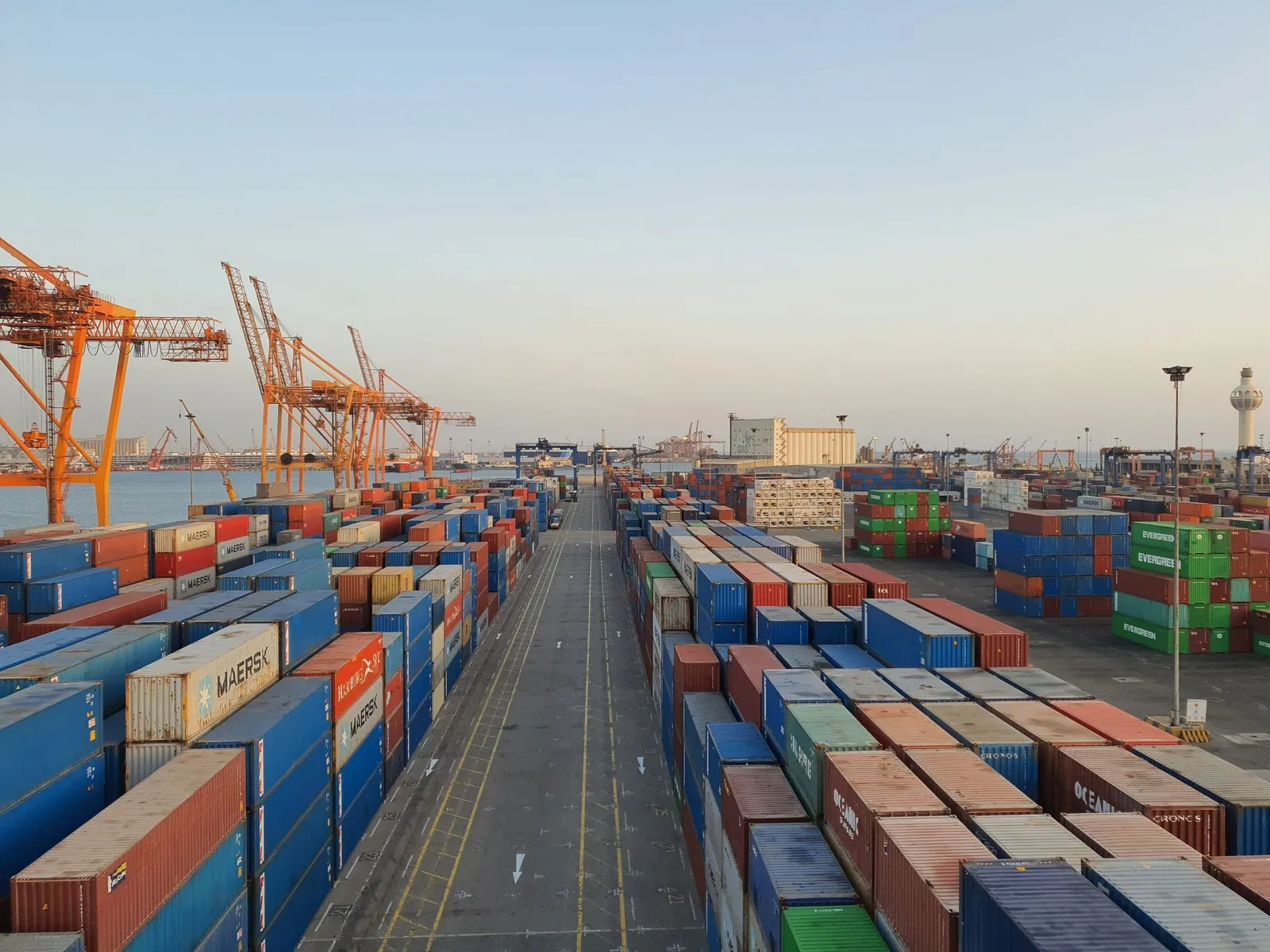
Cover photo: Bilal Ahmed / Pexels / Pexels License.