
Weekly (Issue 18): Fresh AD/CVD Rulings, the Suez Return and the Fleet Glut Ahead
This week: Commerce locked in a 7.48% dumping margin on Chinese wooden cabinets while the China-wide cash-deposit rate stays at 251.64%, and the DOJ opened a new global trade enforcement intake. Carriers returning to Suez risk shifting congestion to Red Sea and North Europe ports, even as the orderbook points to a near-50% fleet expansion by 2030.
Trade Policy & Tariffs
Commerce finalises 7.48% on Chinese wooden cabinets; China-wide rate stays 251.64%
The US Department of Commerce published the final results of its 2024-2025 antidumping administrative review on wooden cabinets and vanities from China on 12 November (91 FR 72851, A-570-106). For the period 1 April 2024 to 31 March 2025 it assigned an estimated weighted-average dumping margin of 7.48% to Yixing Pengjia Technology and to three non-individually examined companies receiving a separate rate. Chinese exporters without their own separate rate keep the China-wide cash-deposit rate of 251.64%. Assessment instructions to CBP go out no earlier than 35 days after publication.
"Commerce determines that the following estimated weighted-average dumping margins exist for the period April 1, 2024, through March 31, 2025."
For buyers of kitchen and bath cabinetry, the gap between a 7.48% and a 251.64% deposit is the whole landed-cost model: confirm which rate applies to the named exporter before year-end entries are filed.
- UPS takes CBP to court over IEEPA refunds. Filed at the US Court of International Trade on Friday, the suit seeks re-liquidation of entries plus interest after the Supreme Court ruled the IEEPA tariffs unlawful in February. UPS says it has already received some $500m from CBP under the refund programme, passed around $230m on to customers by the start of October and still owes about $270m. CAPE Phase 3, opened last month, covers finally liquidated entries but only where the importer holds a CIT re-liquidation order — buyers who actually bore the duty should confirm their importer of record's refund path rather than assume the money flows back automatically.
- DOJ formalises a trade-fraud intake channel. On 12 November the National Fraud Enforcement Division published a 60-day notice for a "Global Trade & Commerce Enforcement Section Lead Intake Form" (91 FR 72922, OMB 1105-0NEW, comments to 11 January 2027). It is a paperwork notice, but it names a dedicated enforcement section: importers should treat origin, valuation and broker records as audit-ready going into 2027.
Supply Chain & Logistics
- The Suez return may just move the queue. Evergreen is planning eight ad hoc Suez Canal and Bab-el-Mandeb transits for its Far East-Europe services; its 16,556 teu Ever Eon made the first passage last weekend, and Maersk and Hapag-Lloyd are returning their ME1 service to the canal. DP World's Jeddah South Container Terminal handled more than 221,200 teu in July, a monthly record since 1999, on first-half volumes up 79% year on year — yet Expeditors reported landside delays of 10-12 days after discharge there in September. Flexport forecasts arriving vessel capacity at 131% of normal in Week 47 (31 ships via Suez, 61 still via the Cape), with at least three weeks above its 120% congestion threshold between mid-November and January; Rotterdam already shows 3.37-day dwell times and 80-90% yard utilisation. Shorter routings cut seven to ten days of transit, but the pressure shifts between ports rather than disappearing.
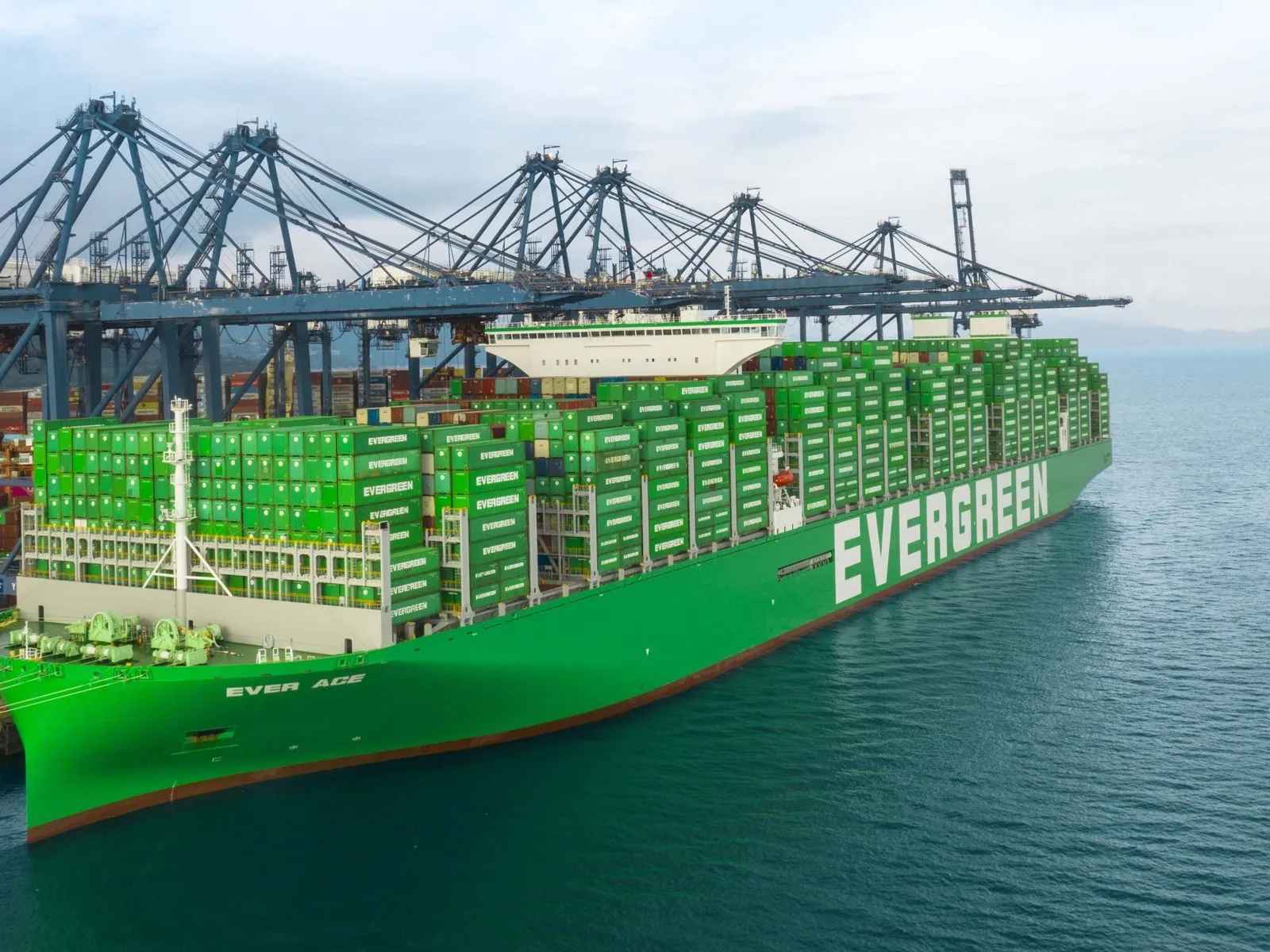
- The fleet is set to grow almost 50% by 2030. Sea-Intelligence sees global containership capacity rising from nearly 34m teu today to 40m by Q2 2028 and 50m by Q3 2030 — roughly 10% a year over 2027-2030, with quarterly deliveries averaging 1m teu and peaking at 1.8m in Q3 2028 against 560,000 in 2023-2026. The orderbook stands at 15.7m teu, or 46.4% of the existing fleet (Xeneta: 15.47m). Even repeating 2016's record demolition of 670,000 teu every year would offset under 17% of scheduled deliveries. For sourcing planners this is a medium-term argument against betting on tight capacity — but not against the near-term congestion above.
- Shenzhen closes belly cargo for APEC week. International belly-cargo operations at Shenzhen are suspended from midnight 16 November to 6pm on 20 November local time around the APEC Economic Leaders' Meeting on 18-19 November; freighter slots are "drastically reduced" rather than fully banned, with dangerous goods, perishables and time-sensitive shipments likely refused. Freightos reported China-US air rates up 3% last week to more than $8/kg — already last year's mid-December high — and China-Europe up 11% to $4.87/kg, 23% higher year on year. Shenzhen handled about 2.05m tonnes of cargo and mail in 2025, including 1.06m tonnes of international and regional traffic, plus 25,000 tonnes of fresh and cold-chain imports in H1 2026 (+37.1%). UPS announced service adjustments in selected areas for 12-21 November. Move South China air bookings ahead of the window or route via Hong Kong and Guangzhou, where space is already described as very tight.

Factory & Manufacturing
- Global factory growth eases, but supply strains return. The J.P.Morgan Global Manufacturing PMI (S&P Global with ISM and IFPSM) fell to 52.6 in October from 53.0 in September, a two-month low but a 15th consecutive month above 50. Nineteen of 29 countries with October data raised output, led by Thailand, India and Indonesia; backlogs grew for a ninth month and supplier delivery times lengthened for a 29th consecutive month, one of the steepest in that run. Input-cost inflation hit its fastest since June. J.P.Morgan economist Maia Crook put the output index at 53.1, still consistent with roughly 3% manufacturing growth. For buyers, longer lead times and rising input prices are the signal to lock Q1 capacity early.
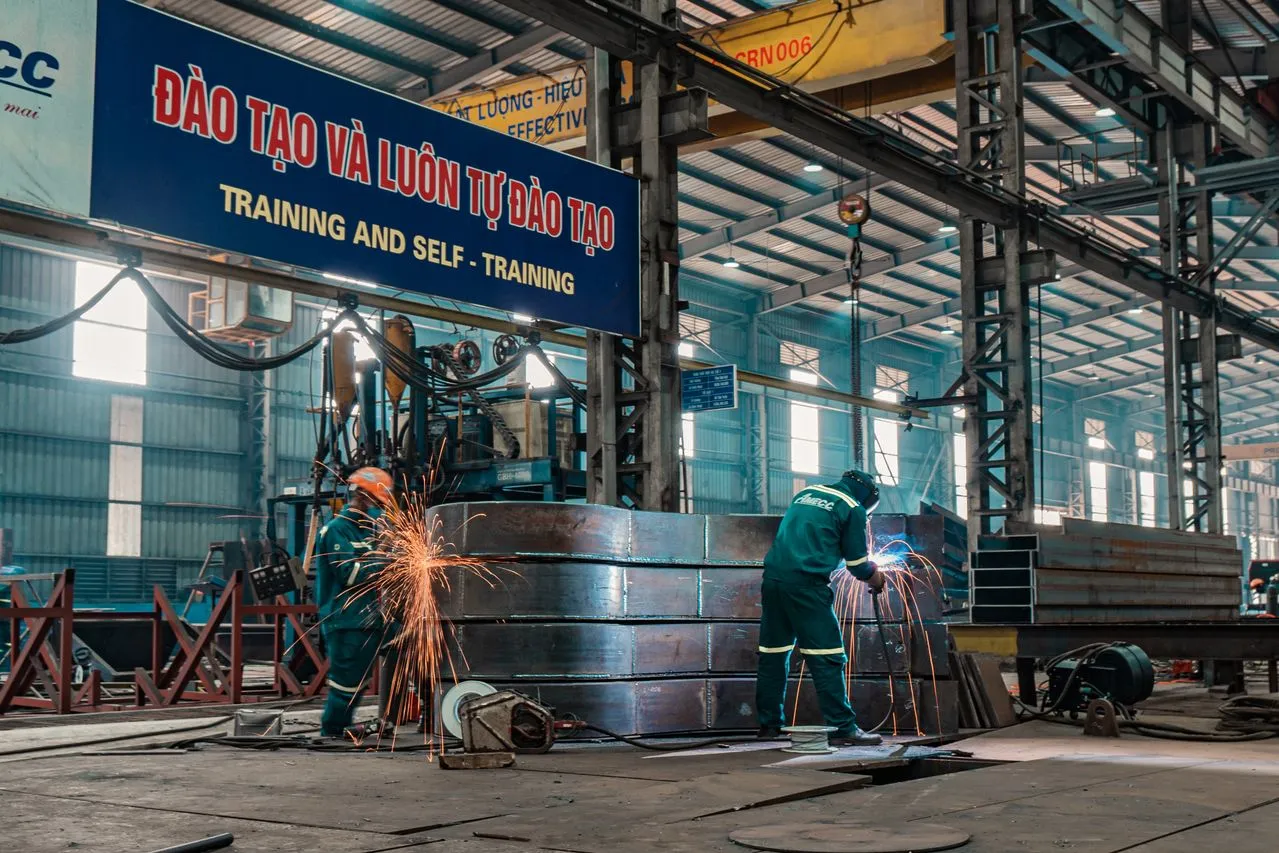
- Singapore cools from a high base. Singapore's manufacturing PMI eased 0.3 points to 51.4 in October from 51.7, with the electronics sector down 0.4 to 52.5 as slower growth in new orders, output, inventories and employment weighed. SIPMM Executive Director Stephen Poh said the sector was "cooling from a high base, not losing momentum", with AI-linked orders and elevated backlogs keeping electronics the main pillar — while warning that renewed Middle East shipping disruption could constrain output.
New Products & Sourcing Ideas
- AceiiLab A1 — a tennis robot that moves with you. First seen on Kickstarter in 2025 as the Aceii One, the A1 uses 4K binocular vision and a wheeled base to reposition between feeds at up to 13.1 ft/s (about 4 m/s), with launch speeds up to 80 mph, adjustable 0.5-15 second intervals and topspin, backspin and lobs up to 8 metres. A detachable bag holds 120 balls; the suitcase-style body is 23.8 kg without the battery, and a 36V 7Ah pack is rated for eight hours of static feeding or two hours of dynamic training. It is listed at $1,999 for Black Friday 2026 against a $2,599 list price. A useful read of where consumer robotics hardware is heading for OEM buyers.

- Knit Form — a $999 soundbar dressed as furniture. Michigan startup Knit Sound Company wraps a 46-inch, 5.1.2 Dolby Atmos bar in a seamless 360-degree "Threadform" knit sleeve in five colours, with 14 channels of Class D amplification, two built-in subwoofers and no separate sub. It deliberately skips Wi-Fi: one HDMI eARC cable carries everything, with Bluetooth 5.3 and Auracast for headphones. Founder Joel Sietsema spent twenty years at Sound United (Denon, Marantz); Brand Foundry Ventures and designer Nate Berkus are investors. On sale now in the US, direct only, with a $79 flush wall bracket.

Sourcing Platforms & Tools
- Freight Right MCP — quoting and booking inside your AI assistant. Announced 12 October 2026, the Model Context Protocol connection lets shippers quote, track, book and manage ocean, air and ground freight from ChatGPT, Claude, Microsoft Copilot, Grok, Muse and compatible coding agents. Upload a packing list, commercial invoice or purchase order and the assistant extracts dimensions, weight, piece counts, commodity, origin and destination to build the request; it can also answer "which of my shipments are late?" with live operational context.
"Shippers should not have to change the way they work every time the logistics industry introduces another piece of software." — Robert Khachatryan, CEO, Freight Right Global Logistics
- Kickstarter orders now flow into Shopify. Available 11 November, the official Shopify App Store app connects Kickstarter's Pledge Manager to Shopify: match reward variants to products by SKU, transfer finalised backer orders in batches, pause or resume synchronisation, schedule multiple fulfilment waves and send tracking back to Kickstarter. Backers have 48 hours to confirm shipping addresses. The app is free for Pledge Manager users (standard crowdfunding fees still apply) and needs a launched Pledge Manager, Shopify admin access and matching SKUs.
"Kickstarter is where creators prove there's demand for an idea, and Shopify is where they grow it into a business." — Jeff Kennedy, partnerships, Shopify
Industry Trends
- Chip sales up 24.1% in a single quarter. Worldwide semiconductor revenue reached $517.7b in Q3 2026, up 24.1% quarter on quarter, according to the Semiconductor Industry Association; September alone was $172.6b, up 146.8% year on year and 7.9% on August. The Americas led annual growth in September at 191.7%, followed by Asia-Pacific/other (141.4%), China (124.9%), Europe (102.5%) and Japan (73.4%). SIA president Michael Robbins said the market had grown more than 20% quarter on quarter for a third consecutive quarter — a demand signal that keeps component lead times and allocation on the buyer's risk list.

- Growth outruns cash visibility. PYMNTS Intelligence's "Growth and Scaling" report (June survey of 60 US CFOs at $100m-$1bn-revenue companies) found 58% grew revenue over the prior 24 months while 62% struggled to manage or scale cash-flow forecasting — for 37% the single hardest finance or back-office task. Investment priorities: cash-flow forecasting 52%, real-time reporting 35%, fewer manual processes 33%, unified finance data 32%. Some 62% said their systems were at least mostly ready for the next 24 months, but only 12% reported complete readiness. For supplier negotiations, expect more buyers tying payment terms to forecast confidence.
Payments & Trade Finance
- Deutsche Bank switches on digital-asset custody. On 11 November the bank began providing digital asset custody to paying institutional and corporate clients in Europe, after outlining the service earlier. Custody — safeguarding assets clients already hold — is being built in-house while issuance is pursued with other institutions, a useful distinction for treasury teams evaluating counterparties.
- Banks decide what to own and where to partner. Goldman Sachs, Citigroup, Santander and Deutsche Bank are behind reported funding for Project Faro, a planned US issuer of a dollar stablecoin, with the money covering about five years of operations. Visa disclosed a stablecoin settlement run rate above $25 billion on its October earnings call and added Monad as a settlement option on 10 November; a PYMNTS Intelligence / The Clearing House tracker found 76% of surveyed institutions had enabled the RTP Network for commercial customers and 40% offered FedNow. The OCC's GENIUS Act final rule takes effect 18 January, and Morgan Stanley agreed on 9 November to acquire transfer agent Vinyl Equity, expected to close in Q1 2027 with tokenisation flagged as a future application.
Buyer Voices & Insights
- "Containerships are built to last a life at sea, so they are mainly demolished for commercial and operational reasons rather than wear and tear." — Peter Sand, chief analyst, Xeneta, on why scrapping will not absorb the newbuilding wave.
- "On paper, the numbers look remarkably similar, but this is where the comparison ends. There is a major mismatch in vessel sizes." — Jonathan Roach, analyst, Braemar, on 1,944 vessels aged 20+ versus 1,903 ships on order.
- "October's PMI readings point to a sector cooling from a high base, not losing momentum." — Stephen Poh, Executive Director, Singapore Institute of Purchasing and Materials Management.
- "So that easy button that we spoke about just got harder to press." — Nunzio De Filippis, co-CEO, CargoTrans, on DDP shipments under CBP's new foreign importer-of-record rule; he advises buyers to establish exactly who is the IOR, who is the broker and whether the arrangement meets the new requirements.
Cover photo: Tomwsulcer / Wikimedia Commons / Public domain.