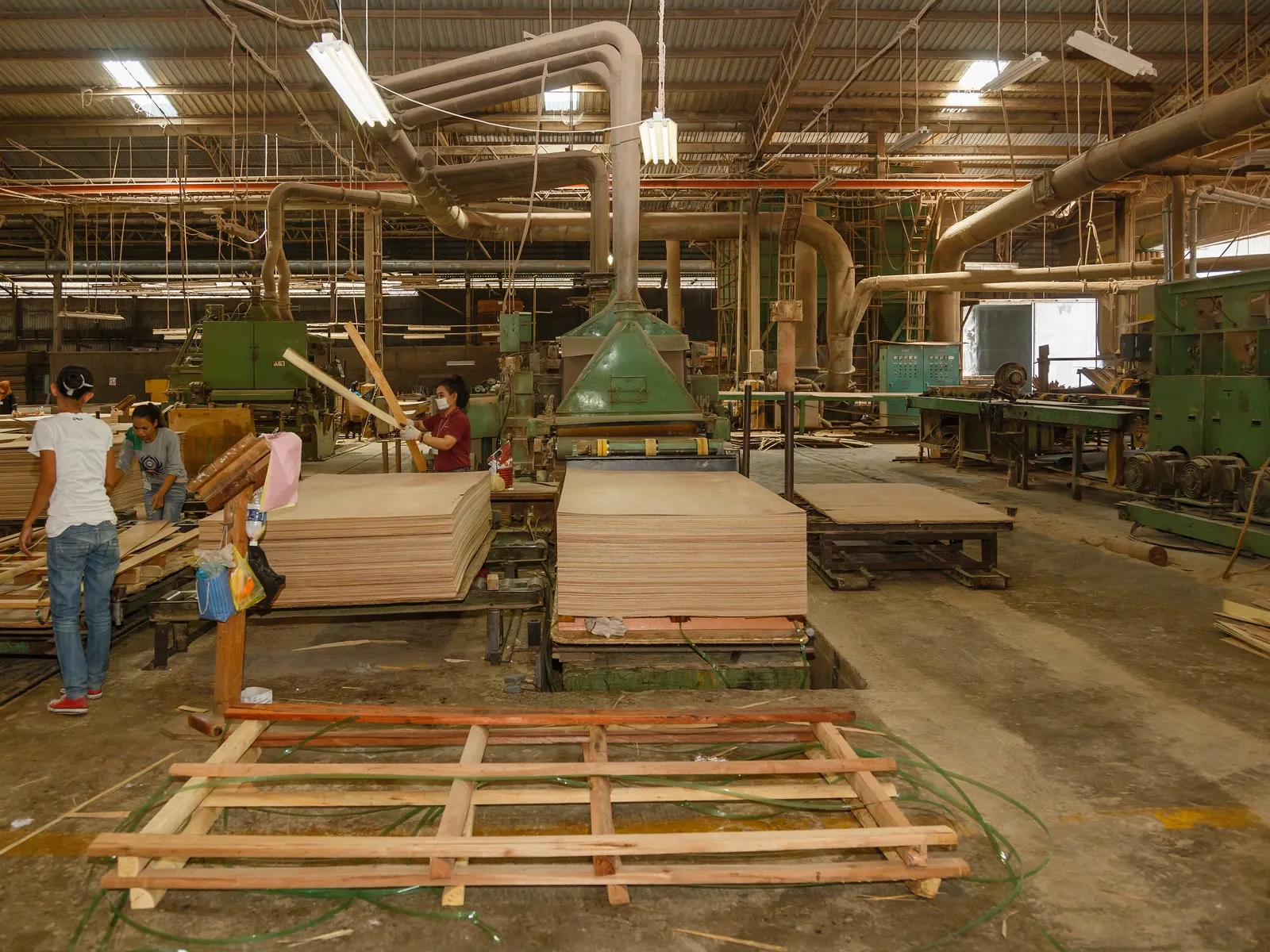
Weekly (Issue 19): Plywood AD Orders, Cabinet Subsidies and a Four-Year Airfreight High
This week: Commerce issued antidumping orders on hardwood and decorative plywood from China at cash-deposit rates up to 187.27%, while a separate review put Chinese wooden-cabinet subsidies as high as 113.08%. Carriers are blanking more sailings to hold spot rates into 2027 contract talks, and transatlantic airfreight hit its highest level in four years.
Trade Policy & Tariffs
Commerce issues plywood AD orders; China-wide cash-deposit rate 187.27%
Commerce published antidumping duty orders on hardwood and decorative plywood from China, Indonesia and Vietnam on 17 November (FR 2026-23386), following affirmative final determinations by Commerce and the ITC. For Chinese exporters, the cash-deposit rates range from 18.10% for the listed "All Others" row up to 187.27% for Linyi Xinshancheng Board Factory / Linyi Hanbo Import; the China-wide entity rate is 185.96%. CBP will suspend liquidation and require cash deposits at these rates from the date of the ITC final determination's Federal Register publication.
"Accordingly, effective on the date of publication in the Federal Register of the ITC Final Determinations, CBP will suspend the liquidation of entries of subject merchandise, and require, at the same time that importers would normally deposit estimated duties on the merchandise, a cash deposit equal to the rates listed below."
For buyers of panel products, the spread between individually reviewed exporters and the China-wide entity is now a landed-cost decision: confirm the named producer and exporter on every quote before the deposit requirement bites.
- Wooden-cabinet subsidies reach 113.08% in CVD review. On 16 November Commerce published the final results of its countervailing duty administrative review of wooden cabinets and vanities from China for 1 January-31 December 2024 (FR 2026-23264). Yixing Pengjia Technology and Jiangsu Xiangsheng Bedtime Furniture received 5.48% subsidy rates, while KM Cabinetry, Dalian Hualing Wood and a combined KM/Zhongshan Nu Furniture entity were assigned 113.08%. Cash deposits at the company-specific rates take effect on publication and remain in force until further notice. This is a countervailing duty review, separate from the 7.48% antidumping margin covered last issue — importers of kitchen and bath cabinetry now face two distinct rate schedules.
- Metal lockers: 21.74% preliminary CVD rate. Commerce's preliminary results of the 2024 countervailing duty administrative review on metal lockers from China, published 16 November (FR 2026-23271), assign Xingyi Metalworking Technology (Zhejiang) a 21.74% subsidy rate and rescind the review in part for six companies. Briefs and comments are open: the rate is preliminary, not final, but it sets the cash-deposit expectation for shipments in the review window.
Supply Chain & Logistics
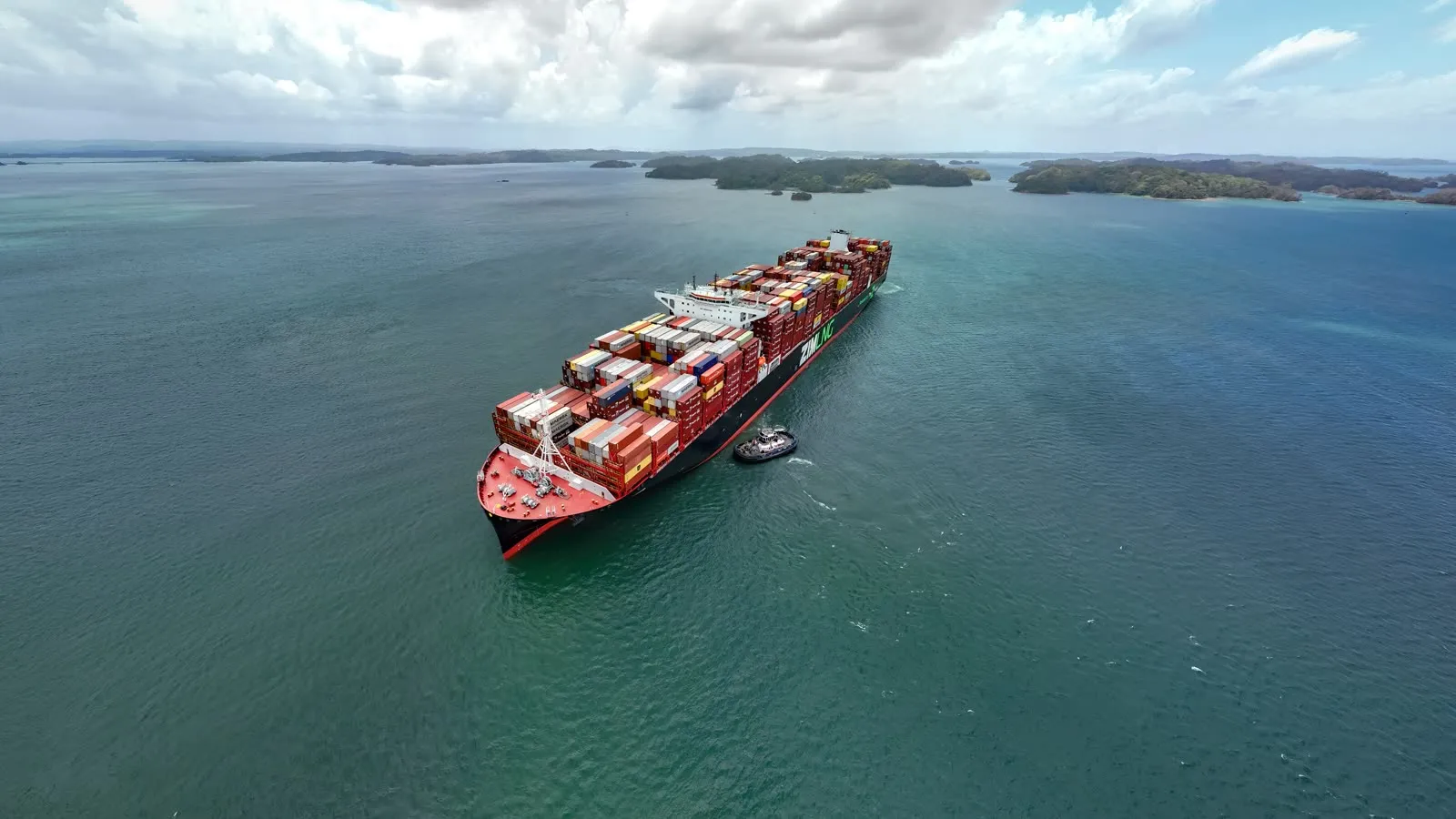
- More blank sailings as spot rates drift lower. Drewry's World Container Index fell 3% week on week on Shanghai-Rotterdam to $3,504 per 40ft in the 13 November assessment, while Shanghai-Genoa held flat at $4,168 for a third week. Transpacific rates also eased: Shanghai-Los Angeles -2% to $7,416 and Shanghai-New York -3% to $9,020, its lowest since August. Carriers are responding with eight blanked sailings next week versus five this week, and eight transpacific blanks versus four, as new FAK levels of $4,500-$5,000 to North Europe and $5,500-$6,600 to the Mediterranean take effect. Hapag-Lloyd CEO Rolf Habben Jansen told analysts 2027 contracts "will be at a higher level than what we have seen in 2026," largely because of the bunker component. Cheapest spot rates may come with weaker schedule reliability into year-end.
- West Coast imports spike 17.6% in September. Sea-Intelligence says North America West Coast ports handled 1.45m TEU of laden imports in September, up 17.6% year on year — the highest September on record — after a -3.9% July and a flat August. Total Q3 volume was 8.32m TEU (+2.6%), with laden imports at 4.12m TEU (+3.9%). The compressed peak produced an 11.3% month-on-month jump from August, the largest September increase in the 2012-2026 series, and LA/Long Beach took 73% of West Coast laden imports. Buyers should expect terminal, chassis and rail stress even when headline volumes look only modestly higher for the quarter.
- Transatlantic airfreight at a four-year high. Freightos reported Europe-US rates up 12% last week to $3.27/kg and China-North America up 16% to $9.25/kg, already above last year's December peak — the highest transatlantic level since December 2022. Forwarder ExFreight's data show average >100kg Europe-US rates jumping from about $3.06/kg in June-October to $3.83/kg in November (+25%), with Denmark-US up 191% from $2.55 to $7.41/kg. A 13 November US flight grounding had little additional effect. Cathay Cargo's October tonnage rose 8% year on year on just 1% more capacity; expect tightness to persist into the holiday peak.

Factory & Manufacturing
- Taiwan's factory boom cools but supply strains worsen. The S&P Global Taiwan Manufacturing PMI fell to 54.9 in October from 56.7 in September, still a 11th consecutive month of expansion, with new orders and output growing at slower rates. Supplier delivery times lengthened substantially again on AI-component shortages, capacity constraints and Middle East shipping delays; backlogs built for an 11th straight month, and firms stockpiled inputs at the fastest pace in four months to hedge against price rises. Input-cost inflation eased slightly but stayed rapid for metals, plastics and electronics. For buyers, longer lead times and precautionary stocking at the supplier level are the signals to watch.
- Philippine manufacturing contracts for a second month. The S&P Global Philippines Manufacturing PMI dropped to 49.1 in October from 49.6, with output and new orders falling and purchasing cut at the sharpest rate in 11 months. Supplier performance has deteriorated for 11 consecutive months, though input-cost inflation was the weakest in eight months. Business confidence rebounded to a near two-year high, but S&P Global economist Siân Jones noted it had yet to translate into orders or hiring — and the central bank's half-point rise to 5.50% could restrain demand further. A cautionary read for anyone adding Philippine capacity.
New Products & Sourcing Ideas
- Co Print Quadro — four toolheads, one rail, $649. The Quadro uses four independent extruders with their own filament, nozzle and temperature, sharing a single rail and docking to let the active head reach the full 300 x 300mm bed. Co Print says handoffs take about one second (versus roughly five for toolchangers that park whole heads) and multi-material prints cut filament waste by up to 90%. It was live on Kickstarter at $649 early pricing (from $899), with more than $337,000 raised at the time of writing. The four-toolhead layout is a useful design signal for buyers watching multicolour desktop manufacturing.

- ASUS ProArt GR1X — a local-AI mini PC with 128GB unified memory. Measuring 5.91in square and 2.01in tall, the Arm-based Windows 11 box pairs an NVIDIA RTX Spark 20-core Grace CPU with a Blackwell GPU (6,144 cores), in 64GB or 128GB unified-memory configurations. Two fans, four heat pipes and 57 cooling fins support a 140W thermal design; connectivity includes four 4K displays via HDMI and three USB-C ports, dual M.2 slots and 10Gb Ethernet. For teams weighing on-premise AI against cloud upload of client material, this is the hardware shape that trade-off now takes.

- Bunkr — a camper pod that detaches from the trailer. VentureXplorer's removable tiny home mounts on a compatible utility trailer or stands on its own, in 5x10ft, 6x12ft and 7x14ft footprints (50-98 sq ft). The demo unit fits a sofa-bed, fold-down upper bunk, four-burner stove, oven, microwave, fridge and a wet bathroom, with galvanized steel or aluminium framing and XPS insulation. Base prices are reported at $30,000-$40,000 with a two-to-three-month turnaround — an instructive data point in the overlap between outdoor, RV and modular-housing supply chains.
Sourcing Platforms & Tools
- Wakeo launches Supply Chain Advisor. Announced 3 November, the tool combines Wakeo's real-time multimodal shipment visibility with "Trusted Routes" benchmarks to score a company's current transport plan on cost, reliability, transit time, disruption exposure and CO2, then recommends better routes and providers. It is aimed at the gap between procurement teams judged on cost and supply-chain teams judged on delivery — both see the same data before a tender is signed.
"Ten years ago, we built Wakeo to give companies real-time visibility on their shipments, so they could react fast to disruptions, cut emergency costs and keep customers satisfied. But one question kept coming back: how can we do better next time?" — Julien Cote, CEO and co-founder, Wakeo
- Visa links Hong Kong cargo data to commercial cards. Visa Cargo Solutions connected Hong Kong International Airport's Cargo Data Platform with commercial card payments, letting freight forwarders use verified shipment information in payment workflows. Eligible buyers can get up to 85 days to pay depending on issuer terms, while recipients can receive funds in as few as three days after conditions are met — an example of logistics data becoming a direct input into trade-finance decisions.
Industry Trends
- Target puts AI behind 90% of buying and restocking. Chief operating officer Lisa Roath told analysts on 18 November that modernised purchasing and replenishment tools now cover more than 90% of Target's assortment, up from about 40% a year earlier. A "Proxima" digital twin modelled inventory flows with 98% accuracy and, in a 63-item fresh-food pilot, improved on-shelf availability by 2.5%. Roath was careful not to credit all gains to AI alone — but the direction for retail procurement automation is clear.
- ZIM's Q3 net profit triples to $830m. The carrier reported revenue of $2.71bn, up 53% year on year, with average freight rate at $2,480/TEU (+55%) on 962,000 TEU carried (+4%). Adjusted EBITDA was $1.33bn (49% margin) and free cash flow $1.22bn; full-year adjusted EBITDA guidance was raised to $3.3bn-$3.5bn. For shippers, the numbers show how much of the current rate environment is pricing power rather than volume growth.
Payments & Trade Finance
- GENIUS Act stablecoin approval clock starts 18 January. Payment stablecoin issuers in the US will generally need regulatory approval to keep issuing after 18 January 2027, with no automatic grace period for existing issuers, according to PYMNTS on 19 November. The OCC's final implementing rule (issued 21 October) generally requires redemption within two business days of a valid order and notification within 24 hours if requests in a 24-hour period exceed 10% of outstanding issuance value. Issuers must back tokens one-for-one with eligible assets and disclose reserves monthly. Treasurers using stablecoins for supplier settlement should confirm their issuer's approval path before the deadline.
- Banks push tokenized deposits to keep the customer. JPMorgan and Singapore's DBS Bank announced DLT infrastructure on 16 November allowing institutional customers to transfer tokenized deposits across blockchain networks, part of a wider bank-backed push (including World Bank Group with Citi and Circle) to modernise payments without losing the deposit relationships that fund lending. The competitive question for corporate treasuries is whether a payment rail preserves credit and banking relationships, not just whether it moves value faster.
Buyer Voices & Insights
- "I don't think we're going to see the lever being pushed as fast as it has been. But I don't see them going away." — Nunzio De Filippis, co-CEO of CargoTrans, on tariffs after the US midterms; he expects 2027 to be "the year of enforcement."
- "Those conversations are starting more or less as we speak... when one looks at contracts that will be closed for 2027, they will be at a higher level than what we have seen in 2026." — Rolf Habben Jansen, chief executive, Hapag-Lloyd, on annual contract negotiations.
- "The longer it continues, what you start to worry about is … price elasticity, where you get to a point where it's just no longer viable to send by air cargo." — Martin Drew, chief commercial officer, Atlas Air, on rising costs pushing perishables out of airfreight.
- "We're seeing ocean carriers return to Suez Canal routings which translate to 10-12 day transit improvements to Savannah supply chain inventory and fulfillment speeds." — Kevin Price, president, Georgia Ports Authority, after the port posted 565,366 TEU in October, up 25%.
Cover photo: CEphoto, Uwe Aranas / CC BY-SA 3.0 / Wikimedia Commons.