
Weekly (Issue 21): US Closes Vietnam Steel-Wheel Route as Freight Rates Split by Lane
This week: US Commerce moved first on steel wheels finished in Vietnam, while an opposite call cleared coated steel finished in Indonesia. Freight diverged just as sharply: Ningbo-to-Middle East box rates rose 453.5% year on year, but North American import growth stayed concentrated on the West Coast. Parcel, factory and settlement costs all moved into the 2027 planning window.
Trade Policy & Tariffs
- US Commerce finds Chinese steel wheels finished in Vietnam circumvent duties Commerce's preliminary determination covers steel wheels completed in Vietnam using hot-rolled steel produced in China. The agency treated that processing as circumvention of the antidumping and countervailing duty orders on steel wheels from China (A-570-082 / C-570-083), applicable from 24 November 2026. Buyers using Vietnam as a finishing route should audit mill certificates and country-of-origin records before Q1 shipments, not after a cash-deposit request arrives.
- Commerce declines to find circumvention for Chinese-coated steel finished in Indonesia In a separate preliminary ruling on the same day, Commerce found that corrosion-resistant steel products completed in Indonesia from Chinese hot-rolled or cold-rolled steel were not circumventing the US AD/CVD orders. The inquiry period ran from 1 January 2021 through 31 December 2025. The contrast with the steel-wheel ruling matters: origin engineering is being judged product by product, so a supplier's "third-country processing" answer cannot be reused across categories.
- EU opens safeguard investigation into composite input materials The European Commission launched a safeguard probe on 23 November covering glass-fibre reinforcements such as chopped strands, rovings and mats, composite resins and other inputs used in wind energy, transport and defence applications. The case takes a supply-chain approach rather than looking at one finished good. For buyers, the practical risk is upstream: a safeguard on resin or fibre can reprice downstream components long before any finished-product tariff appears.
Supply Chain & Logistics
- Ningbo-to-Middle East box rates surge 453.5% year on year Dynamar's November DynaLiners Monthly puts average October freight rates from Ningbo-Zhoushan to the Middle East at US$5,243.69 per 40-foot container, up 453.5% from October 2025. Container News frames the market as two-speed: regional exposure now matters more than a global headline average. Buyers quoting 2027 Middle East orders off trans-Pacific or European indices should reset the lane assumption.

- North American laden imports rise 2.4% as West Coast gains share Sea-Intelligence reports 7.45 million TEU of laden imports across major North American ports in 2026 Q3, up 2.4% year on year. The Pacific Southwest grew 5.1% to 3.21 million TEU, with Long Beach up 10.5% and Los Angeles up 2.5%, while Oakland fell 7.2%. A flat national number therefore hides very different berth, drayage and inventory pressures by port.
- FedEx and UPS base rates rise 5.9%; surcharges push budgets higher The carriers will lift average base rates by 5.9%, with UPS changes from 21 December and FedEx from 4 January 2027. Supply Chain Dive reports sharper increases on 1- to 5-pound parcels, while the effective increase once surcharges are included typically lands at 8% to 12%. Buyers shipping samples, spare parts and light B2B replenishment should renegotiate dimensional-weight and additional-handling terms before the calendars flip.
Factory & Manufacturing
- US Steel and union reach four-year deal covering 11,200 workers The tentative agreement covers more than 10,000 workers at a dozen plants, with 19.25% total wage growth over the term, annual base increases, improved healthcare and a US$4,000 ratification bonus. U.S. Steel also committed US$4.5 billion to union-backed facilities. Ratification is still pending, but the deal signals that domestic steel cost and capacity planning must now include labor terms, not just input tariffs.
- Lego plans 1.2m-square-foot automated factory in Portugal The new Estarreja plant will handle moulding, processing and packing for Europe, the Middle East and Africa. Construction is set to start in the first half of 2027, with production targeted for 2030 and about 1,000 jobs. Lego calls it its most automated site so far and says the layout is designed to flex with demand, a reminder that nearshoring decisions now include automation density as a core supplier-selection criterion.
- Tesla proposes US$3.1bn Texas polysilicon refinery Tesla has applied for a state incentive for a polysilicon facility near Robstown, Texas, described as the upstream piece of a domestic solar manufacturing platform. The plant would supply solar-grade polysilicon for high-efficiency N-type cells, a material still predominantly made outside the United States. For solar component buyers, the proposal is a long-dated supply signal, not near-term capacity.
New Products & Sourcing Ideas
- Obsbot launches two motorized 4K cameras for live production The Tail Air 2 and Tail 2 ADV track moving subjects without a camera operator. The 438-gram Tail Air 2 uses a 50-megapixel 1-inch sensor; the ADV offers 21x optical zoom and claims tracking up to 240 metres. Both record 4K at 60 fps and can rotate for vertical video. List prices are US$899 and US$1,599, with preorder prices of US$799 and US$1,399 and an 8 December release date.

- HobbyBoi builds a 4.8-litre desktop PC that fits a laptop bag The 3D-printed enclosure holds an AMD Ryzen 9 7900X, ASUS RTX 3060 with 12GB, 32GB DDR5 and a 1TB NVMe drive in a console-like layout. The build cost roughly US$1,000 using used and discounted parts, and the creator demonstrated it with a hotel TV in Canada. The sourcing lesson is not the spec sheet: it is how additive manufacturing turns enclosure design into a differentiation point.
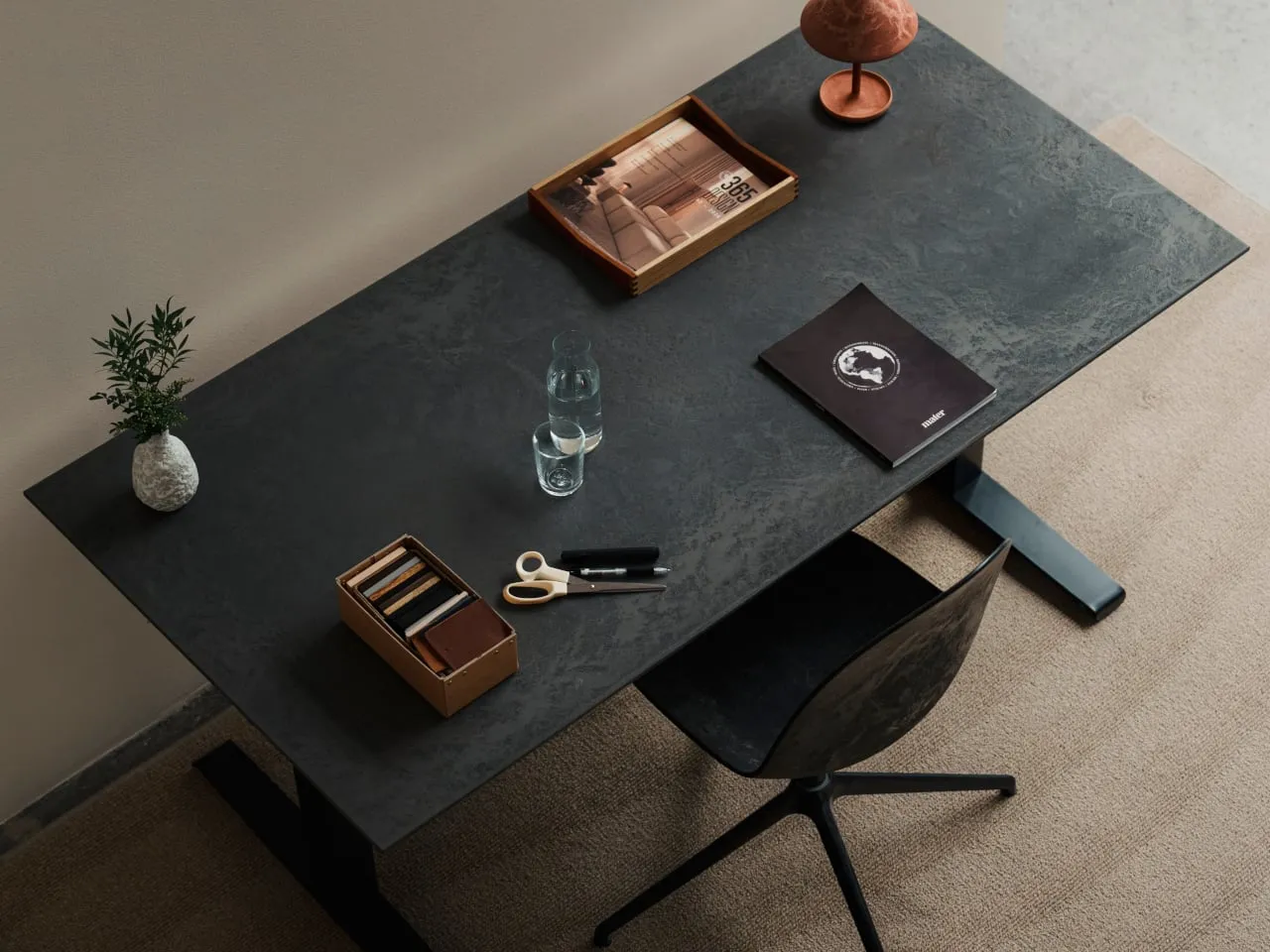
- Mater makes a standing-desk top from coffee-roasting waste The Matek desktop press-moulds coffee-husk fibres with a binder recovered from discarded electronics. The smallest panel is listed at EUR 450 in Mater's German shop, without the lifting frame, and US availability is unconfirmed. Mater offers take-back and regrinding, subject to location and volume. For office-goods buyers, this is a concrete example of waste-stream material moving into a replaceable, serviceable product rather than a one-off promotional object.
Sourcing Platforms & Tools
- NYSHEX says container freight futures are gaining traction In a Container News roundtable, NYSHEX co-founder and CEO Gordon Downes and VP of financial products Rich Heath said volatility since 2020 has exposed the limits of traditional contracting. More than 10,000 TEU of NYFI-linked futures had traded since launch in April 2026. Heath cautioned that a hedge only works if the index tracks the rate a shipper actually pays, making benchmark governance a procurement issue.
- Simple Cargo handles 30% more shipments with the same staff The Dutch-Belgian air-cargo GSSA brought sales, bookings and invoicing into FreightSpark ONE and cut daily booking work from a full employee-day to about an hour. Managing partner Gert-Jan Lantrok says the team now handles around 30% more shipments without adding headcount. The takeaway for smaller forwarders: workflow consolidation can beat headcount growth when volumes swing.
- Rockwell previews FactoryTalk Conductor orchestration platform Rockwell introduced Conductor in late October and showed it at Automation Fair in Boston. The platform manages multiple AI-enabled workflows, lets engineers start tasks in natural language and uses Nvidia Nemotron models, with planned integration across Logix Echo, Emulate3D and FactoryTalk Optix. For industrial buyers, the question is whether orchestration reduces engineering hours across the whole stack or just adds another licence.
Industry Trends
- P&G plans to cut up to 30% of product-supply headcount by 2030 Chief Product Supply Officer Luc Reynaert told investors the CPG group will remove 20% to 30% of its product-supply workforce, including contractors, as manual work is automated. P&G already runs autonomous production at more than 15 sites and targets up to 20% productivity improvement by 2030. The disclosed ambition is up to US$10 billion in productivity savings through FY 2030, including as much as US$1.8 billion a year in cost of goods sold.
- Under Armour aims to halve its assortment after a 25% SKU cut The brand already reached a 25% SKU reduction earlier this year and now wants to cut its assortment in half. It ended fiscal Q2 2027 with US$1.1 billion in inventory, up 4% year on year, and is asking factory partners to delay some shipments while shortening lead times. Supplier scorecards are likely to reward speed and small-batch flexibility over scale alone.
- Fluidstack targets six-month build for 400MW modular data centres The Blackbird platform scales from a single zone above 10MW to a 400MW facility and aims to cut construction from the typical 18 to 24 months to six months after groundbreaking. Compute Modules integrate power, cooling and cabling and are factory-tested before shipment. If the schedule holds, modular delivery changes the procurement calendar for switchgear, cooling and server infrastructure as much as it changes construction.
Payments & Trade Finance
- Tokenized deposits need cross-bank interoperability, says Clearing House The Clearing House is designing shared infrastructure to synchronise on-chain tokenized-deposit transactions with fiat settlement over existing payment rails. The goal is programmatic, round-the-clock movement of regulated USD commercial bank money without breaking deposit relationships. PYMNTS cites Cornerstone Advisors that 57% of banks have discussed tokenized deposits at board or executive level, with cross-border supplier payments named as a target use case.
- Private equity talks could value Global Payments at US$50bn Blackstone, Warburg Pincus and Apollo are in talks to help GTCR finance a take-private acquisition of Global Payments, according to Reuters reporting cited by PYMNTS. No agreement has been finalised and GTCR has made no definitive decision. Even at the discussion stage, the reported US$50 billion scale points to consolidation pressure in the payment infrastructure used by cross-border sellers.
- Payments AI race shifts from features to operational advantage PYMNTS argues that once every provider can deploy sophisticated automation, differentiation comes from existing operational advantages rather than the AI tools themselves. For finance and procurement teams, the practical filter is whether a vendor can show faster reconciliation, lower exception rates or better working-capital visibility, not merely an AI label.
Buyer Voices & Insights
- Dual sourcing is not resilience if both providers bid too low Chris Clowes, executive director at Scala, warned that two carriers on a lane can still be a single point of failure if both won at unsustainably low rates. His advice to logistics decision-makers is to price commercial sustainability into the tender, then keep flexibility for smaller operators with local knowledge.
"Having two transport providers on a particular lane may look like sensible contingency planning, but if both have won business by bidding at unsustainably low rates in a procurement exercise, how resilient is the arrangement?" - Chris Clowes
- Banks must keep deposits while moving money on-chain Reena Verma, head of tokenized deposit commercialisation at The Clearing House, frames tokenization as an upgrade inside the regulated banking framework rather than a replacement for bank deposits. For corporate treasuries, that distinction determines whether an on-chain payment remains compatible with existing banking relationships.
"Tokenized deposit transactions are more than just a payments upgrade. They offer a way to bring bank-funded money into digital markets while preserving deposit relationships for financial institutions." - Reena Verma
Cover photo: Jacapa090 / Public domain / Wikimedia Commons.