Weekly (Issue 22): Customs Rulings Split on Origin as Freight Congestion Returns
9
0
0 likes
This week: US trade rulings split again on third-country processing while new duties landed on chemical intermediates. Port and air-cargo bottlenecks reappeared from the UK to Brazil. AI moved deeper into sourcing workflows, and memory costs started rewriting hardware contracts.
Trade Policy & Tariffs
- Commerce clears Vietnamese steel finished in Indonesia, but only for one order Commerce preliminarily found on a country-wide basis that corrosion-resistant steel completed in Indonesia from Vietnamese cold-rolled steel does not circumvent the AD/CVD orders on Vietnamese corrosion-resistant steel (A-552-843 / C-552-844). The inquiry covered 1 January to 31 December 2025 and applies from 24 November 2026. Buyers should treat this as a product-specific answer, not a blanket pass for third-country processing.
- Chinese prestressed concrete steel wire strand duties survive a third sunset review Commerce and the ITC continued the antidumping and countervailing duty orders on prestressed concrete steel wire strand from China (A-570-945 / C-570-946) after the third sunset review. The continuation applies from 10 November 2026; the original orders date to 2010. Construction and infrastructure buyers face another five-year window of duty exposure on the same input.
- Chinese Tris faces preliminary dumping margins up to 132.59% Commerce's preliminary determination covers tris(hydroxymethyl)aminomethane from China, with the period of investigation running from 1 October 2025 to 31 March 2026. Weighted-average margins range from 9.07% for one exporter to 132.59% for the China-wide entity, the latter based on adverse facts available. Importers of this industrial chemical should expect cash deposits at those rates from publication and review supplier classification early.
- BIS adds seven entities in Malaysia, Singapore and Thailand to the Entity List The Bureau of Industry and Security added seven entities across Malaysia, Singapore and Thailand to the Entity List, effective 23 November 2026. The rule restricts exports of items subject to the Export Administration Regulations to those parties. Sourcing teams using Southeast Asian assemblers or distributors should re-screen supplier names against the updated list before Q1 purchase orders are released.
Supply Chain & Logistics
- Maersk warns of UK bottlenecks as global yard congestion spreads A 24 November customer advisory flagged high import volumes, vessel delays, weather and rail disruption across Maersk's UK and Ireland network. Kuehne+Nagel data cited in the report put average vessel waits at London Gateway at two days, Hamburg's CTH terminal at 99% yard occupancy, and three Tokyo terminals at 107%-120% utilisation. Carriers have also begun omitting Sydney calls. Buyers should pad lead times on UK-bound orders rather than assume post-peak fluidity.
- Brazil's main air cargo gateway backs up after inspection operation Trucks arriving at São Paulo's Guarulhos Airport on 20 November were still waiting to unload days later, after a Federal Police operation tightened export checks. The airport handled 59% of Brazil's air exports and 55% of its air imports in 2025, and reported a record 99,500 tonnes in Q3 2026, up 14.4% year on year. Time-sensitive exports out of Brazil need buffer space before another acceptance halt.
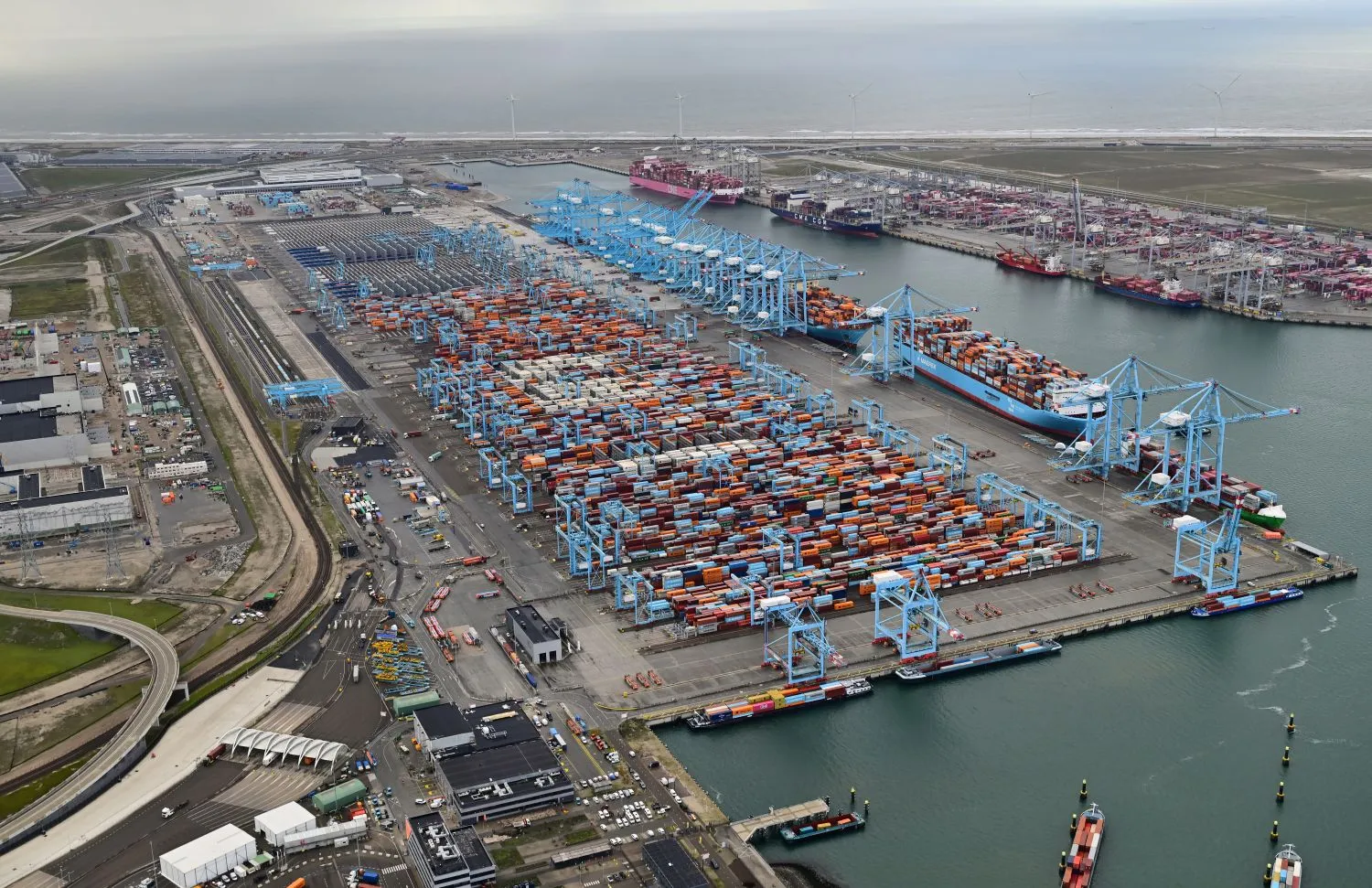
- APM Terminals plans a 1.4m TEU second phase at Maasvlakte II APM Terminals and the Port of Rotterdam unveiled plans to add 1.4m TEU of annual capacity, 711 metres of quay and 25 hectares of yard at Maasvlakte II. Shareholder approval is expected in February 2027, with construction scheduled from October 2027 to January 2030. The project signals where the next round of North European container capacity will land, but it offers no relief to 2027 contract negotiations.
Factory & Manufacturing
- Siemens targets 70% less manual planning with autonomous production agents At SPS 2026 in Nuremberg, Siemens expanded its industrial AI portfolio with planning and engineering agents plus a goods-unpacking robot under development. The company expects its planner to cut manual planning effort by 70%, moving factories toward goal-based automation. For buyers, that shifts the bottleneck from execution to data quality and cyber-resilience compliance.

- Bandai opens a second Gunpla factory with seven multicolor injection machines Bandai Spirits opened its first plastic-model plant in western Japan in Sakai, covering 3,360 square metres and running seven proprietary multicolor injection machines that mould four colours in one cycle. Gundam franchise sales reached a record 254.3 billion yen in the last fiscal year. The added capacity diversifies export logistics away from the company's Shizuoka base.
New Products & Sourcing Ideas
- SecondBrain VoicePad — a five-key AI desk controller at $119 Genspark launched the 85-gram CNC-machined aluminium controller on Kickstarter on 24 November, with five programmable CHERRY MX ultra-low-profile keys for dictation and AI commands. Campaign pricing runs $119-$149 against a $169 retail price, with first units expected in January 2027. One year of unlimited dictation is included; afterwards the free tier drops to 4,000 words per week.

- Aurzen ZIP Pro — a tri-fold 1080p projector that becomes its own stand The ZIP Pro folds to 10.7 mm and weighs 586 grams, with a back panel that props the lens into a stand. Its 200 ANSI lumen output is double the original ZIP model, and it is listed at $579.99. For sourcing, the interesting detail is the hinge-and-stand integration: fewer accessories to bundle, ship and support.

Sourcing Platforms & Tools
- Bureau Veritas buys Topo Solutions to link AI procurement with factory inspection The testing and certification group acquired Topo Solutions on 25 November, adding a SaaS platform that covers RFQs, technical specification sharing, sampling, orders, quality, lab testing and traceability. Bureau Veritas already runs factory inspections in 76 countries; Topo generated about EUR 3m in 2025, and the group targets EUR 1bn in AI-driven revenue by 2030. Buyers get one workflow from digital order to on-site audit, but should check which modules cover their own tier-two suppliers.
- Phillips 66 scales predictive procurement after a $96m pilot The energy company is rolling Arkestro's platform across its whole procurement organisation after a June pilot processed about US$96m in spend and produced more than 32,000 supplier quotes. Some events closed in fewer than three business days, with every award involving multiple competitive rounds. The result is a useful benchmark: AI sourcing is being judged on cycle time and quote volume, not just savings claims.
Industry Trends
- AI server buyers face contract repricing of up to 45% Dell, HPE, Lenovo and Supermicro are asking customers to pay more at delivery on servers ordered months earlier, with some increases reaching 45 percent. J.P. Morgan projected DRAM prices rising more than 400 percent by end-2026 versus start-2024, and KB Securities expects demand to outgrow supply by 25 percent against 18 percent next year. Fixed-price hardware contracts are becoming a risk that buyers must price and renegotiate, not a given.
- NAND spot falls 23.4% while DRAM stays firm TrendForce's average spot quote for 512Gb TLC NAND wafers fell from US$18.592 on 19 October to US$14.238 on 16 November, a 23.4% drop, while 16Gb DDR5 spot traded at US$60.833 on 24 November. Contract prices for NAND are still guided up 8–13% in Q4, however. SSD buyers have a negotiating window on spot-linked deals that does not extend to server DRAM.
Payments & Trade Finance
- Ant International and BNY explore 24/7 FX and tokenised deposits The two firms signed a memorandum of understanding on 25 November covering real-time treasury, liquidity, tokenised deposits, tokenised money market funds and wider interoperability. The scope includes 24/7 FX and digital payment tools, subject to internal and regulatory approvals. For cross-border buyers, the signal is that round-the-clock settlement is moving from stablecoin pilots into mainstream banking roadmaps.
- StraitsX and OCBC pilot stablecoin B2B settlement into bank accounts The pilot links stablecoin collection to participating OCBC clients' existing accounts, using dedicated wallet addresses for payment identification, compliance, reconciliation and settlement. OCBC supplies the fiat off-ramp, so recipients never touch the underlying tokens. NTT DOCOMO ASIA is the first participant, and both firms sit in Singapore's Project BLOOM.
Buyer Voices & Insights
- "By aligning our technology roadmaps with Infineon and securing access to critical power semiconductors, we are taking another proactive step that enables our customers to scale with confidence." — Frieda He, Chief Procurement Officer, Vertiv
Vertiv signed a three-year strategic agreement with Infineon covering silicon and silicon carbide power semiconductors for 800 VDC systems that are replacing 54 VDC architectures in AI data centres. He framed the deal as continuity planning, not a spot buy.
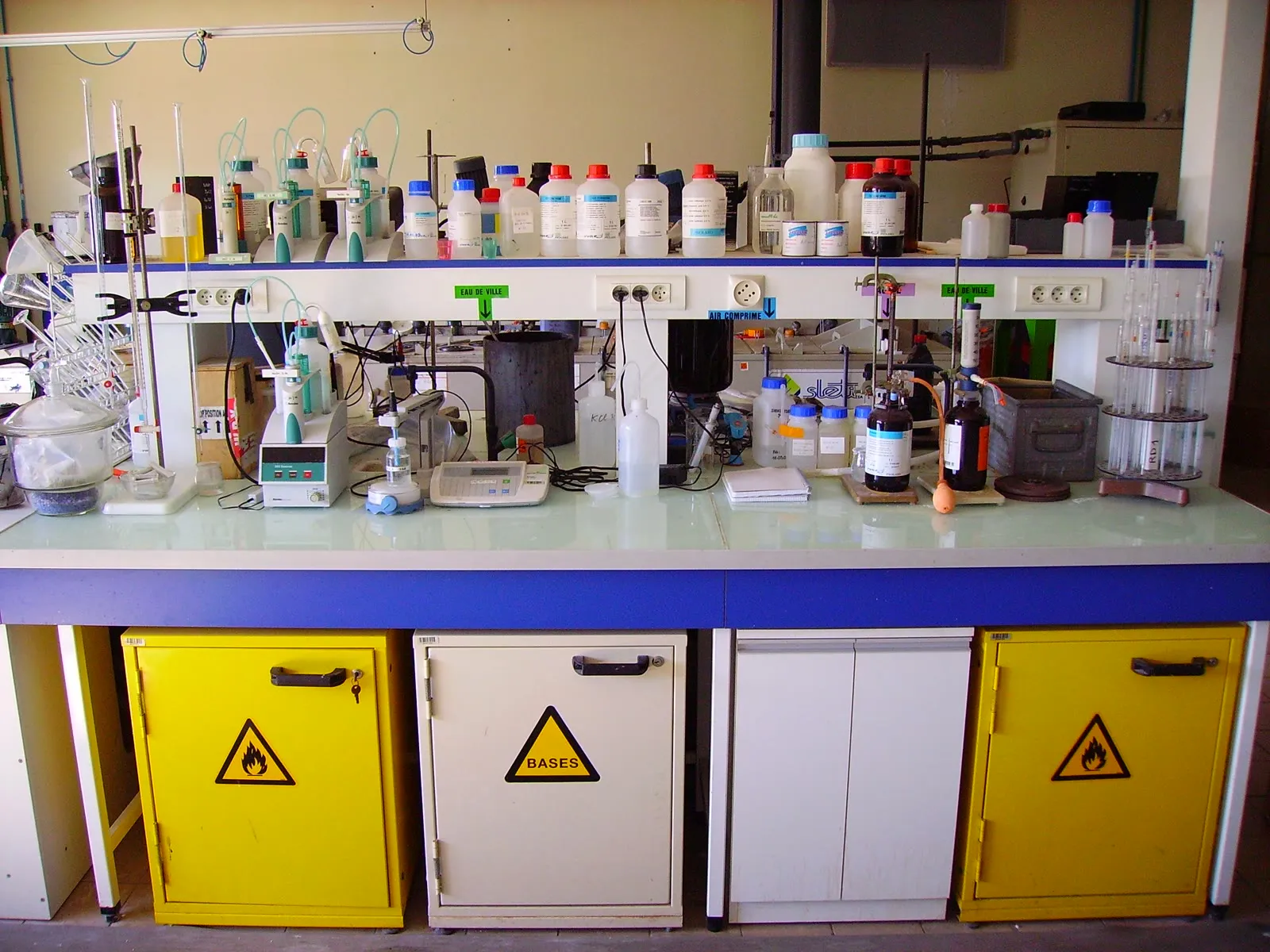
Cover photo: Jean-Pierre from Cosne-Cours-sur-Loire / CC BY-SA 2.0 / Wikimedia Commons.